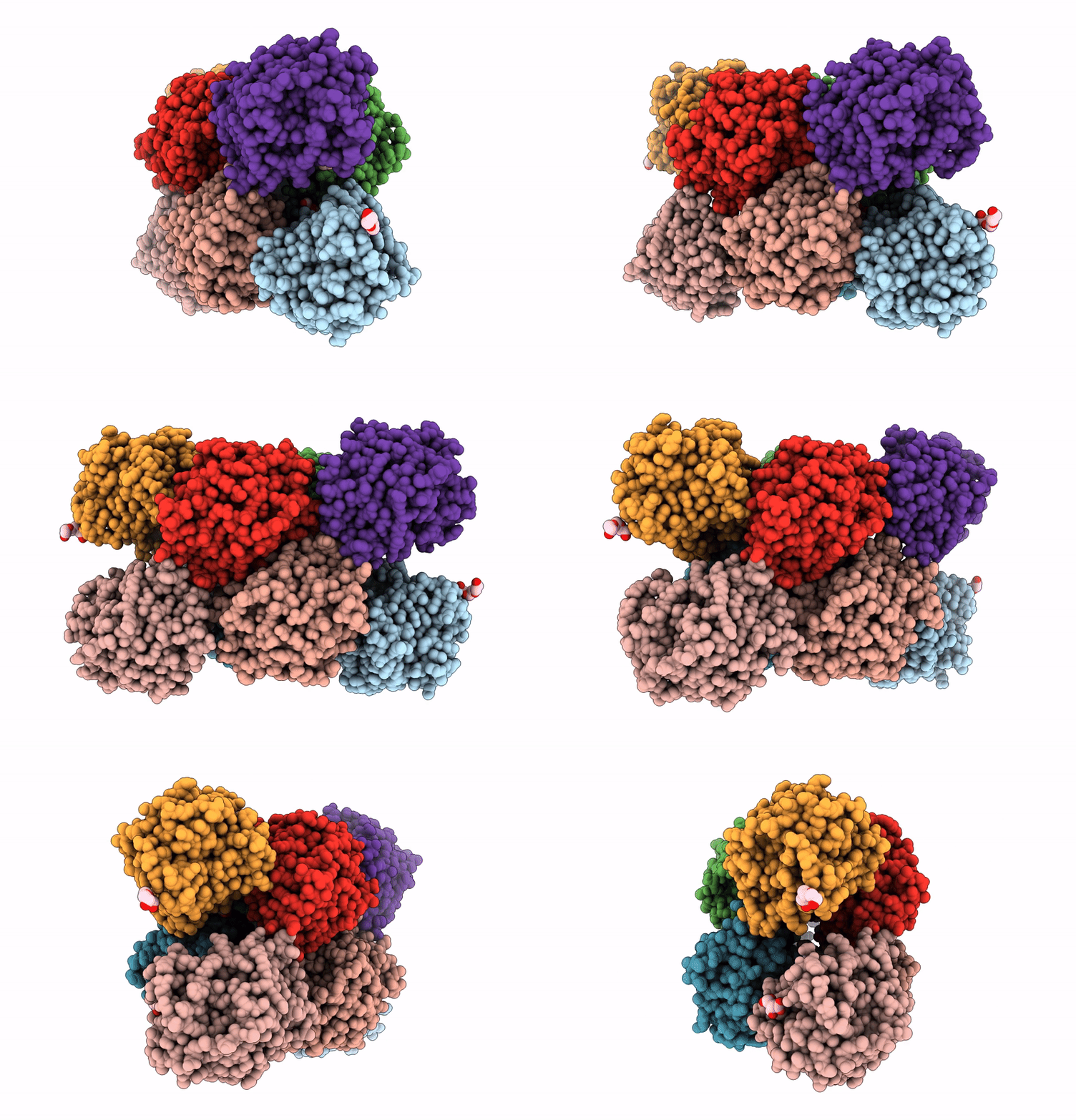
9OES image
Deposition Date 2025-04-29
Release Date 2025-11-19
Last Version Date 2025-12-03
Entry Detail
PDB ID:
9OES
Title:
HalA with lysine, succinate, chloride, and vanadium(IV)-oxo at pH 4.2
Biological Source:
Source Organism:
Method Details:
Experimental Method:
Resolution:
1.93 Å
R-Value Free:
0.21
R-Value Work:
0.17
R-Value Observed:
0.17
Space Group:
H 3
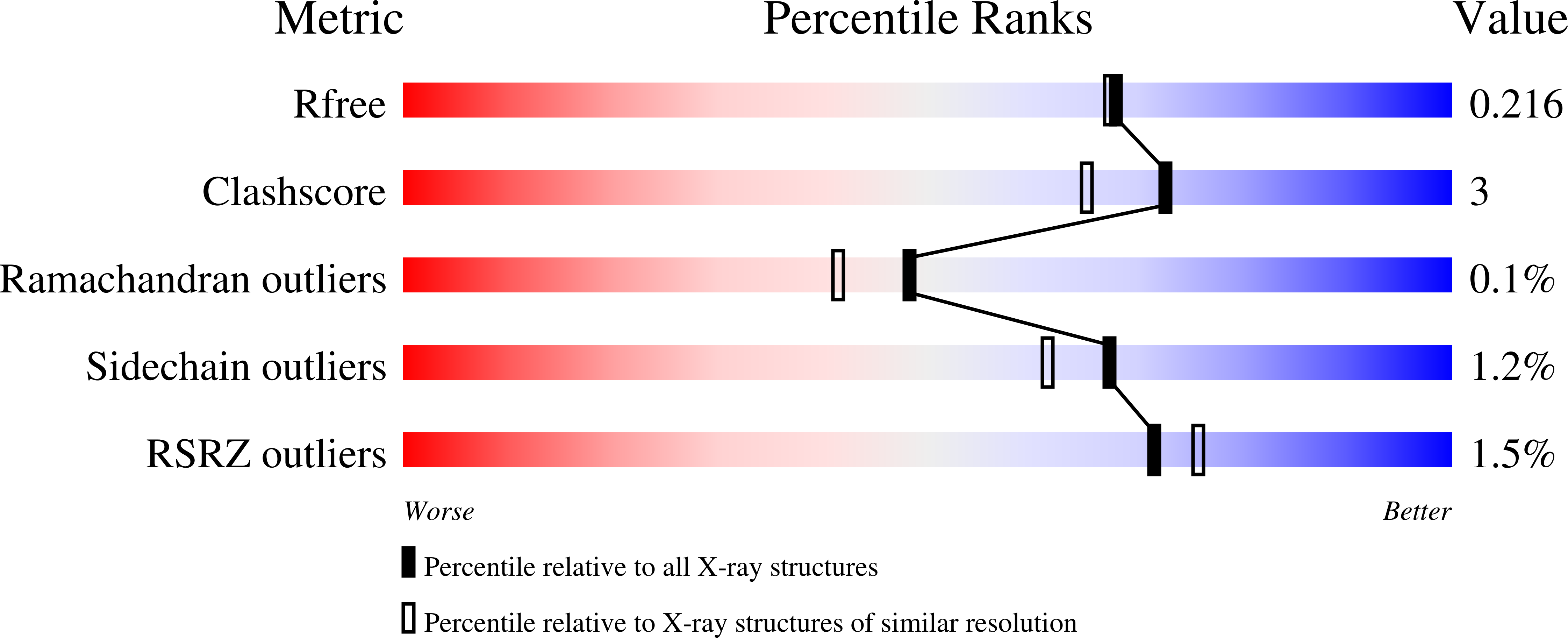
Macromolecular Entities
Structures with similar UniProt ID
Protein Blast
Polymer Type:polypeptide(L)
Molecule:Lysine halogenase
Gene (Uniprot):FHX34_1011265
Chain IDs:A, B, C, D, E, F, G, H
Chain Length:258
Number of Molecules:8
Biological Source:Actinoplanes teichomyceticus
Primary Citation
Dynamic metal coordination controls chemoselectivity in a radical halogenase.
Nat.Chem.Biol. ? ? ? (2025)
PMID: 41272319 DOI: 10.1038/s41589-025-02077-x

Abstact

The activation of inert C(sp3)-H bonds by nonheme Fe enzymes provides a powerful biocatalytic platform for the chemical synthesis of molecules with increased sp3 complexity. In this context, FeII/α-ketoglutarate-dependent radical halogenases are uniquely capable of carrying out transfer of a diverse array of bound anions following C-H activation. Here, we provide experimental evidence that bifurcation of radical rebound after H-atom abstraction can be driven both by the ability of a dynamic metal coordination sphere to reorganize and by a second-sphere hydrogen-bonding network where only two residues are sufficient. In addition, we present crystallographic data supporting the existence of an early peroxyhemiketal intermediate in the O2 activation pathway of FeII/α-ketoglutarate-dependent enzymes. These data provide a paradigm for understanding the evolution of catalytic plasticity in these enzymes and yields insight into the design principles by which to expand their reaction scope.

Legend

Protein

Chemical

Disease

Primary Citation of related structures
Feedback Form
Name
Email
Institute
Feedback