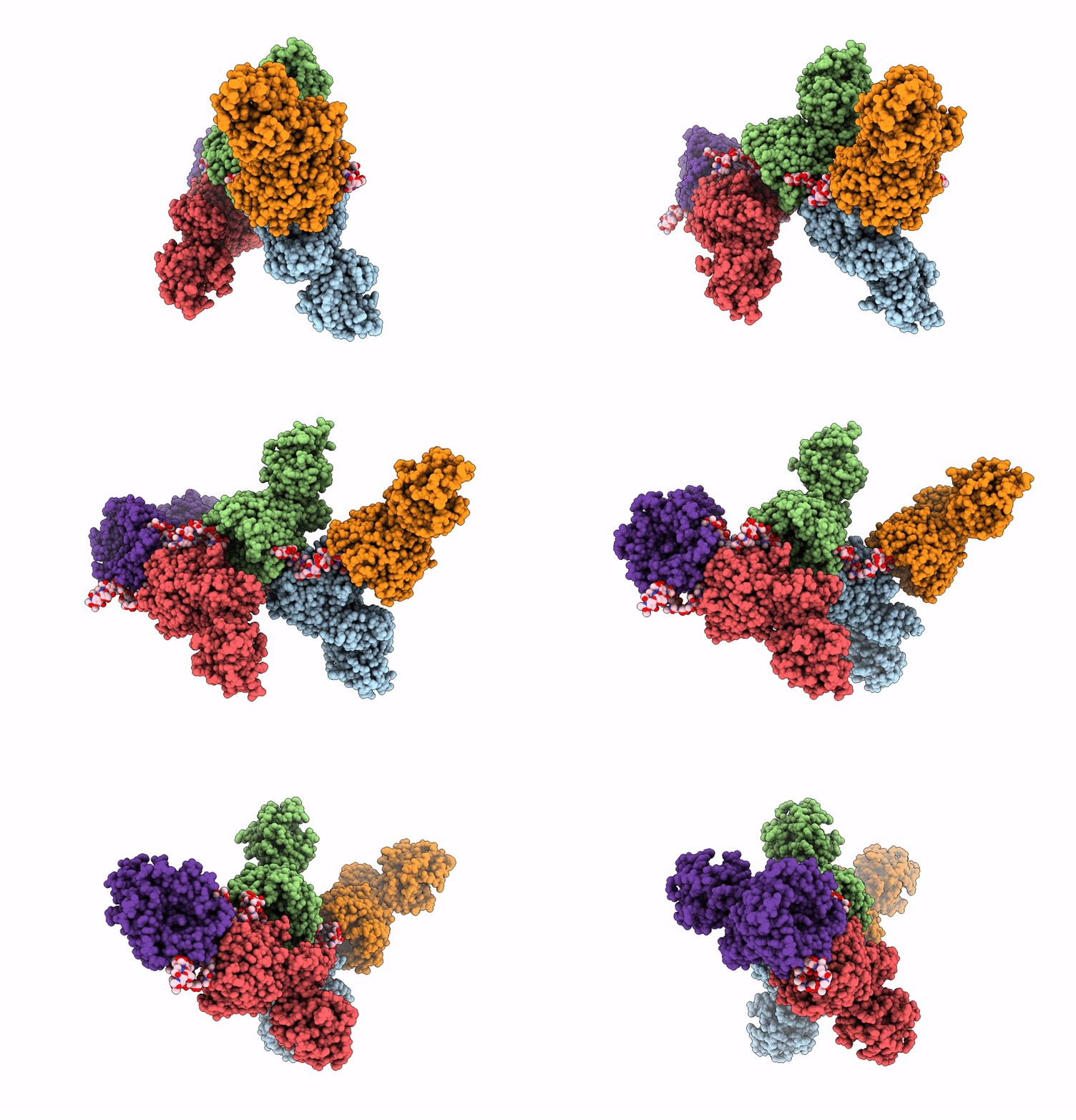
9OEE image
Deposition Date 2025-04-28
Release Date 2025-12-17
Last Version Date 2025-12-17
Entry Detail
PDB ID:
9OEE
Keywords:
Title:
S. griseus TUA bound UmbA4 complexes
Biological Source:
Source Organism(s):
Expression System(s):
Method Details:
Experimental Method:
Resolution:
3.40 Å
Aggregation State:
PARTICLE
Reconstruction Method:
HELICAL
Macromolecular Entities
Structures with similar UniProt ID
Protein Blast
Polymer Type:polypeptide(L)
Molecule:Secreted esterase
Gene (Uniprot):SCBAC19G2.08c
Chain IDs:A, B, C (auth: D), D (auth: F), E (auth: H)
Chain Length:696
Number of Molecules:5
Biological Source:Streptomyces coelicolor
Primary Citation
The unique architecture of umbrella toxins permits a two-tiered molecular bet-hedging strategy for interbacterial antagonism.
Cell ? ? ? (2025)
PMID: 41338195 DOI: 10.1016/j.cell.2025.10.044

Abstact

Bacteria exist in competitive and rapidly changing environments in which the nature of future threats cannot be easily predicted. Streptomyces coelicolor produces three antibacterial umbrella particles that harbor distinct polymorphic toxin domains and an overlapping set of six diversified lectins. Here, we show that the exquisite specificity of umbrella particles derives from lectin-mediated species-specific binding to previously undescribed hypervariable surface glycoconjugates. A cryo-electron microscopy (cryo-EM) structure of one such lectin in complex with its oligosaccharide substrate defines the molecular basis for targeting through the coordinated recognition of multiple glycan features. Biochemical and genetic studies of several target species, in conjunction with lectin-swapping experiments, support a model whereby S. coelicolor umbrella toxin diversification at the levels of lectin composition and toxin polymorphism represents a unique, two-tiered bet-hedging strategy. Bioinformatic analyses support this as a means by which the unusual architecture of umbrella toxins offers Streptomyces a generalizable strategy to antagonize an unpredictable array of competitors.

Legend

Protein

Chemical

Disease

Primary Citation of related structures
Feedback Form
Name
Email
Institute
Feedback