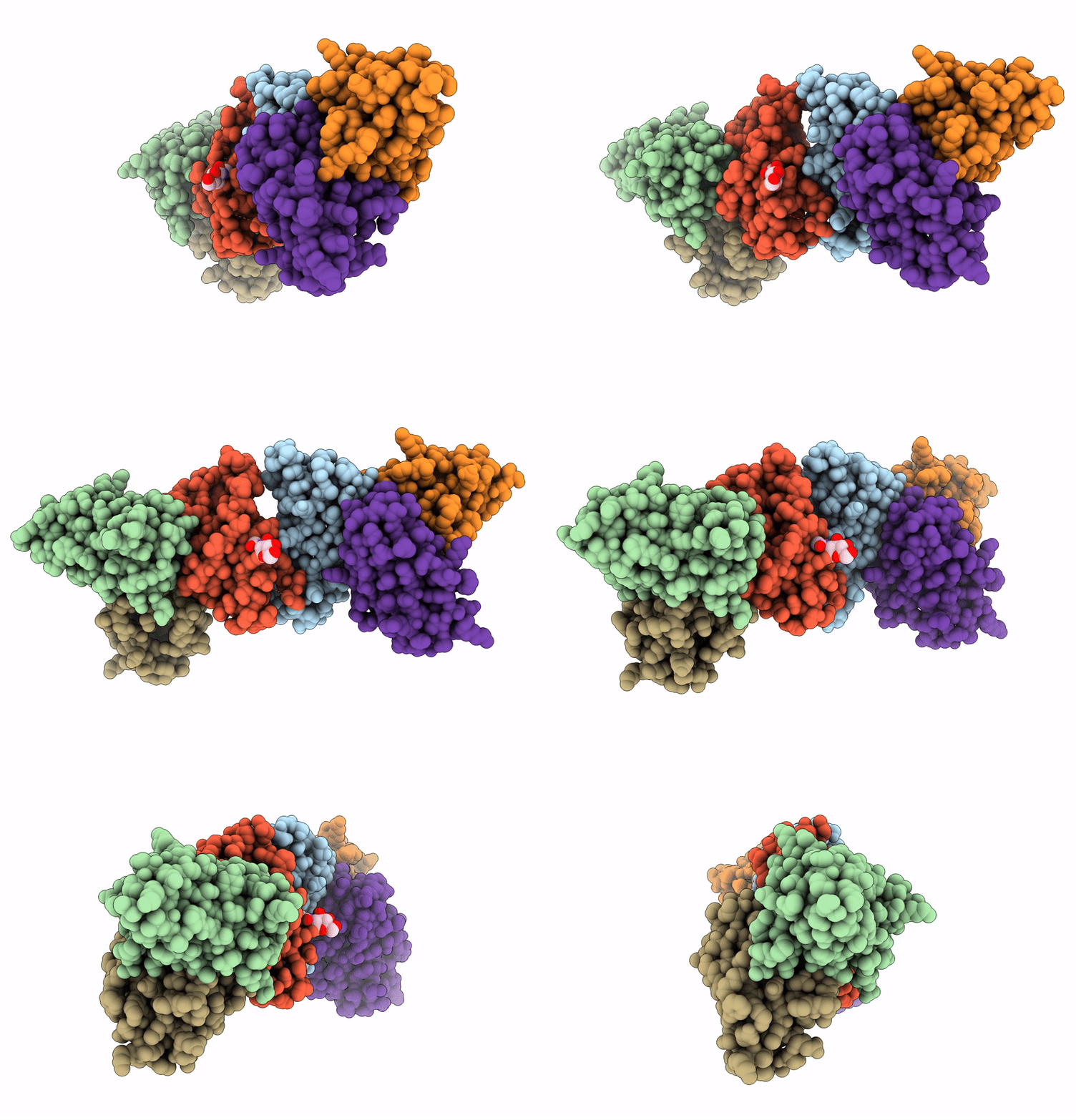
9ODB image
Deposition Date 2025-04-26
Release Date 2025-06-11
Last Version Date 2025-07-30
Entry Detail
PDB ID:
9ODB
Keywords:
Title:
Clone 2.1 Fab in complex with chicken IgY CH2 domain (local refinement)
Biological Source:
Source Organism(s):
Gallus gallus (Taxon ID: 9031)
Mus musculus (Taxon ID: 10090)
Expression System(s):
Method Details:
Experimental Method:
Resolution:
4.00 Å
Aggregation State:
PARTICLE
Reconstruction Method:
SINGLE PARTICLE
Macromolecular Entities
Structures with similar UniProt ID
Protein Blast
Polymer Type:polypeptide(L)
Molecule:chicken IgY heavy chain,Ig-like domain-containing protein
Chain IDs:A, F (auth: D)
Chain Length:561
Number of Molecules:2
Biological Source:Gallus gallus
Polymer Type:polypeptide(L)
Molecule:Clone 2.1 Fab heavy chain
Chain IDs:B (auth: H), D (auth: B)
Chain Length:239
Number of Molecules:2
Biological Source:Mus musculus
Polymer Type:polypeptide(L)
Molecule:Clone 2.1 Fab light chain
Chain IDs:C (auth: L), E (auth: C)
Chain Length:214
Number of Molecules:2
Biological Source:Mus musculus
Ligand Molecules
Primary Citation

Abstact

Darwinian evolution of immunoglobulin genes within germinal centers (GC) underlies the progressive increase in antibody affinity following antigen exposure. Whereas the mechanics of how competition between GC B cells drives increased affinity are well established, the dynamical evolutionary features of this process remain poorly characterized. We devised an experimental evolution model in which we "replay" over one hundred instances of a clonally homogenous GC reaction and follow the selective process by assigning affinities to all cells using deep mutational scanning. Our data reveal how GCs achieve predictable evolutionary outcomes through the cumulative effects of many rounds of imperfect selection, acting on a landscape shaped heavily by somatic hypermutation (SHM) targeting biases. Using time-calibrated models, we show that apparent features of GC evolution such as permissiveness to low-affinity lineages and early plateauing of affinity are best explained by survivorship biases that distort our view of how affinity progresses over time.

Legend

Protein

Chemical

Disease

Primary Citation of related structures
Feedback Form
Name
Email
Institute
Feedback