Planned Maintenance: Some services may turn out to be unavailable from 15th January, 2026 to 16th January, 2026. We apologize for the inconvenience!

9OC6 image
Deposition Date 2025-04-23
Release Date 2025-11-19
Last Version Date 2025-12-24
Entry Detail
PDB ID:
9OC6
Keywords:
Title:
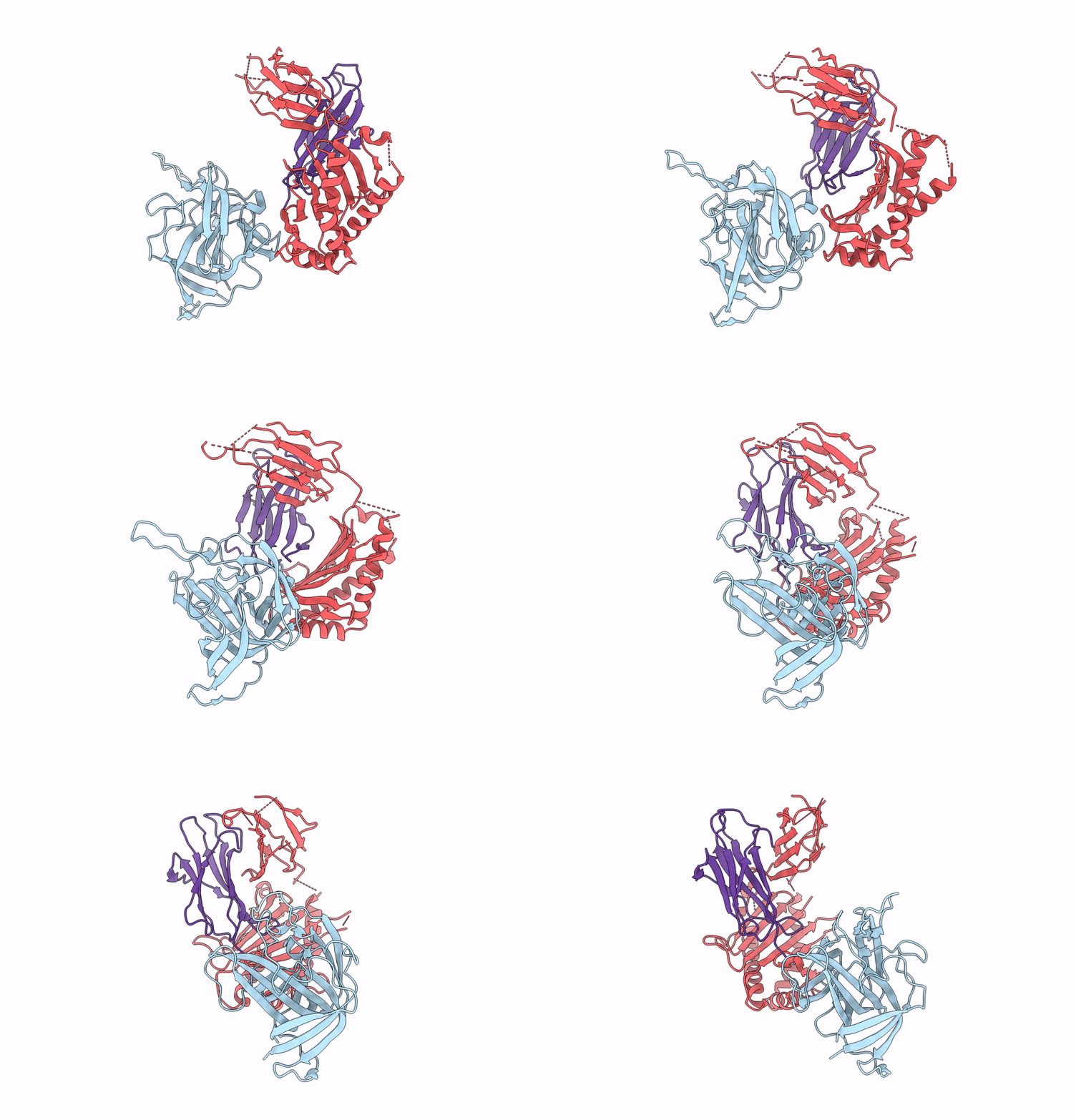
Crystal structure of receptor FcRn bound to Human Astrovirus 6 spike
Method Details:
Experimental Method:
Resolution:
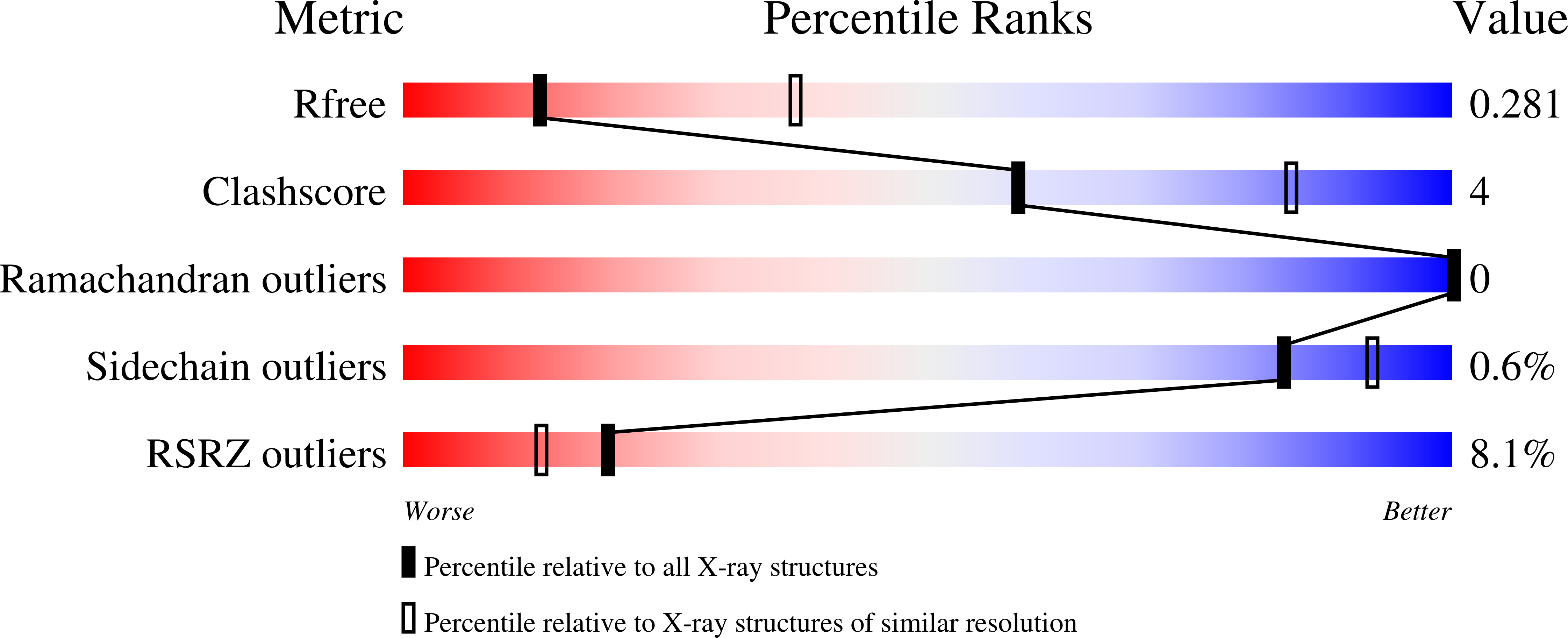
2.97 Å
R-Value Free:
0.28
R-Value Work:
0.22
R-Value Observed:
0.23
Space Group:
C 1 2 1
Macromolecular Entities
Structures with similar UniProt ID
Protein Blast
Polymer Type:polypeptide(L)
Molecule:Capsid polyprotein VP90
Gene (Uniprot):ORF2
Chain IDs:C (auth: A)
Chain Length:244
Number of Molecules:1
Biological Source:Human astrovirus 6
Structures with similar UniProt ID
Protein Blast
Polymer Type:polypeptide(L)
Molecule:IgG receptor FcRn large subunit p51
Gene (Uniprot):FCGRT
Chain IDs:A (auth: C)
Chain Length:274
Number of Molecules:1
Biological Source:Homo sapiens
Structures with similar UniProt ID
Protein Blast
Polymer Type:polypeptide(L)
Molecule:Beta-2-microglobulin
Gene (Uniprot):B2M
Chain IDs:B (auth: D)
Chain Length:99
Number of Molecules:1
Biological Source:Homo sapiens
Ligand Molecules
Primary Citation
Structural hijacking of FcRn by human astrovirus spikes reveals conserved epitopes for broad-spectrum antivirals.
Cell Rep 44 116679 116679 (2025)
PMID: 41389202 DOI: 10.1016/j.celrep.2025.116679

Abstact

Human astroviruses (HAstVs) are a leading cause of pediatric gastroenteritis and emerging systemic infections; however, no targeted therapies exist. A critical barrier to intervention has been the lack of molecular insights into viral entry, particularly the interaction between the HAstV capsid spike and its receptor, the neonatal Fc receptor (FcRn). Here, we report crystal structures of the HAstV spike from classical serotypes 2 and 6 in complex with human FcRn at 3 Å resolution, defining a conserved receptor-binding interface at atomic resolution. These structures reveal serotype-specific variations that dictate receptor affinity and demonstrate that reported neutralizing antibodies can inhibit infection by sterically blocking the receptor-binding site. Mapping conserved epitopes across classical HAstV serotypes provides a blueprint for designing broad-spectrum antivirals that disrupt viral entry. Notably, our structural data rationalize the potential repurposing of clinical FcRn inhibitors, such as nipocalimab, to block HAstV infection, bridging critical gaps in astrovirus biology and antiviral development.

Legend

Protein

Chemical

Disease

Primary Citation of related structures
Feedback Form
Name
Email
Institute
Feedback