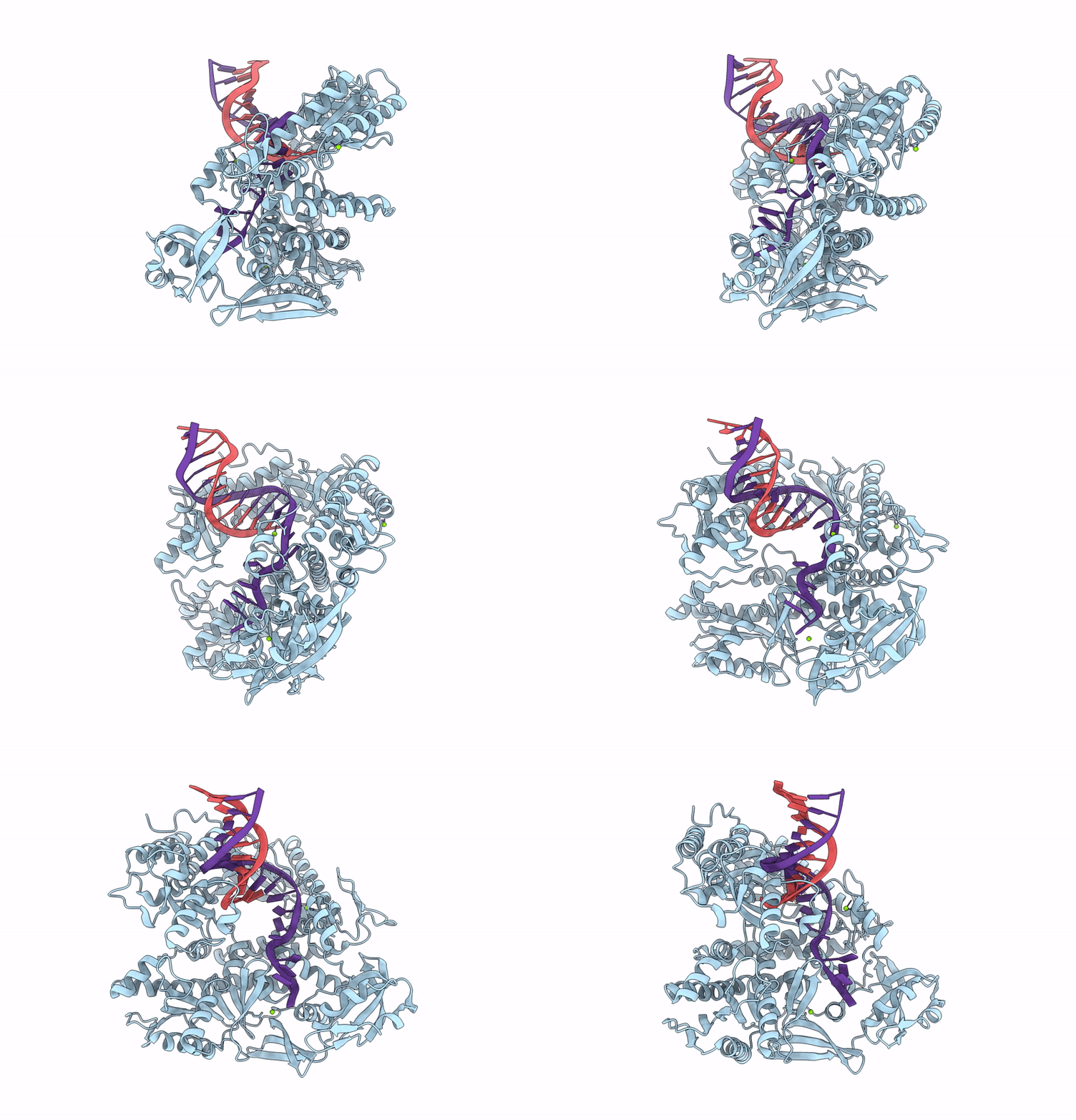
9OAV image
Deposition Date 2025-04-21
Release Date 2025-12-10
Last Version Date 2026-02-04
Entry Detail
PDB ID:
9OAV
Keywords:
Title:
TNA polymerase, 8-64, binary complex
Biological Source:
Source Organism(s):
Expression System(s):
Method Details:
Experimental Method:
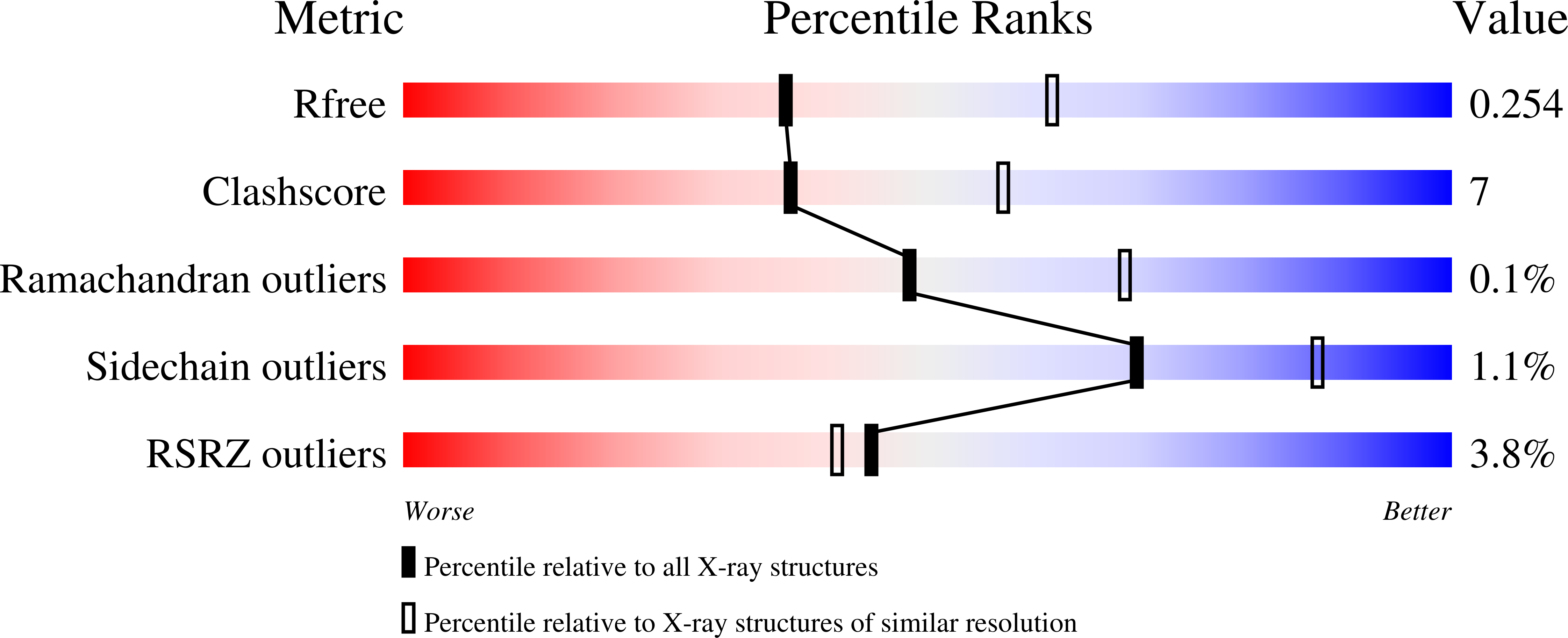
Resolution:
2.50 Å
R-Value Free:
0.25
R-Value Work:
0.22
R-Value Observed:
0.23
Space Group:
P 21 21 21
Macromolecular Entities
Structures with similar UniProt ID
Protein Blast
Polymer Type:polypeptide(L)
Molecule:8-64, TNA polymerase
Chain IDs:A
Chain Length:775
Number of Molecules:1
Biological Source:Thermococcus kodakarensis
Polymer Type:polydeoxyribonucleotide
Molecule:Primer
Chain IDs:C (auth: P)
Chain Length:13
Number of Molecules:1
Biological Source:synthetic construct
Polymer Type:polydeoxyribonucleotide
Molecule:Template
Chain IDs:B (auth: T)
Chain Length:18
Number of Molecules:1
Biological Source:synthetic construct
Ligand Molecules
Primary Citation
Directed evolution of a TNA polymerase identifies independent paths to fidelity and catalysis.
Nat Commun 17 925 925 (2025)
PMID: 41413390 DOI: 10.1038/s41467-025-67652-1

Abstact

Directed evolution facilitates functional adaptations through stepwise changes in sequence that alter protein structure. While most campaigns yield solutions that maintain the framework of a rigid protein architecture, a few have produced enzymes with more notable structural differences. One example is a polymerase that was evolved to synthesize threose nucleic acid (TNA) with near-natural activity. Understanding how this enzyme arose provides a model for studying pathways that guide enzymes toward more productive regions of the fitness landscape. Here, we trace the evolutionary trajectory of an unnatural polymerase by solving crystal structures of key intermediates along the pathway and evaluating their biochemical activity. Contrary to the view that fidelity is a product of increased catalytic efficiency, we find that accuracy and catalysis are decoupled activities guided by separate ground-state and transition-state discrimination events. Together, these results offer a glimpse into the forces responsible for shaping the emergence of new enzyme functions.

Legend

Protein

Chemical

Disease

Primary Citation of related structures
Feedback Form
Name
Email
Institute
Feedback