9OAL image
Deposition Date 2025-04-21
Release Date 2025-12-31
Last Version Date 2026-01-14
Entry Detail
PDB ID:
9OAL
Keywords:
Title:
Cryo-EM structure of EBV gB prefusion construct C3-GT
Biological Source:
Source Organism(s):
Expression System(s):
Method Details:
Experimental Method:
Resolution:
3.10 Å
Aggregation State:
PARTICLE
Reconstruction Method:
SINGLE PARTICLE
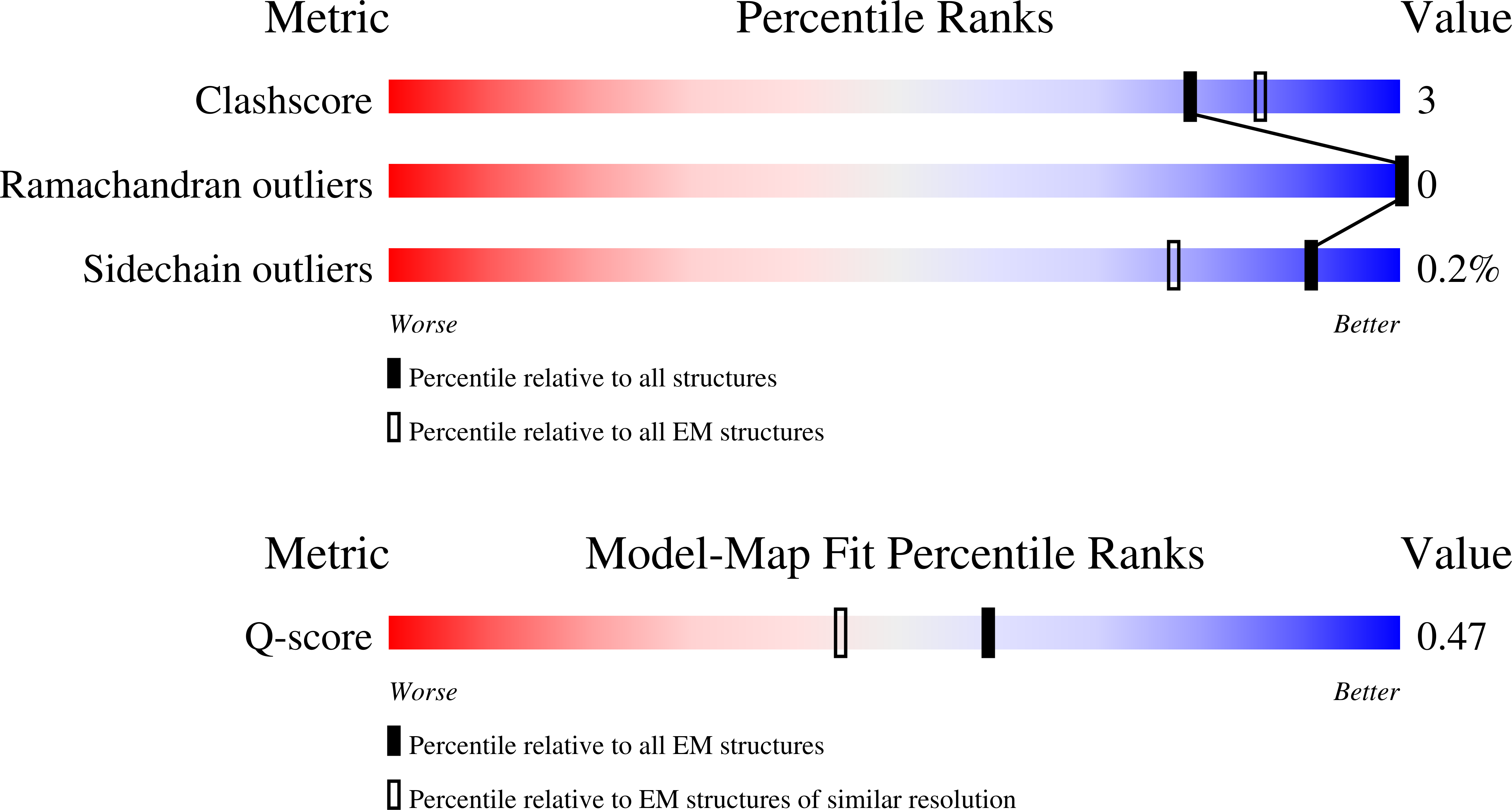
Macromolecular Entities
Structures with similar UniProt ID
Protein Blast
Polymer Type:polypeptide(L)
Molecule:Envelope glycoprotein B
Gene (Uniprot):gB
Mutagens:I89C, W112H, Y113R, W193R, L194V, I195E, W196A, A175C, D220E, H316I, D320Q, S325L, R428G, R429G, R439S, R431G, R432G, L628GCG, E634C
Chain IDs:A, B, C
Chain Length:775
Number of Molecules:3
Biological Source:human gammaherpesvirus 4
Ligand Molecules
Primary Citation
Structure and immunogenicity of an engineered soluble prefusion-stabilized EBV gB antigen.
Nat Commun ? ? ? (2026)
PMID: 41484092 DOI: 10.1038/s41467-025-67969-x

Abstact

Epstein-Barr virus (EBV), the causative agent of mononucleosis, is linked to over 140,000 annual cancer-related deaths globally and increases the risk of multiple sclerosis by up to 32-fold. As a herpesvirus, EBV establishes lifelong infection, and over 90% of U.S. adults are EBV-seropositive. Despite its significant disease burden, no approved EBV vaccines or therapeutics exist. Among EBV envelope glycoproteins, the fusion protein (gB) is strictly required for epithelial and B cell infection. Here, using a combination of AlphaFold-guided modeling, rational design, and ThermoMPNN-informed optimization, we engineer a stabilized prefusion gB variant, C3-GT. This construct incorporates two inter-protomeric disulfide bonds and three cavity-filling substitutions, resulting in a melting temperature of 54 °C. Cryo-EM analysis of this construct reveals the prefusion structure of EBV gB, providing insights into the structural transitions required to adopt the postfusion conformation. Murine immunizations and depletion studies with human sera suggest a trend toward improved functional immunogenicity of C3-GT compared to postfusion gB. Collectively, these studies define engineering principles to stabilize class III fusion proteins, provide reagents to interrogate the human antibody response to EBV gB, and lay a foundation for further studies to develop EBV gB-based vaccine candidates.

Legend

Protein

Chemical

Disease

Primary Citation of related structures
Feedback Form
Name
Email
Institute
Feedback