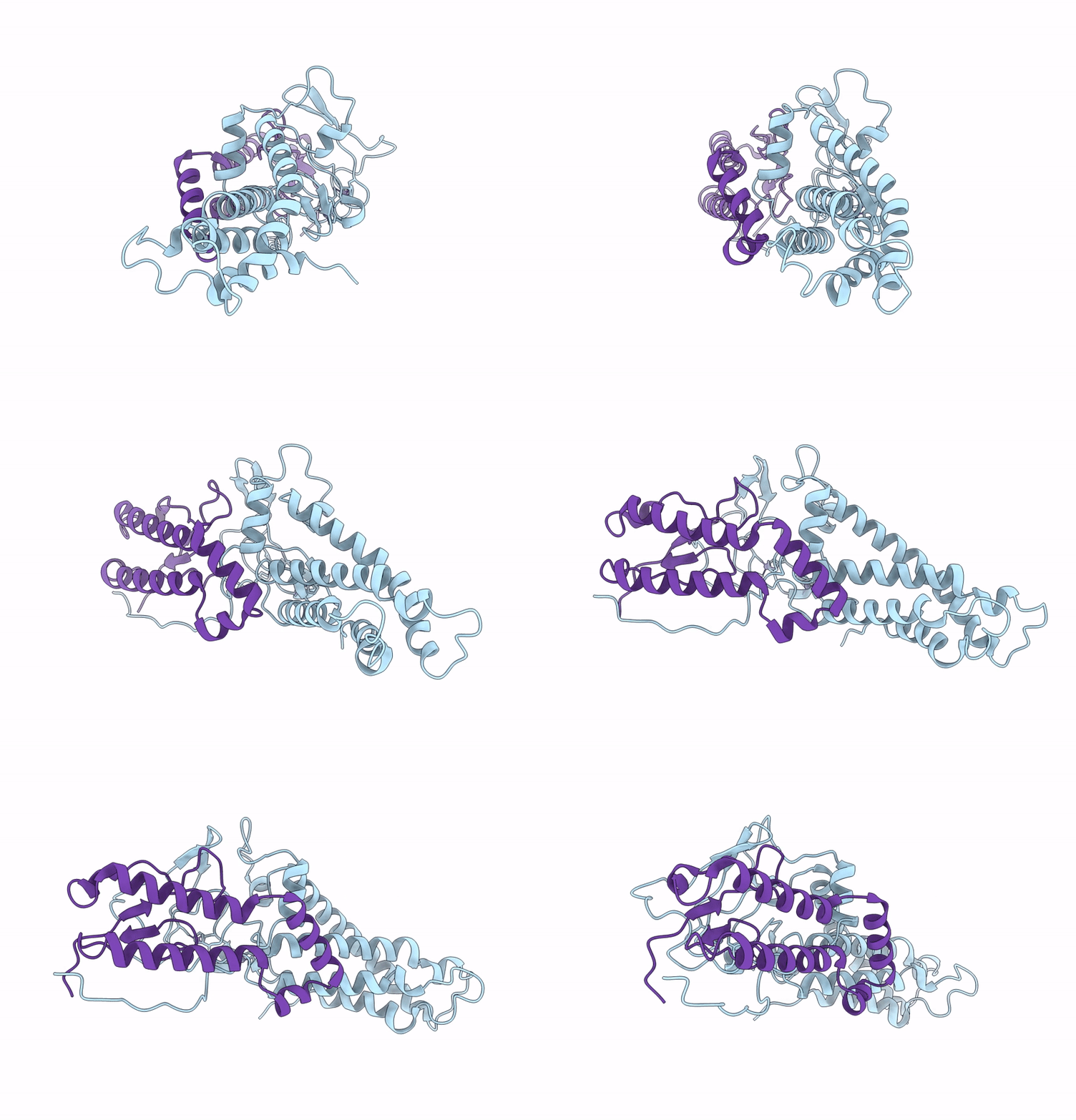
9OA6 image
Deposition Date 2025-04-19
Release Date 2025-10-22
Last Version Date 2025-10-22
Entry Detail
PDB ID:
9OA6
Keywords:
Title:
Cryo-EM structure of the Zdhhc5-GOLGA7 complex
Biological Source:
Source Organism:
Homo sapiens (Taxon ID: 9606)
Mus musculus (Taxon ID: 10090)
Host Organism:
Method Details:
Experimental Method:
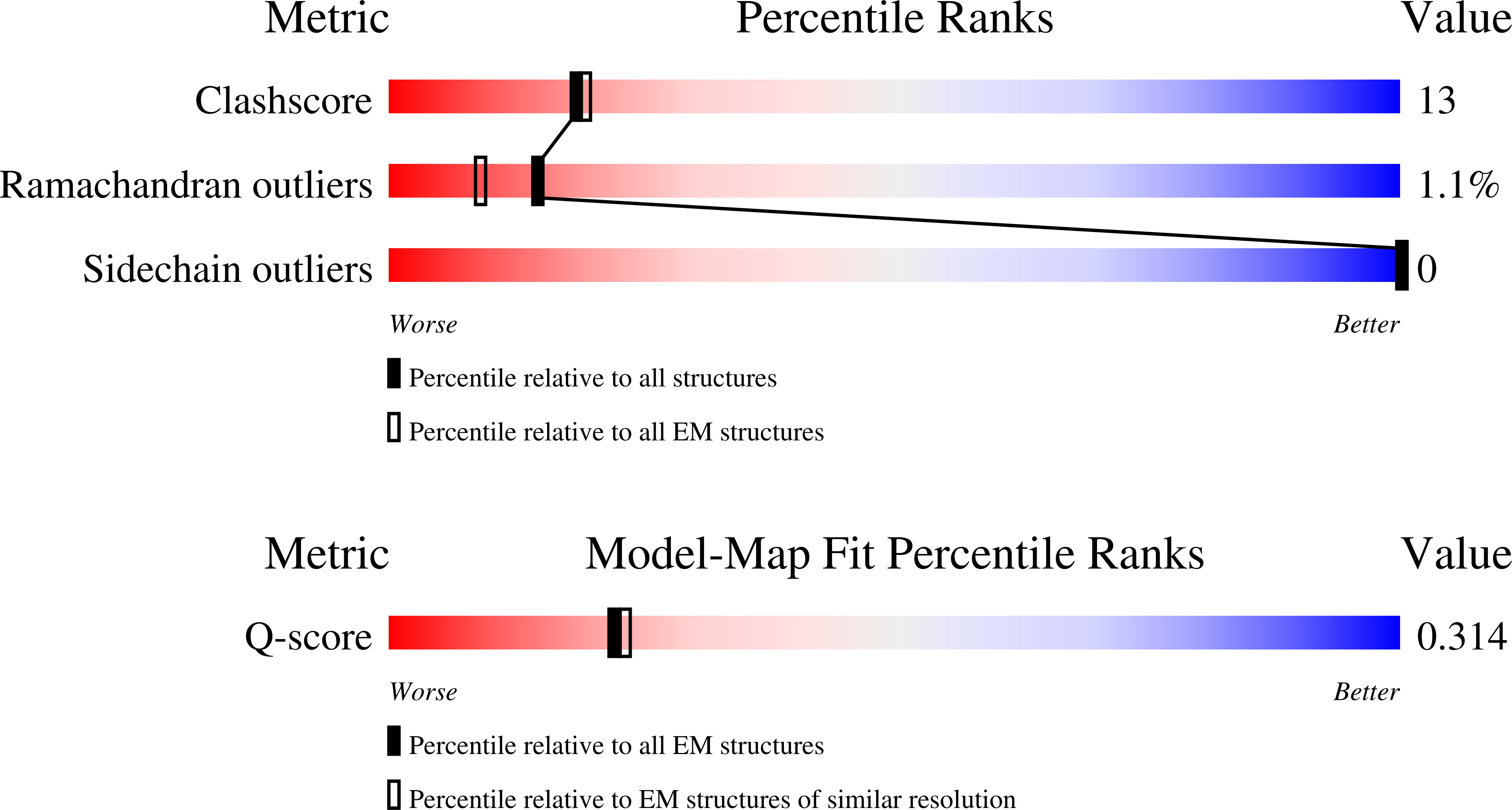
Resolution:
3.90 Å
Aggregation State:
PARTICLE
Reconstruction Method:
SINGLE PARTICLE
Macromolecular Entities
Structures with similar UniProt ID
Protein Blast
Polymer Type:polypeptide(L)
Molecule:Palmitoyltransferase ZDHHC5
Gene (Uniprot):Zdhhc5
Chain IDs:B (auth: A)
Chain Length:718
Number of Molecules:1
Biological Source:Mus musculus
Structures with similar UniProt ID
Protein Blast
Polymer Type:polypeptide(L)
Molecule:Golgin subfamily A member 7
Gene (Uniprot):GOLGA7
Chain IDs:A (auth: B)
Chain Length:153
Number of Molecules:1
Biological Source:Homo sapiens
Ligand Molecules
Primary Citation
Functional dissection of the zDHHC palmitoyltransferase 5-golgin A7 palmitoylation complex.
J.Biol.Chem. 301 110694 110694 (2025)
PMID: 40930250 DOI: 10.1016/j.jbc.2025.110694

Abstact

Small molecules serve as valuable tools for probing nonapoptotic cell death mechanisms. The small molecule caspase independent lethal 56 (CIL56) induces a unique form of nonapoptotic cancer cell death that is promoted by a complex formed between zDHHC palmitoyltransferase 5 (ZDHHC5) and an accessory protein, golgin A7 (GOLGA7, also known as GCP16). The structure and function of this complex in nonapoptotic cell death regulation remain poorly understood. Here, we use coimmunoprecipitation, functional assays, and cryogenic electron microscopy (cryo-EM) to elucidate the structure and function of the Zdhhc5-GOLGA7 complex. We identify key residues in both Zdhhc5 and GOLGA7 that are necessary for complex formation and to promote nonapoptotic cancer cell death in response to caspase independent lethal 56. These results provide new insights into the structure and function of a death-promoting protein complex.

Legend

Protein

Chemical

Disease

Primary Citation of related structures
Feedback Form
Name
Email
Institute
Feedback