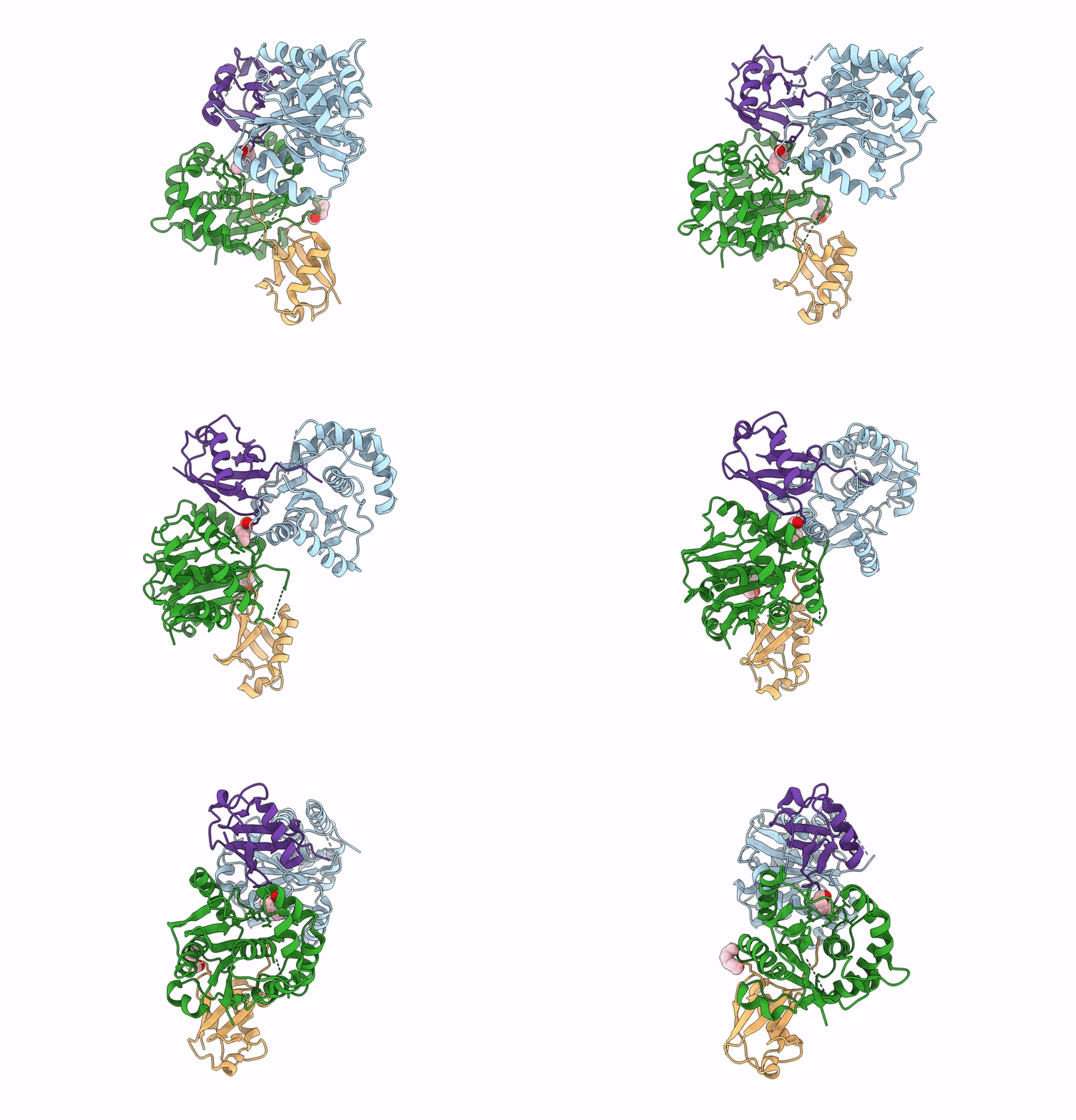
9O4M image
Deposition Date 2025-04-08
Release Date 2025-07-30
Last Version Date 2025-12-03
Entry Detail
PDB ID:
9O4M
Keywords:
Title:
Crystal structure of Ubiquitin Carboxy Terminal Hydrolase L1 Q209C mutant covalently crosslinked to ubiquitin genetically encoded with N6-(6-bromohexanoyl)-L-lysine
Biological Source:
Source Organism:
Homo sapiens (Taxon ID: 9606)
Host Organism:
Method Details:
Experimental Method:
Resolution:
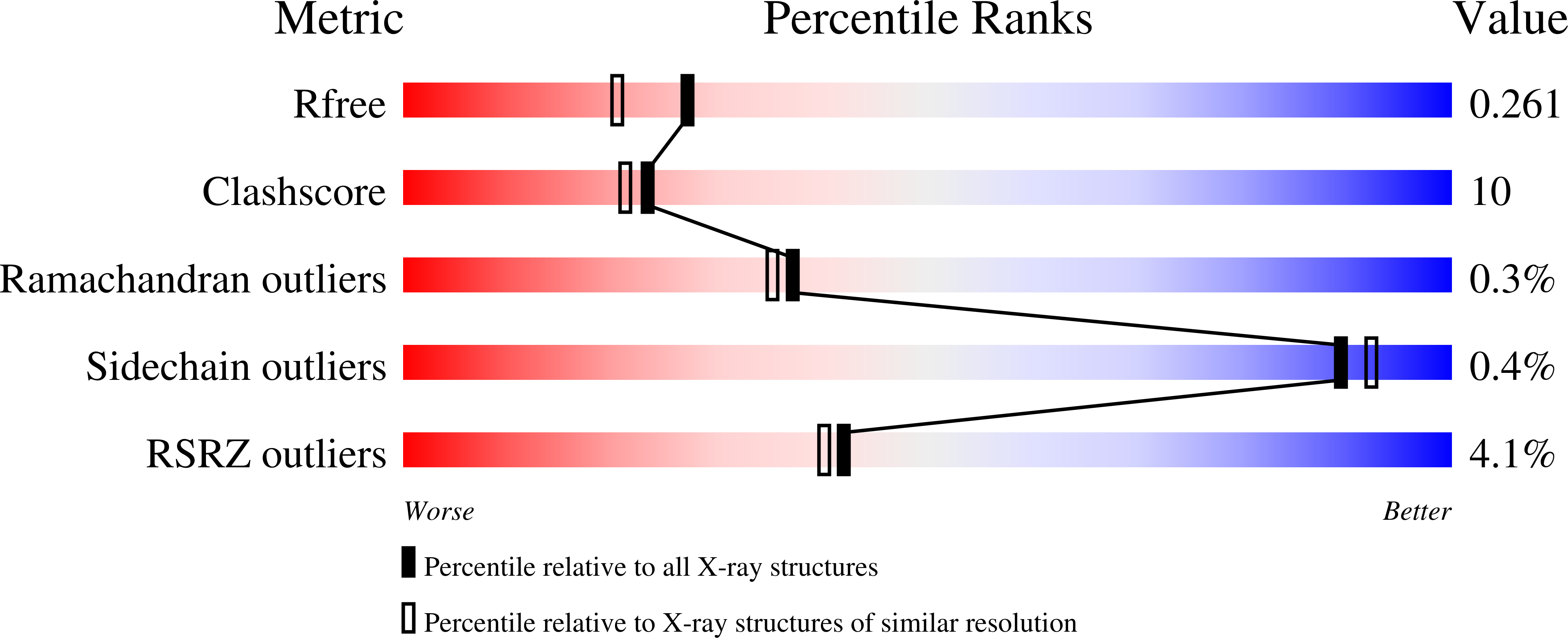
2.00 Å
R-Value Free:
0.26
R-Value Work:
0.22
R-Value Observed:
0.22
Space Group:
P 32 2 1
Macromolecular Entities
Structures with similar UniProt ID
Protein Blast
Polymer Type:polypeptide(L)
Molecule:Ubiquitin carboxyl-terminal hydrolase isozyme L1
Gene (Uniprot):UCHL1
Mutagens:Q209C
Chain IDs:C (auth: A), D (auth: B)
Chain Length:223
Number of Molecules:2
Biological Source:Homo sapiens
Structures with similar UniProt ID
Protein Blast
Polymer Type:polypeptide(L)
Molecule:Polyubiquitin-C
Gene (Uniprot):UBC
Chain IDs:A (auth: C), B (auth: D)
Chain Length:76
Number of Molecules:2
Biological Source:Homo sapiens
Ligand Molecules
Primary Citation
Internal Ubiquitin Electrophiles for Covalent Trapping and Inhibition of Deubiquitinases.
Chembiochem 26 e202500318 e202500318 (2025)
PMID: 40626928 DOI: 10.1002/cbic.202500318

Abstact

The ubiquitin (Ub) system governs vital cellular processes in eukaryotic biology through an intricate network of Ub-protein interactions. While semisynthetic C-terminal Ub electrophiles (UbEs) are widely used to study Ub transfer and deubiquitinase (Dub) activity, they are limited to probing the active site while leaving other functionally important sites unexplored. Building on previously identified multivalent interaction interfaces and potential allosteric sites which are key to understanding their dynamic nature, here we report the development of genetically encoded Ub-based probes to covalently tether Ub-protein interactions in a proximity driven manner at distal locations away from the active site. This study demonstrates that UbEs with internal electrophiles maintain conformational changes observed with their C-terminal counterparts while circumventing their limitations in capturing distal binding-site complexes, an emerging feature in Ub-mediated regulation. Genetically encoding these electrophiles further demonstrate rational variation as activity-based probes (ABP), leading to a Met1-diUb ABP showing preference for OTULIN over other Met1 cleaving Dubs. Taken together, our study introduces genetically encoded Ub-based probes to explore the structural and biochemical significance of Ub-Dub interactions beyond the canonical S1 site, overcoming some limitations of traditional Ub C-terminal electrophiles.

Legend

Protein

Chemical

Disease

Primary Citation of related structures
Feedback Form
Name
Email
Institute
Feedback