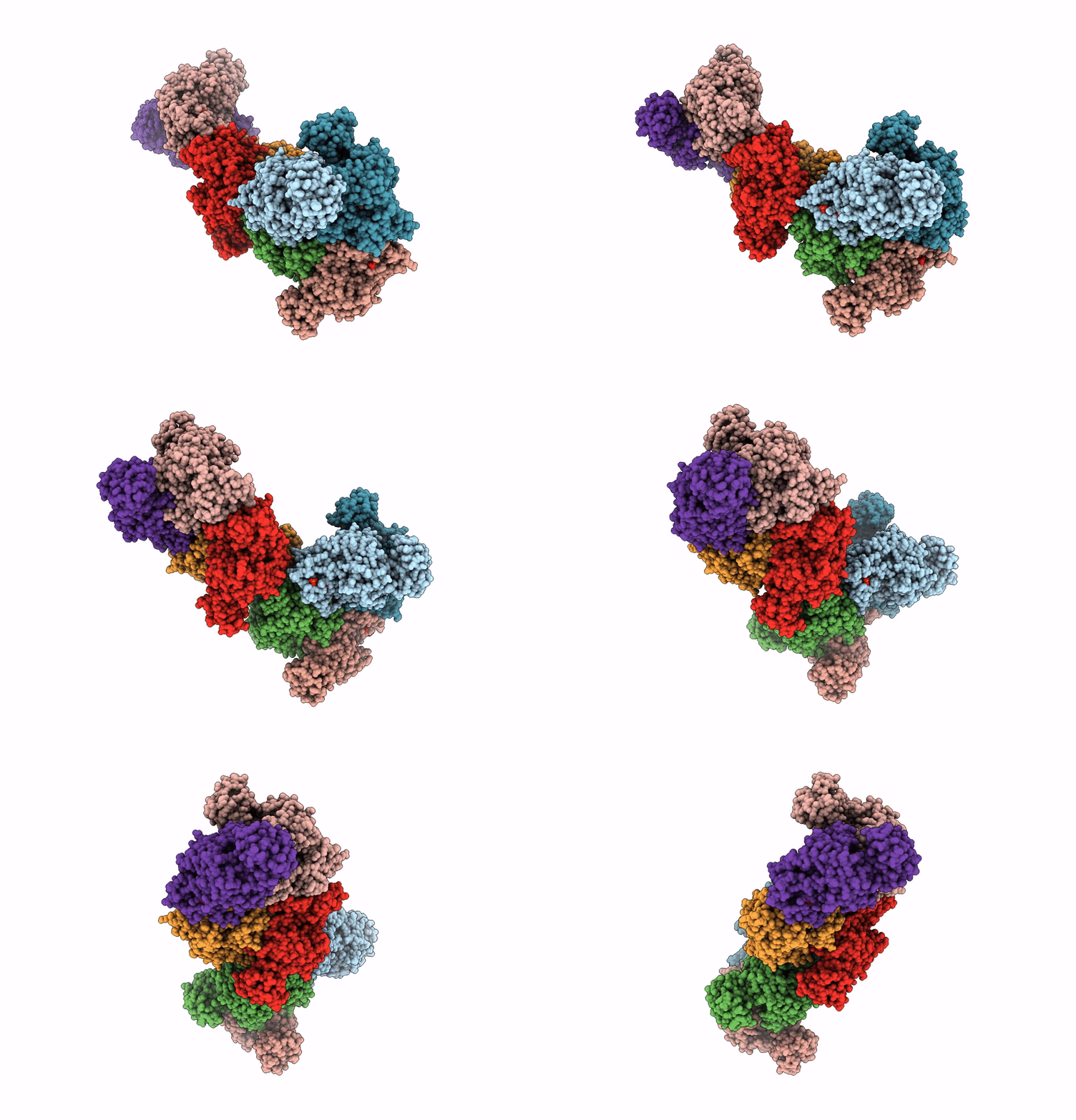
9O3B image
Deposition Date 2025-04-07
Release Date 2025-08-13
Last Version Date 2025-08-13
Entry Detail
PDB ID:
9O3B
Keywords:
Title:
PKM2 bound to MCTI-566
Biological Source:
Source Organism:
Homo sapiens (Taxon ID: 9606)
Host Organism:
Method Details:
Experimental Method:
Resolution:
2.42 Å
R-Value Free:
0.22
R-Value Work:
0.18
R-Value Observed:
0.18
Space Group:
P 1

Macromolecular Entities
Structures with similar UniProt ID
Protein Blast
Polymer Type:polypeptide(L)
Molecule:Pyruvate kinase PKM
Gene (Uniprot):PKM
Chain IDs:A, B, C, D, E, F, G, H
Chain Length:550
Number of Molecules:8
Biological Source:Homo sapiens
Primary Citation
A Novel, Long-Acting, Small Molecule PKM2 Activator and Its Potential Broad Application Against Photoreceptor Degeneration.
Transl Vis Sci Technol 14 26 26 (2025)
PMID: 40742037 DOI: 10.1167/tvst.14.7.26

Abstact

PURPOSE Activating pyruvate kinase M2 (PKM2) has been shown to be neuroprotective in preclinical models of photoreceptor degeneration. We recently developed novel, small molecule activators for ocular delivery. Here, we sought to characterize the ocular pharmacology, toxicity, and efficacy of MCTI-566, a novel PKM2 activator, to translate this therapeutic strategy to the clinic. METHODS X-ray protein crystallography and isothermal titration calorimetry assessed the interaction of MCTI-566 with PKM2. PKM2 activation and tissue pharmacokinetics were examined after intravitreal or systemic administration of MCTI-566. Retinal toxicity was evaluated in rats after intravitreal injection. The effect of MCTI-566 on photoreceptor death was assessed using in vitro and in vivo models of outer retinal stress and on the inflammatory response in the rd10 retina using flow cytometry and quantitative real-time polymerase chain reaction. RESULTS The PKM2-MCTI-566 co-crystal structure demonstrated a binding pocket distinct from endogenous activators. MCTI-566 increases retinal PK activity 200% following intravitreal or systemic administration. MCTI-566 distributed to the retina after intravitreal or systemic administration, activated the target for ≥90 days and was specific for photoreceptor PKM2. No retinal toxicity was observed after repeated intravitreal administration. MCTI-566 reduced photoreceptor apoptosis in a model of retinal detachment, and delayed photoreceptor degeneration and altered the inflammatory response in the rd10 retina. CONCLUSIONS MCTI-566 is a small molecule drug candidate for photoreceptor neuroprotection. TRANSLATIONAL RELEVANCE MCTI-566, a long-acting and well-tolerated ocular PKM2 activator, may be a potential therapeutic to combat currently untreatable retinal degenerations.

Legend

Protein

Chemical

Disease

Primary Citation of related structures
Feedback Form
Name
Email
Institute
Feedback