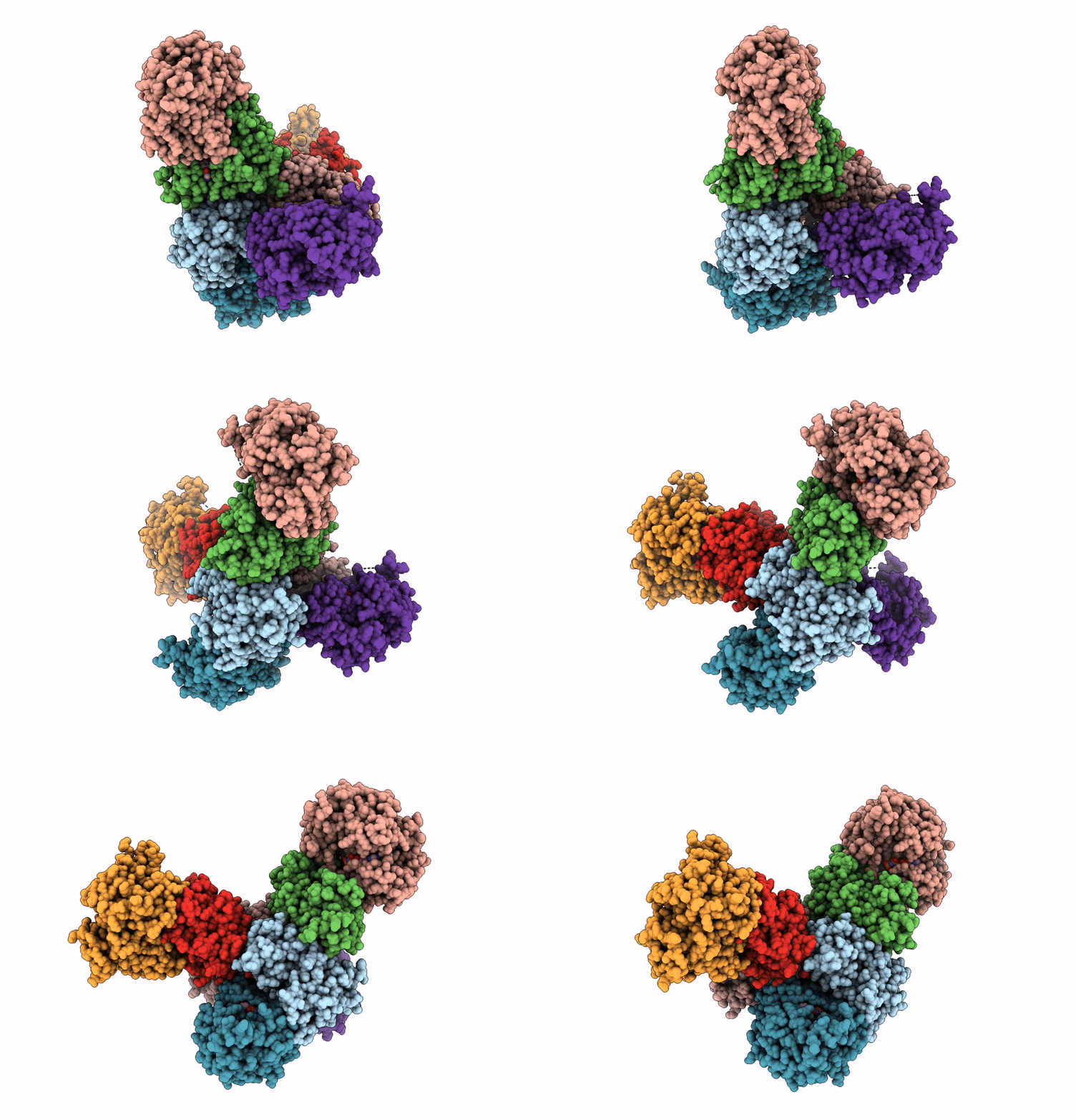
9O0V image
Deposition Date 2025-04-03
Release Date 2025-10-15
Last Version Date 2025-11-19
Entry Detail
PDB ID:
9O0V
Keywords:
Title:
Crystal structure of CRAF/MEK1 complex with PLX4720, CH5126766, and AMPPNP
Biological Source:
Source Organism:
Homo sapiens (Taxon ID: 9606)
Host Organism:
Method Details:
Experimental Method:
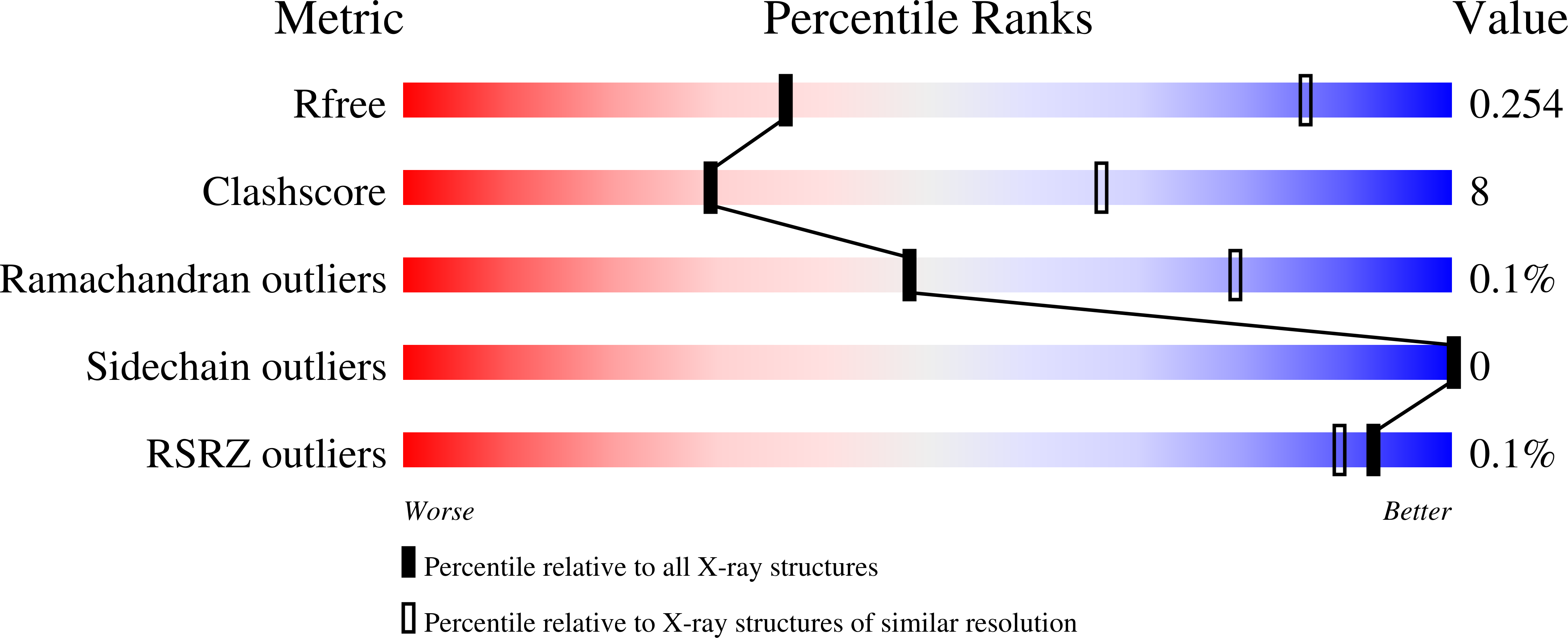
Resolution:
3.50 Å
R-Value Free:
0.25
R-Value Work:
0.20
R-Value Observed:
0.20
Space Group:
P 65 2 2
Macromolecular Entities
Structures with similar UniProt ID
Protein Blast
Polymer Type:polypeptide(L)
Molecule:RAF proto-oncogene serine/threonine-protein kinase
Gene (Uniprot):RAF1
Mutagens:Y340D, Y341D
Chain IDs:A, C, E, G
Chain Length:280
Number of Molecules:4
Biological Source:Homo sapiens
Structures with similar UniProt ID
Protein Blast
Polymer Type:polypeptide(L)
Molecule:Dual specificity mitogen-activated protein kinase kinase 1
Gene (Uniprot):MAP2K1
Mutagens:S218A, S222A
Chain IDs:B, D, F, H
Chain Length:395
Number of Molecules:4
Biological Source:Homo sapiens
Primary Citation
Characterization and inhibitor sensitivity of ARAF, BRAF, and CRAF kinases.
J.Biol.Chem. 301 110800 110800 (2025)
PMID: 41072765 DOI: 10.1016/j.jbc.2025.110800

Abstact

The RAS-RAF-MEK-ERK signaling pathway controls cellular growth and proliferation, and mutational activation of this pathway is a frequent cause of cancer. Most prominently, the V600E mutation in BRAF causes malignant melanoma, papillary thyroid cancer and other malignancies. Rare but recurrent activating mutations in the other two RAF isoforms, ARAF and CRAF, have also been identified in diverse cancers. Distinct classes of RAF inhibitors have been developed, particularly for BRAFV600E, but their potencies against the three RAF isoforms have not been systematically compared. Here we biochemically characterize monomeric and dimeric preparations of ARAF, BRAF, and CRAF kinases and measure the potencies of a panel of thirteen type I, type I.5, and type II RAF inhibitors against each active RAF preparation. Type I inhibitor SB590885 is roughly equipotent across RAF isoforms and, as expected, type I.5 inhibitors are typically most potent against BRAFV600E. Despite their reputation as pan-RAF inhibitors, type II inhibitors as a class are potent inhibitors of CRAF but exhibit relative sparing of ARAF and intermediate potencies against BRAF. Type II compounds inhibit BRAF and CRAF with marked positive cooperativity, and their apparent potencies are insensitive to ATP-concentrations. Crystal structures of CRAF in complex with type I.5 inhibitor PLX4720 reveal an asymmetric CRAF dimer with one CRAF subunit bound in the inactive state and the second bound in an αC-helix-in, active conformation with an altered inhibitor pose. Our findings have important implications for understanding the pharmacology of current RAF inhibitors and will inform development of new agents with distinct isoform selectivity.

Legend

Protein

Chemical

Disease

Primary Citation of related structures
Feedback Form
Name
Email
Institute
Feedback