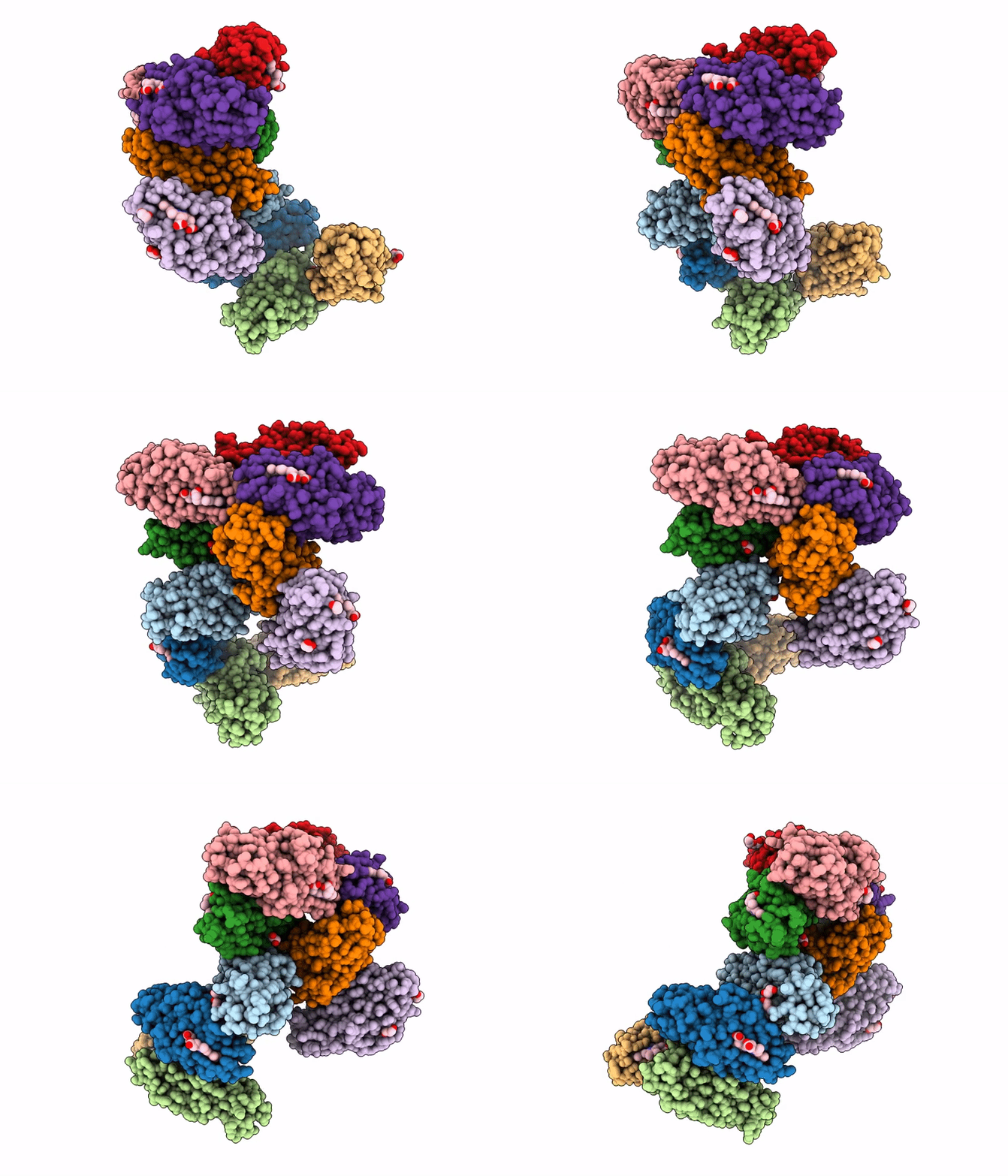
9O0J image
Deposition Date 2025-04-02
Release Date 2025-09-03
Last Version Date 2025-10-08
Entry Detail
PDB ID:
9O0J
Title:
HtaA CR1 domain from Corynebacterium diphtheriae
Biological Source:
Source Organism:
Host Organism:
Method Details:
Experimental Method:
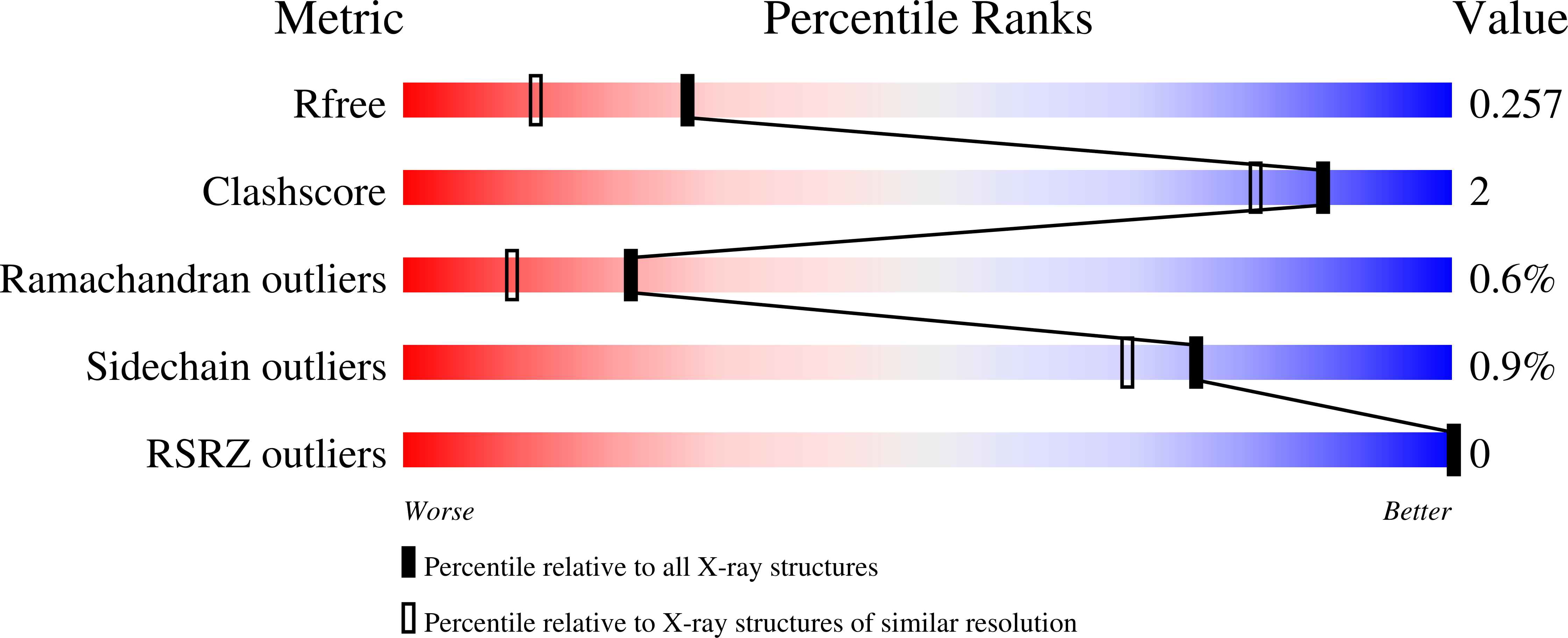
Resolution:
1.88 Å
R-Value Free:
0.24
R-Value Work:
0.21
R-Value Observed:
0.22
Space Group:
C 1 2 1
Macromolecular Entities
Structures with similar UniProt ID
Protein Blast
Polymer Type:polypeptide(L)
Molecule:Membrane protein HtaACR1
Gene (Uniprot):DIP0625
Chain IDs:A, B, C, D, E, F, G, H, I, J
Chain Length:178
Number of Molecules:10
Biological Source:Corynebacterium diphtheriae NCTC 13129
Primary Citation
Structural basis of heme scavenging by the ChtA and HtaA hemophores in Corynebacterium diphtheriae.
J.Biol.Chem. 301 110633 110633 (2025)
PMID: 40876592 DOI: 10.1016/j.jbc.2025.110633

Abstact

Corynebacterium diphtheriae causes diphtheria, a potentially fatal infectious disease that damages tissues in the upper respiratory tract. In order to proliferate, this pathogen acquires the essential nutrient iron from heme (iron-protoporphyrin IX) primarily found in human hemoglobin (Hb). C. diphtheriae secretes ChtA and HtaA hemophore proteins that bind ferric heme (hemin) via Conserved Region (CR) domains. Here we demonstrate that their CR domains scavenge hemin after it is spontaneously released from Hb, and define the structural basis of hemin binding to ChtA and the N-terminal CR domain from HtaA by determining X-ray crystal structures of their protein-hemin complexes. Resonance Raman and EPR experiments demonstrate that the CR domains from ChtA and HtaA engage in pentacoordinate hemin binding through a conserved iron-tyrosyl linkage, though variations in their hemin pockets alter the way they stabilize the axial tyrosine and mask hemin's metal. The importance of these interactions is probed using isothermal titration calorimetry experiments, which represent the first quantitative assessment of CR-hemin affinity and reveal that ChtA binds hemin via an enthalpically driven process. Hemin partitioning experiments using native mass spectrometry demonstrate that the cohort of CR domains within C. diphtheriae's hemin-uptake system have dissociation constants for hemin between 0.8 to 22 nM, raising the possibility that affinity differences contribute to the directional flow of hemin into the cell. Collectively, the results of this work provide insight into how C. diphtheriae and other pathogenic and commensal corynebacterium species utilize CR domains to scavenge iron rich hemin from their environment.

Legend

Protein

Chemical

Disease

Primary Citation of related structures
Feedback Form
Name
Email
Institute
Feedback