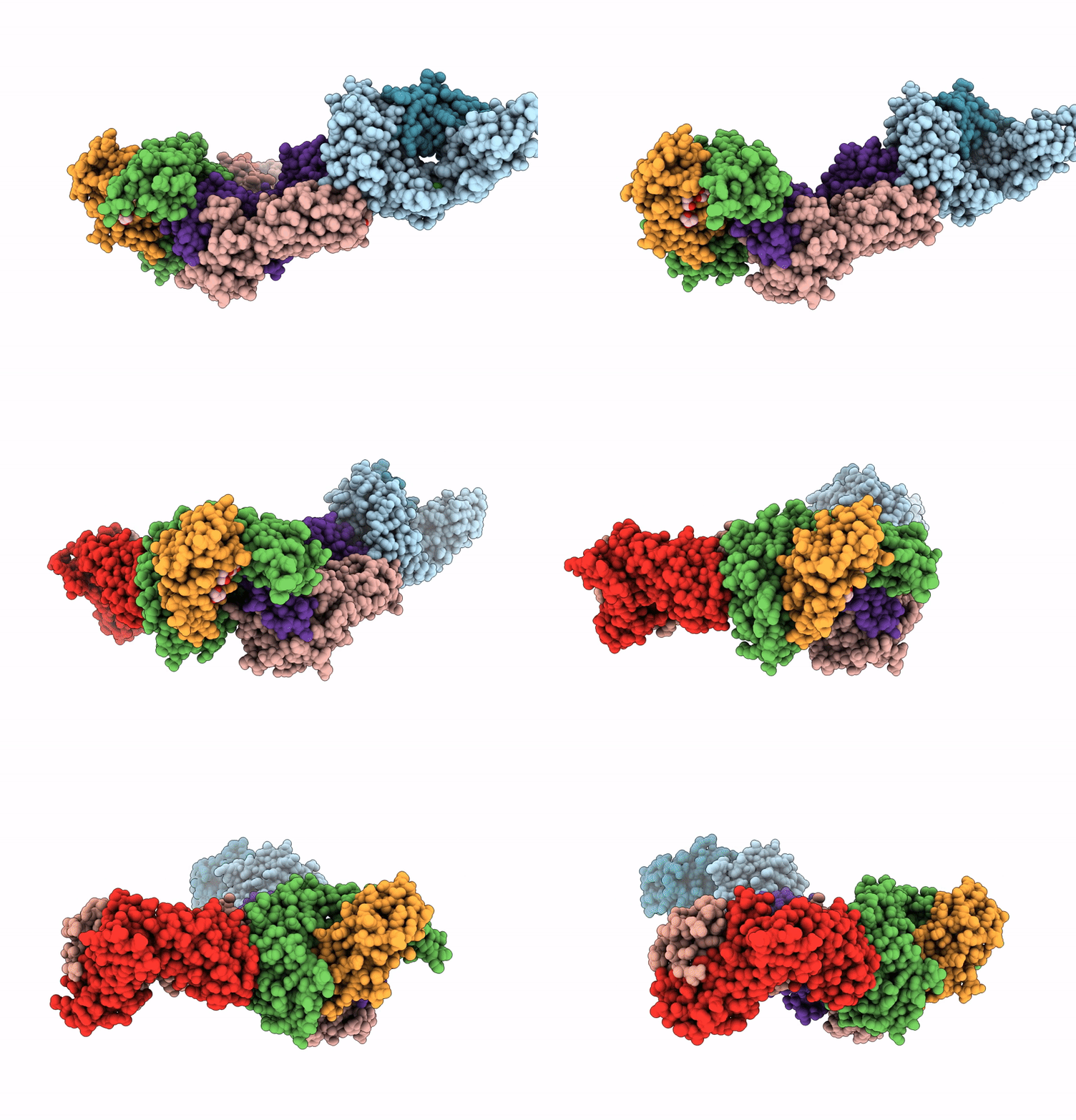
9O05 image
Deposition Date 2025-04-02
Release Date 2025-11-19
Last Version Date 2025-12-24
Entry Detail
PDB ID:
9O05
Keywords:
Title:
Structure of human MAIT A-F7 TCR in complex with human MR1-riboflavin
Biological Source:
Source Organism(s):
Homo sapiens (Taxon ID: 9606)
Expression System(s):
Method Details:
Experimental Method:
Resolution:
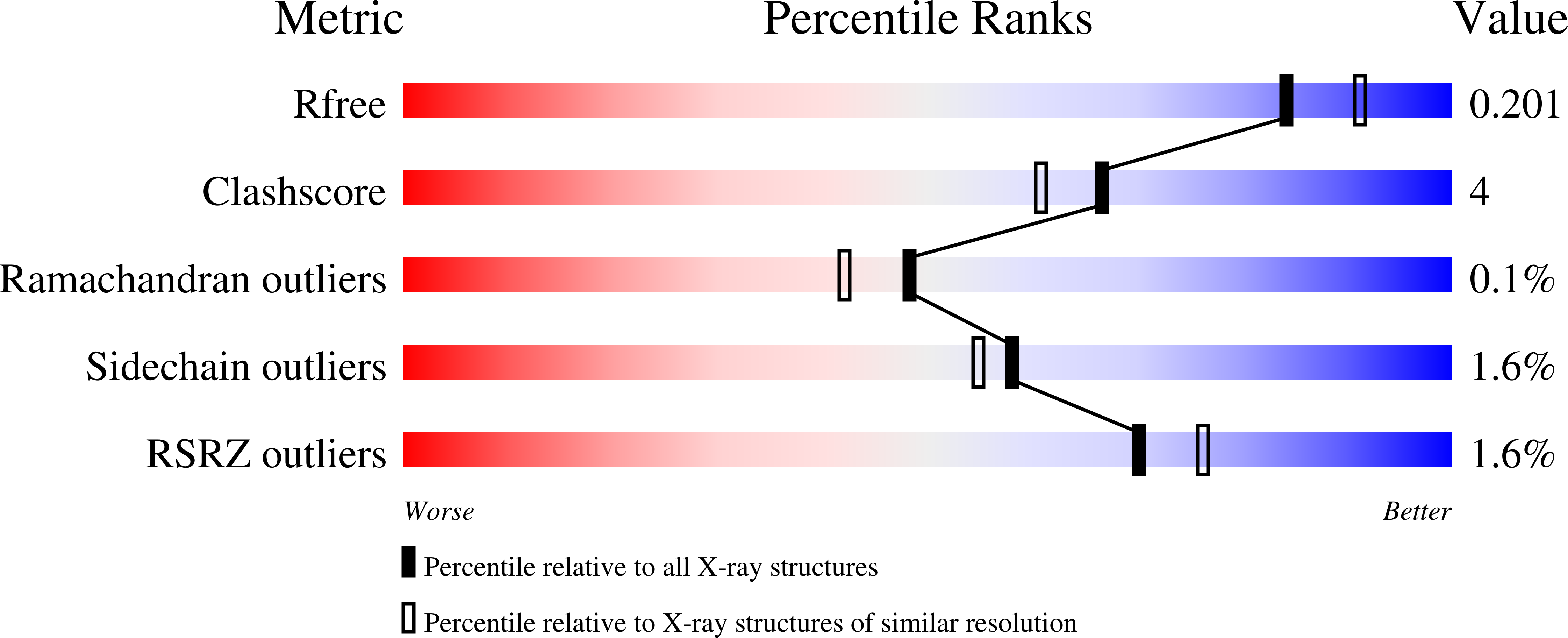
1.95 Å
R-Value Free:
0.20
R-Value Work:
0.16
R-Value Observed:
0.16
Space Group:
C 1 2 1
Macromolecular Entities
Structures with similar UniProt ID
Protein Blast
Polymer Type:polypeptide(L)
Molecule:Major histocompatibility complex class I-related gene protein
Gene (Uniprot):MR1
Chain IDs:A, C
Chain Length:271
Number of Molecules:2
Biological Source:Homo sapiens
Structures with similar UniProt ID
Protein Blast
Polymer Type:polypeptide(L)
Molecule:Beta-2-microglobulin
Gene (Uniprot):B2M
Chain IDs:B, F
Chain Length:100
Number of Molecules:2
Biological Source:Homo sapiens
Polymer Type:polypeptide(L)
Molecule:TCR-alpha
Chain IDs:D, G
Chain Length:204
Number of Molecules:2
Biological Source:Homo sapiens
Polymer Type:polypeptide(L)
Molecule:TCR-beta
Chain IDs:E, H
Chain Length:246
Number of Molecules:2
Biological Source:Homo sapiens
Primary Citation
The antigen-presenting molecule MR1 binds host-generated riboflavin catabolites.
J.Exp.Med. 223 ? ? (2026)
PMID: 41295949 DOI: 10.1084/jem.20250711

Abstact

MHC class I-related protein (MR1) presents vitamin B-based antigens (Ags) to mucosal-associated invariant T (MAIT) cells. While microbial riboflavin (RF) precursors are well-documented MR1 ligands, it is unclear whether host-generated RF catabolites influence MR1 immunity. Here, we report that RF catabolites, including 10-formylmethylflavin (FMF), lumichrome, lumiflavin, and alloxazine, bind to MR1 with moderate affinity, while RF itself binds weakly. In contrast to the MR1-upregulating microbial RF precursors, RF catabolites reduced the surface level of MR1 by inducing its retention in the endoplasmic reticulum and inhibiting exit. These RF catabolites weakly competed with vitamin B-based Ags for MR1 binding, thereby selectively inhibiting MAIT activation. The crystal structures of MR1 with RF, FMF, lumiflavin, and lumichrome show binding in the A'-pocket of MR1. Here, lumichrome formed a "flavin bond" covalent interaction with MR1-Lys43 differing from the typical Schiff base. Collectively, we identified three-ringed isoalloxazines that bind MR1 and reduce surface levels, suggesting a potential role in dampening MAIT cell immunity.

Legend

Protein

Chemical

Disease

Primary Citation of related structures
Feedback Form
Name
Email
Institute
Feedback