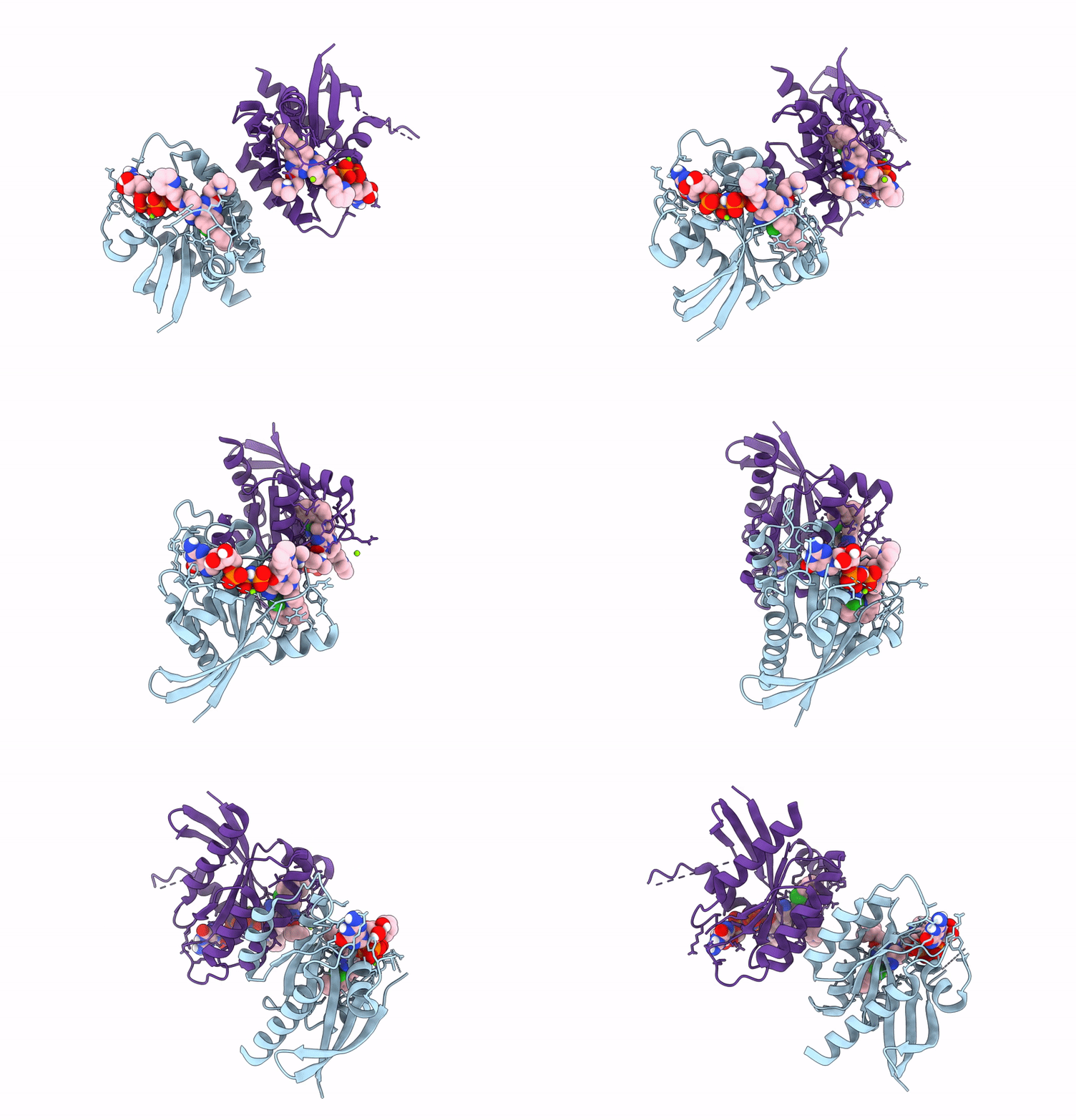
9NZM image
Deposition Date 2025-04-01
Release Date 2025-11-05
Last Version Date 2026-02-11
Entry Detail
PDB ID:
9NZM
Title:
Crystal Structure of Kirsten Rat Sarcoma G12C Complexed with GMPPNP and Covalently Bound to an Adduct of {(2S)-4-[7-(8-chloronaphthalen-1-yl)-2-{[(2S)-1-methylpyrrolidin-2-yl]methoxy}-5,6,7,8-tetrahydropyrido[3,4-d]pyrimidin-4-yl]-1-[(2Z)-2-fluoro-3-(pyridin-2-yl)prop-2-enoyl]piperazin-2-yl}acetonitrile
Biological Source:
Source Organism(s):
Homo sapiens (Taxon ID: 9606)
Expression System(s):
Method Details:
Experimental Method:
Resolution:
1.59 Å
R-Value Free:
0.22
R-Value Work:
0.20
R-Value Observed:
0.21
Space Group:
C 1 2 1
Macromolecular Entities
Structures with similar UniProt ID
Protein Blast
Polymer Type:polypeptide(L)
Molecule:Isoform 2B of GTPase KRas
Gene (Uniprot):KRAS
Mutagens:G12C, C51S, C80L, C121S
Chain IDs:A, B
Chain Length:172
Number of Molecules:2
Biological Source:Homo sapiens
Primary Citation

Abstact

The discovery of KRAS G12C inactive state inhibitors represented a significant advancement in the field of precision oncology. While inactive state inhibition shows promise in patients, Switch II (SWII)-binding inhibitors targeting both inactive and active states remain an underdeveloped therapeutic modality. Here, we describe the discovery of such KRAS G12C dual inhibitors that bind the SWII allosteric site using a chemically differentiated warhead to covalently modify both the KRAS G12C inactive and active states. Co-crystal structures reveal that these inhibitors perturb a key water-mediated hydrogen bonding network and trigger allosteric remodeling of the GTP-bound protein surface and SWI that prevents binding to downstream effectors. Consistent with simultaneous targeting of the active and inactive states, dual inhibitors provide rapid covalent target engagement and suppression of MAPK signaling. However, they demonstrate similar efficacy in cellular and in vivo models when compared to inactive state-selective ones despite faster target inactivation. Furthermore, both inhibitor classes show similar cellular efficacy in the presence of growth factors that drive KRAS, wt NRAS, and wt HRAS to the active state. These data provide the first detailed account of targeting both the active and inactive states of KRAS G12C and highlight the absence of a mechanistic advantage in contexts dependent on prolonged target inhibition.

Legend

Protein

Chemical

Disease

Primary Citation of related structures
Feedback Form
Name
Email
Institute
Feedback