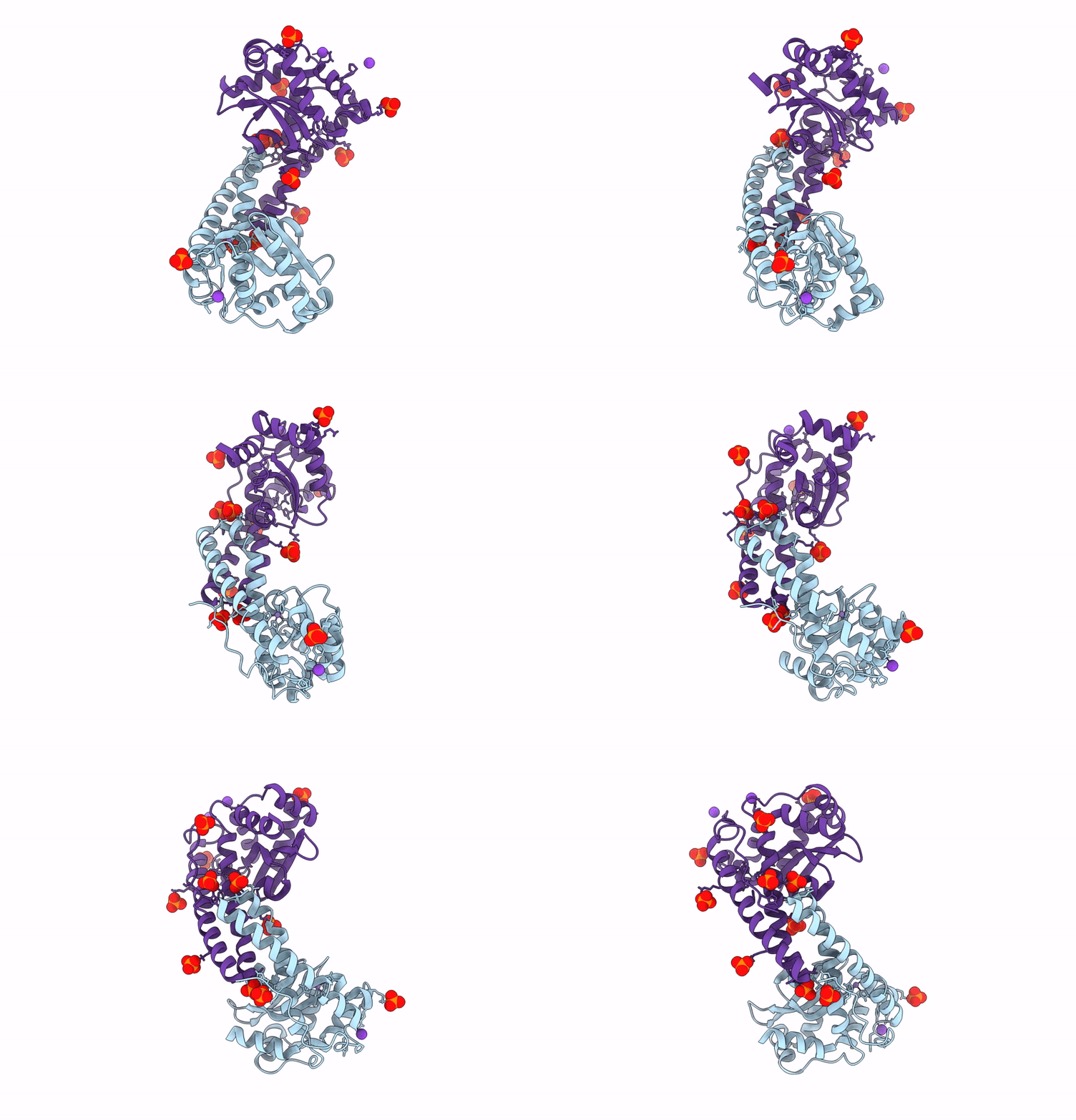
9NR0 image
Deposition Date 2025-03-13
Release Date 2025-08-27
Last Version Date 2025-11-12
Entry Detail
PDB ID:
9NR0
Keywords:
Title:
Finding the exit route of hydrogen peroxide from the manganese superoxide dismutase (MnSOD) active site
Biological Source:
Source Organism:
Homo sapiens (Taxon ID: 9606)
Host Organism:
Method Details:
Experimental Method:
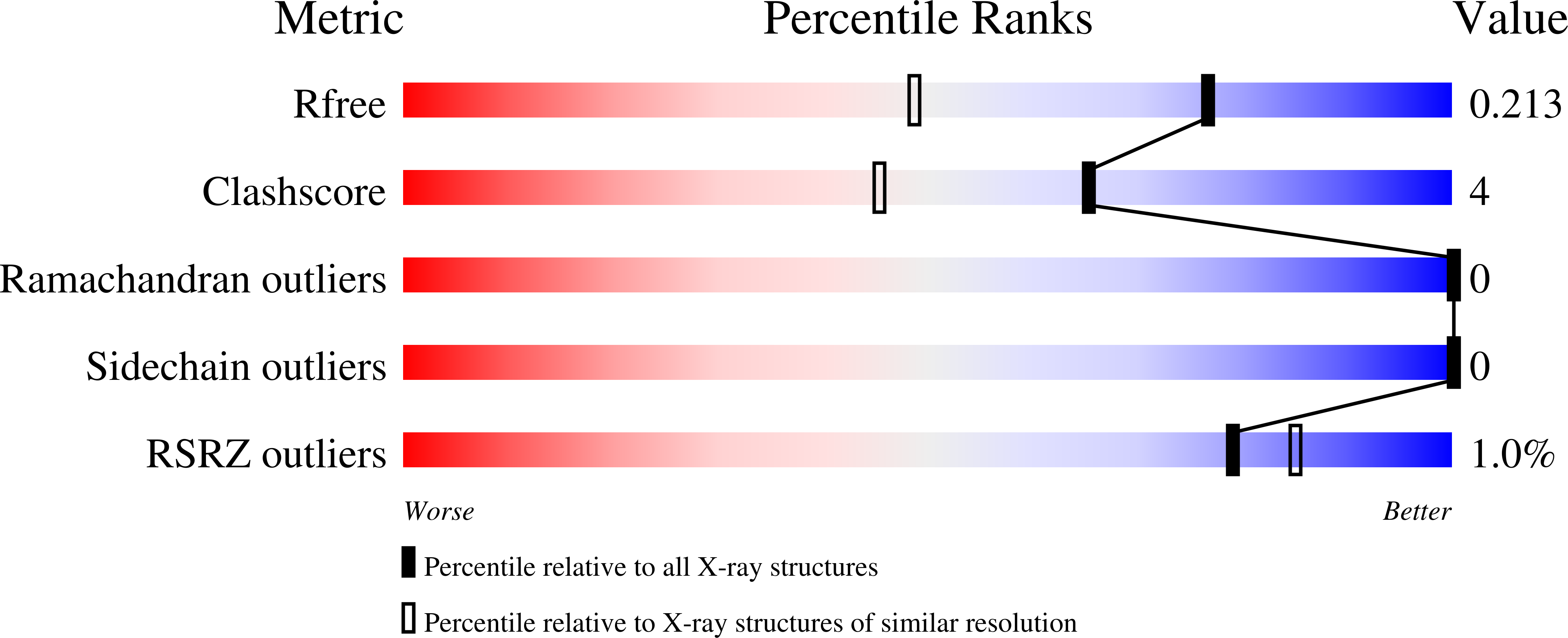
Resolution:
1.55 Å
R-Value Free:
0.21
R-Value Work:
0.17
R-Value Observed:
0.17
Space Group:
P 61 2 2
Macromolecular Entities
Structures with similar UniProt ID
Protein Blast
Polymer Type:polypeptide(L)
Molecule:Superoxide dismutase [Mn], mitochondrial
Gene (Uniprot):SOD2
Mutagens:Q143N
Chain IDs:A, B
Chain Length:199
Number of Molecules:2
Biological Source:Homo sapiens
Primary Citation
High-resolution X-ray structure of Gln143Asn manganese superoxide dismutase captures multiple hydrogen peroxide-binding sites.
Acta Crystallogr.,Sect.F 81 467 477 (2025)
PMID: 41128288 DOI: 10.1107/S2053230X25009045

Abstact

Human mitochondrial manganese superoxide dismutase (MnSOD) converts superoxide into hydrogen peroxide and molecular oxygen, serving as a key defence against oxidative damage. Despite extensive studies, the full structural characterization of H2O2-binding sites in MnSOD remains largely unexplored. Previous H2O2-soaked MnSOD structures have identified two distinct H2O2-binding sites: one directly ligated to the catalytic manganese (LIG position) and another at the active-site gateway (PEO position) between the second-shell residues Tyr34 and His30. In this study, a kinetically impaired Gln143Asn MnSOD variant is used to trap and explore additional H2O2-binding sites beyond the second-shell solvent gate. In the wild-type enzyme, Gln143 mediates proton transfers with the manganese-bound solvent (WAT1) to drive redox cycling of the metal, which is necessary for effective superoxide dismutation. Substitution with Asn stalls catalysis because the increased distance from WAT1 disrupts critical proton-coupled electron-transfer (PCET) events, and the redox cycling of the active-site metal is impaired. This, in turn, stalls the electrostatic cycling of positive charge on the enzyme surface and enhances the likelihood of trapping transient H2O2-bound states in this variant. The results reveal several H2O2 molecules leading up to the active site, in addition to the canonical LIG and PEO positions.

Legend

Protein

Chemical

Disease

Primary Citation of related structures
Feedback Form
Name
Email
Institute
Feedback