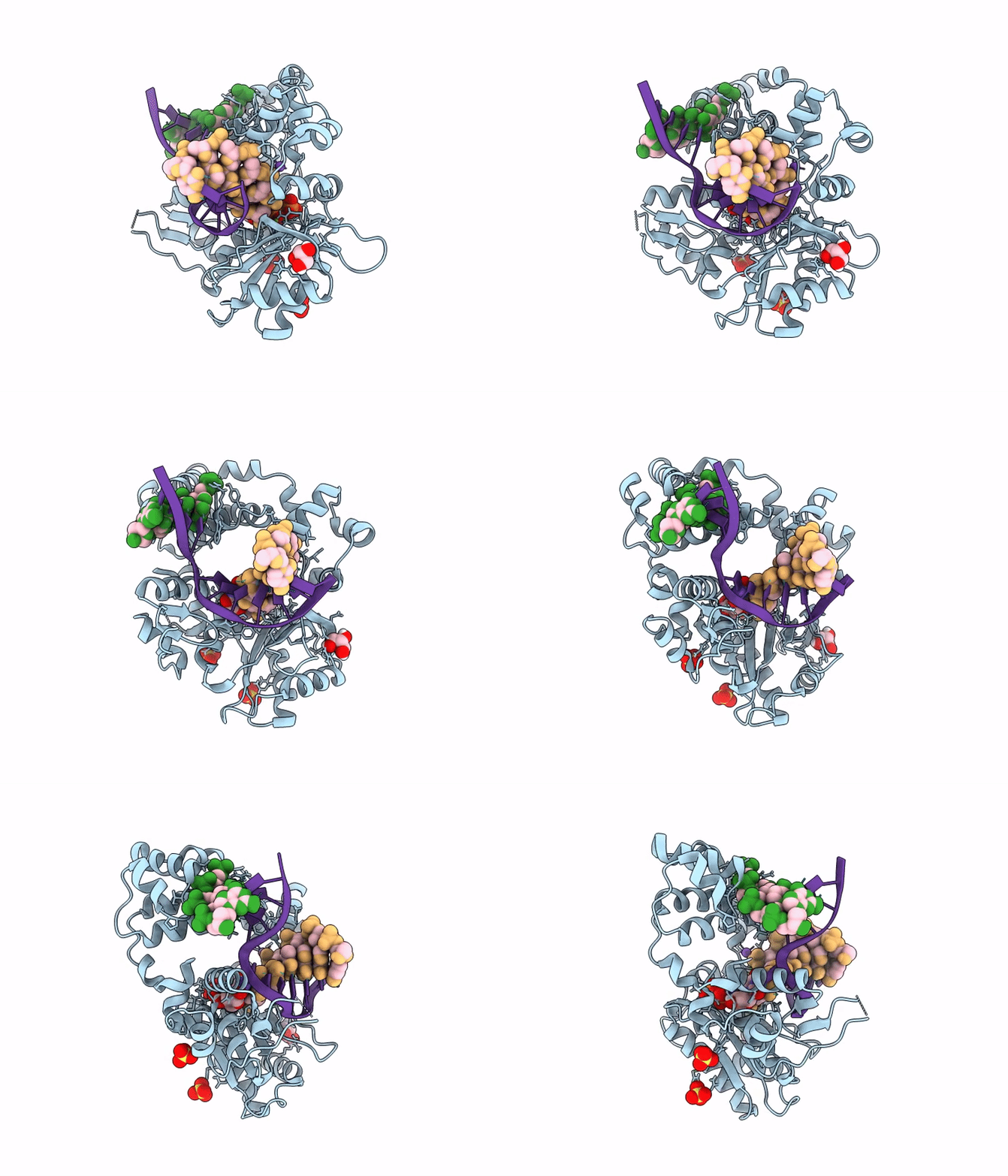
9NPU image
Deposition Date 2025-03-11
Release Date 2026-01-21
Last Version Date 2026-01-21
Entry Detail
PDB ID:
9NPU
Keywords:
Title:
Pre-catalytic ternary complex of DNA Polymerase Lambda with bound 1-nt gapped SSB substrate containing template ribonucleotide opposite primer terminus, and incoming dUMPNPP
Biological Source:
Source Organism(s):
Expression System(s):
Method Details:
Experimental Method:
Resolution:
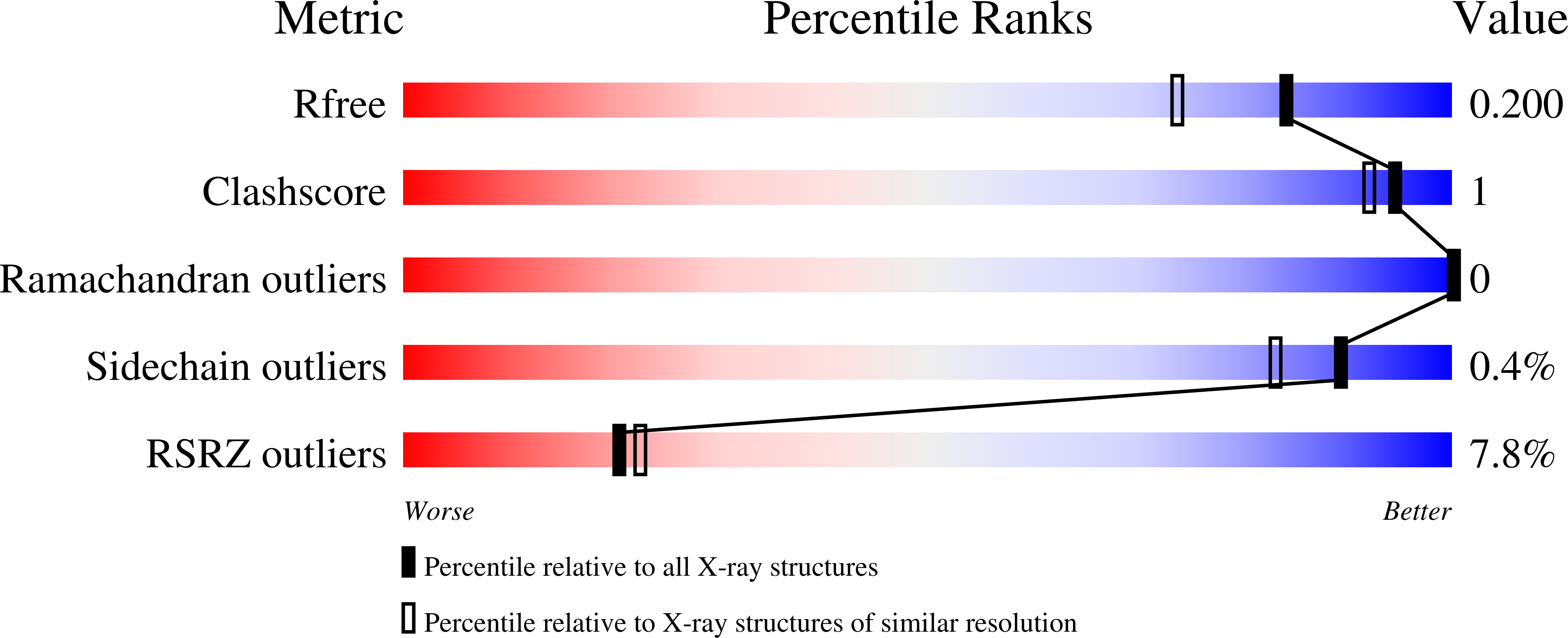
1.63 Å
R-Value Free:
0.19
R-Value Work:
0.17
R-Value Observed:
0.17
Space Group:
P 21 21 21
Macromolecular Entities
Structures with similar UniProt ID
Protein Blast
Polymer Type:polypeptide(L)
Molecule:DNA polymerase lambda
Gene (Uniprot):POLL
Chain IDs:A
Chain Length:346
Number of Molecules:1
Biological Source:Homo sapiens
Polymer Type:polydeoxyribonucleotide
Molecule:DNA (5'-D(P*GP*CP*CP*G)-3')
Chain IDs:D
Chain Length:4
Number of Molecules:1
Biological Source:synthetic construct
Polymer Type:polydeoxyribonucleotide
Molecule:DNA (5'-D(*CP*AP*GP*TP*AP*C)-3')
Chain IDs:C (auth: P)
Chain Length:6
Number of Molecules:1
Biological Source:synthetic construct
Polymer Type:polydeoxyribonucleotide/polyribonucleotide hybrid
Molecule:DNA/RNA (5'-D(*CP*GP*GP*CP*A)-R(P*G)-D(P*TP*AP*CP*TP*G)-3')
Chain IDs:B (auth: T)
Chain Length:11
Number of Molecules:1
Biological Source:synthetic construct
Primary Citation
Nonhomologous end-joining uses distinct mechanisms to repair each strand of a double strand break.
Nat Commun 16 11599 11599 (2025)
PMID: 41285786 DOI: 10.1038/s41467-025-66528-8

Abstact

Nonhomologous end-joining repairs chromosomal double strand breaks, but it is unknown whether both strands are repaired by this pathway, and if one strand break's repair path impacts the other. Here, we show that nonhomologous end-joining employs both of two a priori possible strategies. Strand breaks that can be directly ligated are joined near-simultaneously, with no effect of one strand break's repair path on the other. More complex end structures require obligatorily ordered repair. The first strand to be repaired is used as template for repair of the opposite/second strand break, with the latter repair reaction occurring fastest when also coupled to nonhomologous end-joining. Enforced asymmetry in repair of each strand break can extend to the gap-filling polymerase employed, and whether the polymerases incorporate RNA or DNA. Our results resolve questions about pathway mechanism and identify a requirement for flexibility of the nonhomologous end-joining machinery for efficient repair of both strand breaks within diverse cellular double strand breaks.

Legend

Protein

Chemical

Disease

Primary Citation of related structures
Feedback Form
Name
Email
Institute
Feedback