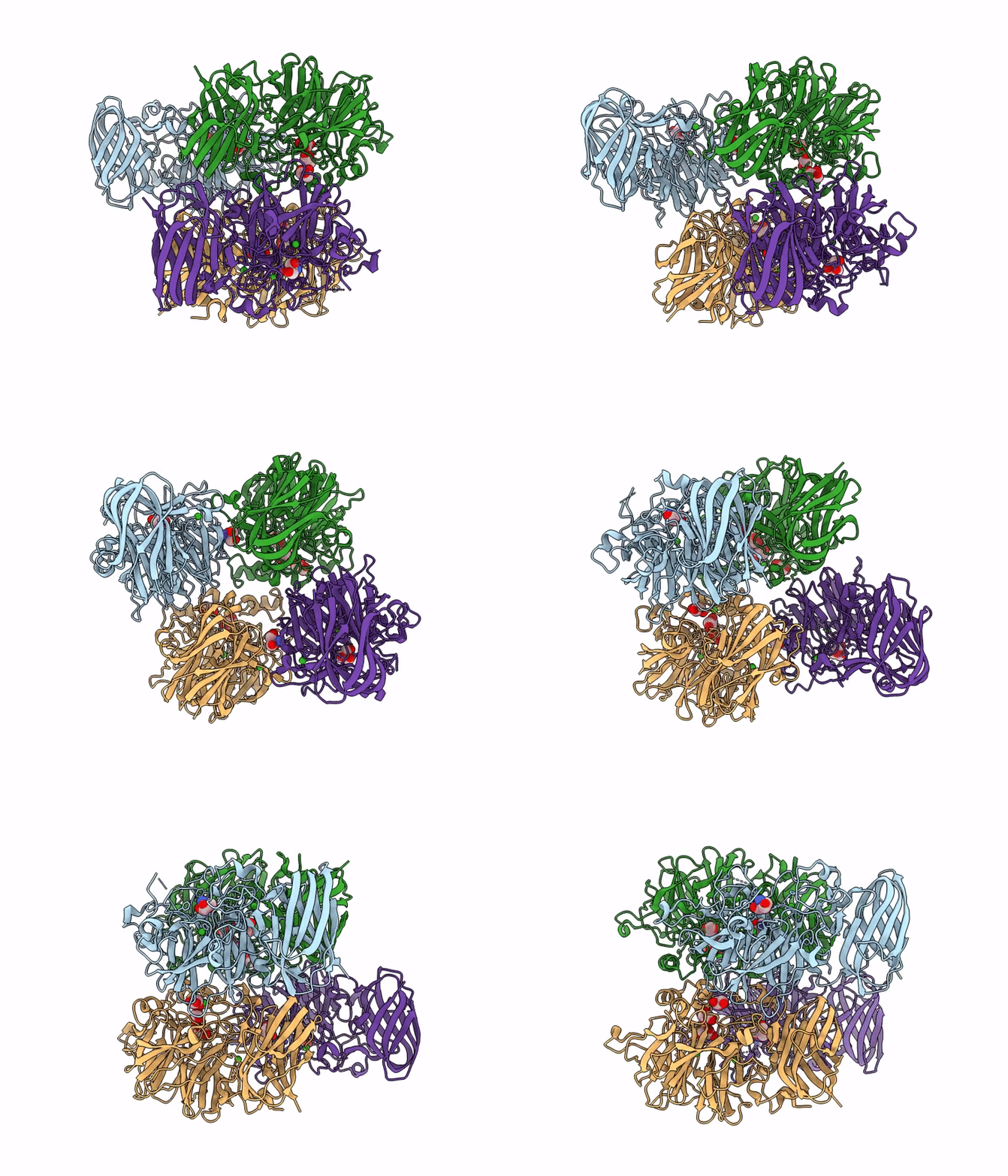
9NO3 image
Deposition Date 2025-03-07
Release Date 2025-10-08
Last Version Date 2025-11-19
Entry Detail
PDB ID:
9NO3
Keywords:
Title:
The bifunctional arabinofuranosidase/xylosidase from metagenome of Pseudacanthotermes militaris.
Biological Source:
Source Organism:
Host Organism:
Method Details:
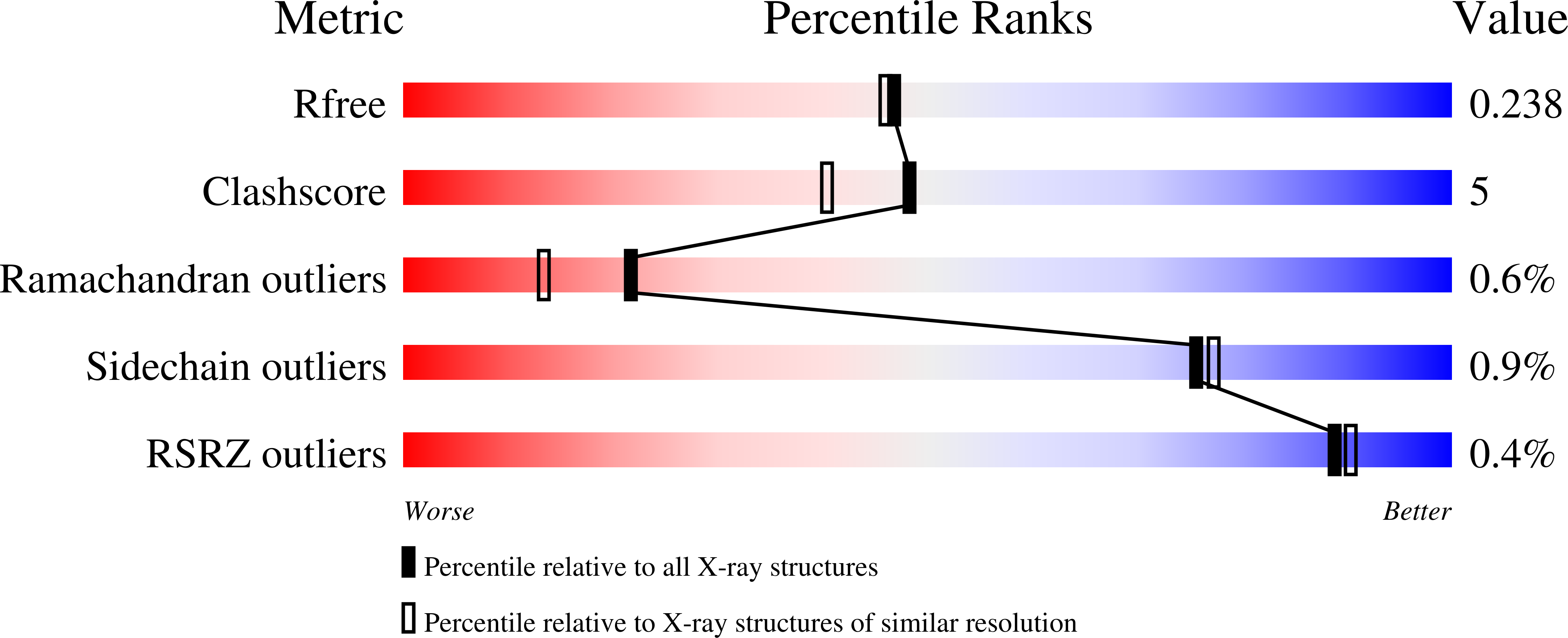
Experimental Method:
Resolution:
2.05 Å
R-Value Free:
0.23
R-Value Work:
0.17
R-Value Observed:
0.18
Space Group:
P 1
Macromolecular Entities
Polymer Type:polypeptide(L)
Molecule:TerARA - arabinofuranosidase/xylosidase from metagenome of Pseudacanthotermes militaris.
Chain IDs:A, B, C, D
Chain Length:506
Number of Molecules:4
Biological Source:Pseudacanthotermes militaris
Primary Citation
Structural and functional characterization of a bifunctional GH43 alpha-L-arabinofuranosidase/ beta-xylosidase from the metagenome of Pseudacanthotermes militaris gut.
Int.J.Biol.Macromol. 329 147909 147909 (2025)
PMID: 41005405 DOI: 10.1016/j.ijbiomac.2025.147909

Abstact

The pursuit of sustainable energy has intensified the search for efficient biocatalysts to convert lignocellulosic biomass. In this context, we characterized a novel bifunctional enzyme, TerARA, identified from the gut metagenome of the termite Pseudacanthotermes militaris. Belonging to the glycoside hydrolase 43 (GH43) family, TerARA was heterologously expressed in E. coli BL21 and purified. The enzyme demonstrated bifunctional activity toward synthetic substrates p-nitrophenyl-α-L-arabinofuranoside (pNP-Araf) (387.22 ± 74.2 U/mg) and p-nitrophenyl-β-D-xylopyranoside (pNP-Xyl) (330.82 ± 31.2 U/mg), with higher catalytic efficiency for pNP-Araf (9.14 s-1·mM-1), suggesting functional preference as an α-L-arabinofuranosidase. Activity modulation by metal ions revealed that Ca2+ slightly improved efficiency toward pNP-Araf (to 9.58 s-1·mM-1 at 1 mM), while Zn2+ reduced efficiency for pNP-Xyl except at 5 mM (6.65 s-1·mM-1). Zn2+ also enhanced enzymatic stability, maintaining 80 % activity in pNP-Xyl hydrolysis. Crystallographic analysis at 2.0 Å resolution revealed a 43 Glycosyl Hydrolase catalytic domain with a five-bladed β-propeller fold and two Ca2+ ions and a Carbohydrate-Binding Module (CBM) domain with a β-sandwich fold likely involved in substrate interaction. Conserved catalytic residues, binding sites, and Ca2+ stabilizing effects were identified. TerARA's bifunctionality and structural features support its application in hemicellulose degradation and biomass conversion.

Legend

Protein

Chemical

Disease

Primary Citation of related structures
Feedback Form
Name
Email
Institute
Feedback