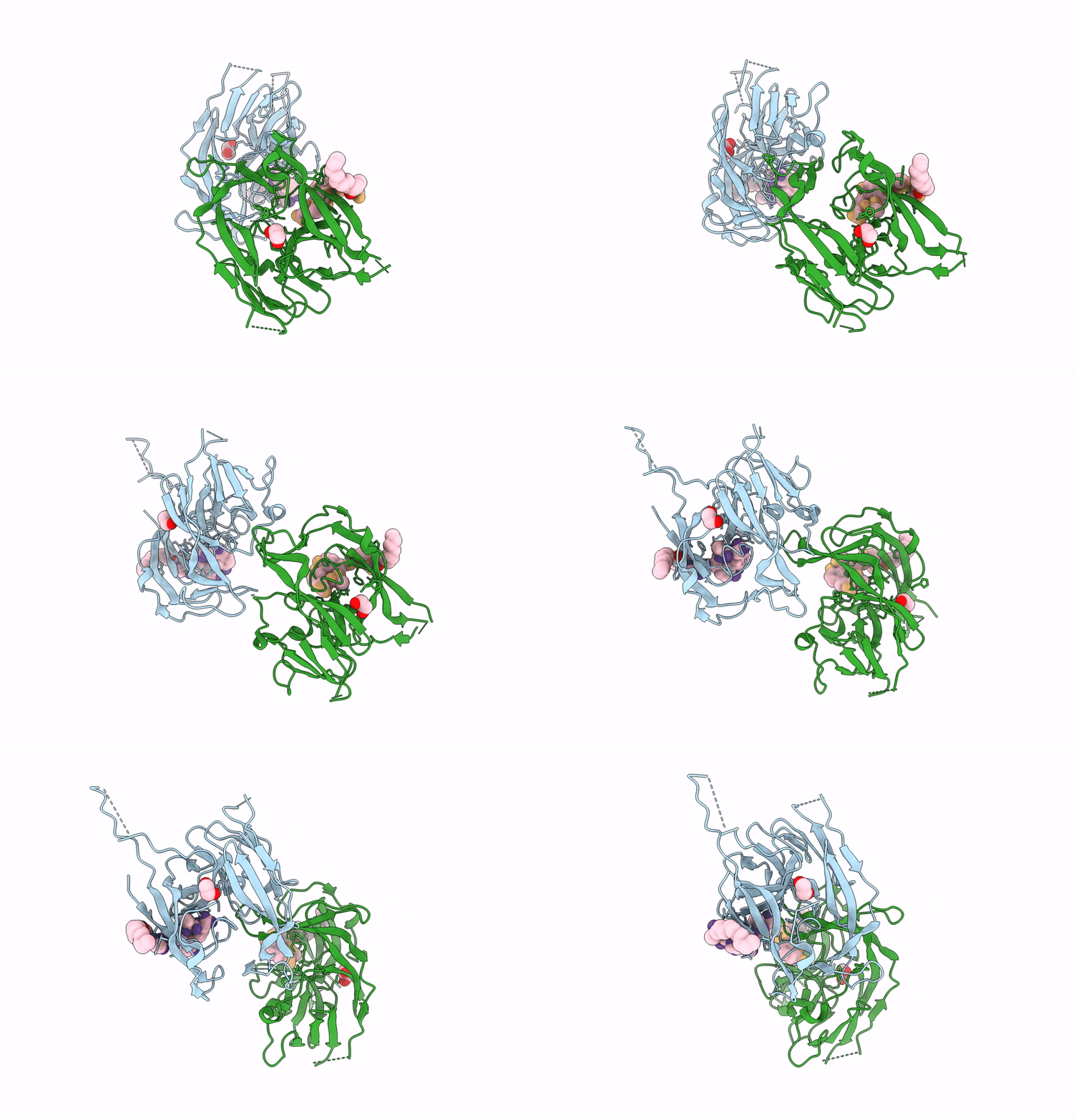
9NLO image
Deposition Date 2025-03-03
Release Date 2025-11-19
Last Version Date 2025-11-26
Entry Detail
PDB ID:
9NLO
Title:
Escherichia coli Signal Peptidase I Delta 2-76 P84A in complex with lipopeptide inhibitor
Biological Source:
Source Organism(s):
Expression System(s):
Method Details:
Experimental Method:
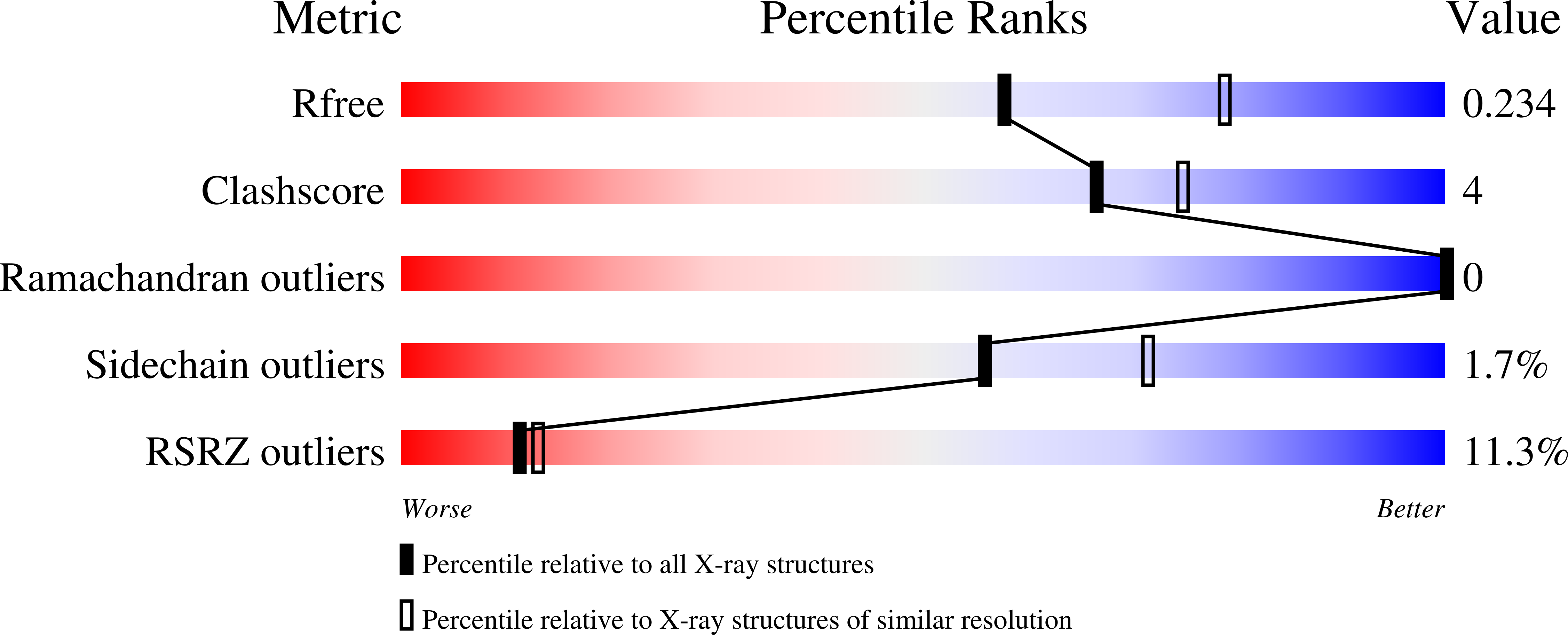
Resolution:
2.32 Å
R-Value Free:
0.23
R-Value Work:
0.20
Space Group:
P 43 21 2
Macromolecular Entities
Structures with similar UniProt ID
Protein Blast
Polymer Type:polypeptide(L)
Molecule:Signal peptidase I
Gene (Uniprot):lepB
Mutagens:P84A
Chain IDs:A, B
Chain Length:249
Number of Molecules:2
Biological Source:Escherichia coli K-12
Polymer Type:polypeptide(L)
Molecule:ARYLOMYCIN A2
Chain IDs:C, D
Chain Length:6
Number of Molecules:2
Biological Source:SYNTHETIC CONSTRUCT
Peptide-like Molecules
PRD_000117
Primary Citation
Crystal structure of Escherichia coli type I signal peptidase P84A in complex with lipopeptide antibiotic arylomycin A 2 .
J.Struct.Biol. 217 108260 108260 (2025)
PMID: 41207487 DOI: 10.1016/j.jsb.2025.108260

Abstact

Type I signal peptidase (SPase I) is an essential membrane-bound enzyme that removes amino-terminal signal peptides from secretory proteins. Owing to its critical role in bacterial viability and its periplasmic accessibility, SPase I has emerged as an attractive target for antibiotic development. Arylomycins, a class of macrocyclic lipohexapeptide natural products, inhibit SPase I by binding to its active site. Previous studies have identified a key resistance determinant-a proline residue at the base of the substrate-binding groove (Pro84 inEscherichia coliSPase I)-which reduces arylomycin affinity. Here, we present the crystal structure of theE. coliSPase I P84A mutant in complex with arylomycin A2, revealing that the introduced alanine enables an additional hydrogen bond between the enzyme backbone and the arylomycin N-terminal carbonyl, thus enhancing the affinity for arylomycins. Furthermore, a newly developed preprotein-binding assay utilizing a non-cleavable version of ProOmpA Nuclease A demonstrates that substituting SPase I Pro84 with serine or leucine disrupts substrate recognition, underscoring the delicate balance between inhibitor resistance and substrate processing. These findings reveal that residue Pro84 participates in the interaction between preprotein signal peptides and the E. coli SPase I substrate-binding groove, offering a foundation for designing next-generation arylomycin analogs with improved antibacterial potency.

Legend

Protein

Chemical

Disease

Primary Citation of related structures
Feedback Form
Name
Email
Institute
Feedback