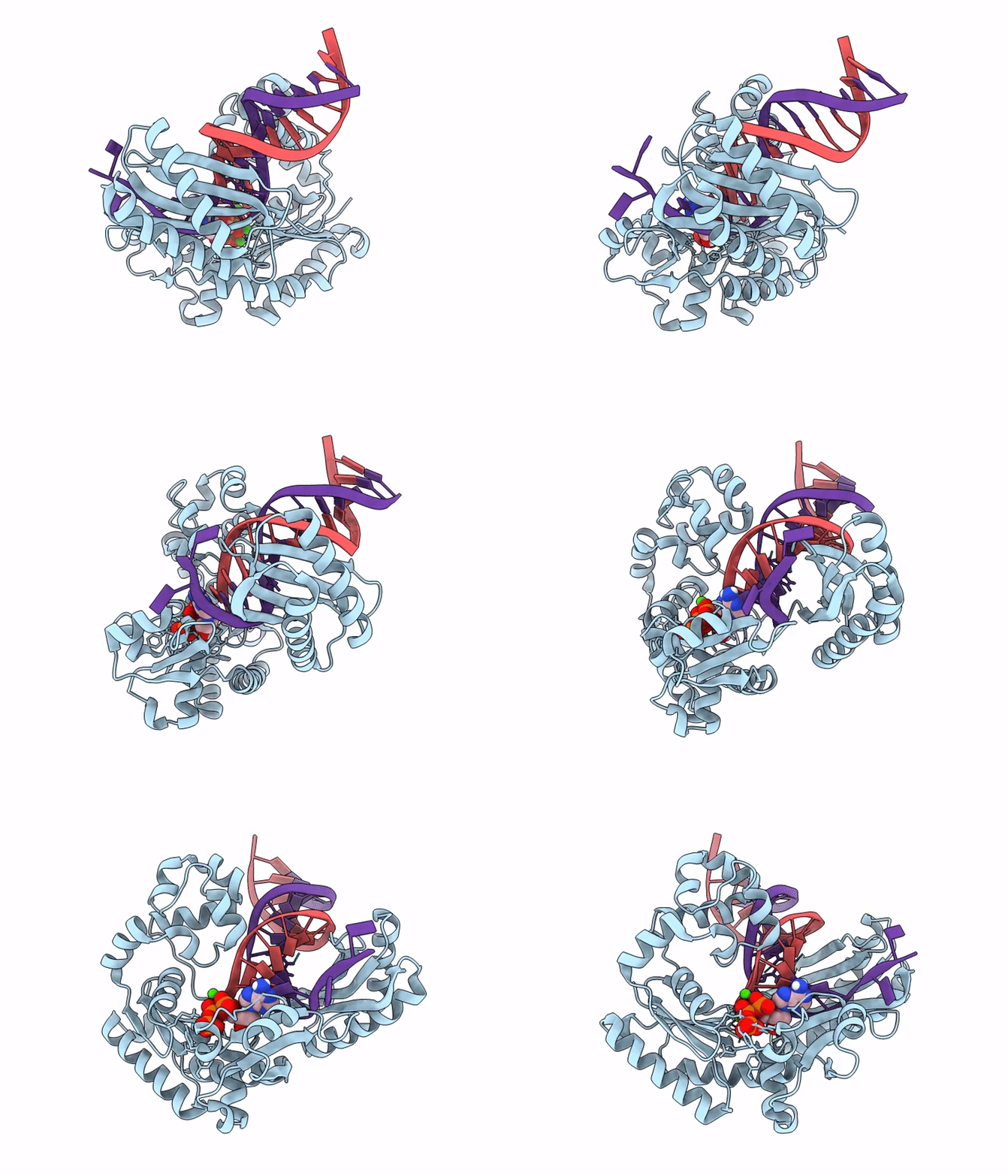
9NKC image
Deposition Date 2025-02-28
Release Date 2025-09-24
Last Version Date 2025-10-08
Entry Detail
PDB ID:
9NKC
Keywords:
Title:
Dpo4 DNA polymerase (Wild Type) in complex with DNA containing an 8oxoG template lesion
Biological Source:
Source Organism:
Host Organism:
Method Details:
Experimental Method:
Resolution:
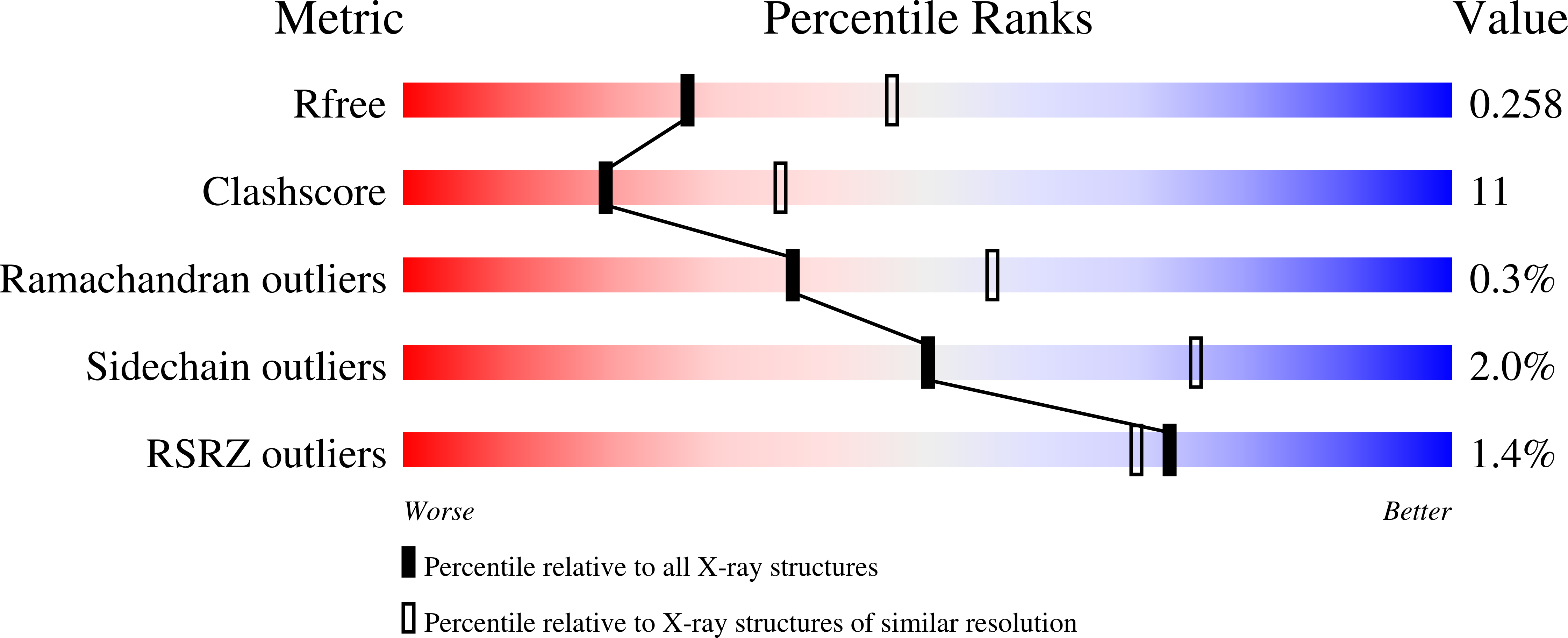
2.50 Å
R-Value Free:
0.25
R-Value Work:
0.18
R-Value Observed:
0.19
Space Group:
P 21 21 2
Macromolecular Entities
Structures with similar UniProt ID
Protein Blast
Polymer Type:polypeptide(L)
Molecule:DNA polymerase IV
Gene (Uniprot):dbh
Chain IDs:A
Chain Length:352
Number of Molecules:1
Biological Source:Saccharolobus solfataricus P2
Polymer Type:polydeoxyribonucleotide
Molecule:Extended Primer Strand
Chain IDs:B (auth: P)
Chain Length:14
Number of Molecules:1
Biological Source:synthetic construct
Polymer Type:polydeoxyribonucleotide
Molecule:Template DNA
Chain IDs:C (auth: T)
Chain Length:17
Number of Molecules:1
Biological Source:synthetic construct
Primary Citation
Residues in the little finger domain of the Y-family Dpo4 DNA polymerase communicate to restrict synthesis past 8-oxoguanine lesions.
Nucleic Acids Res. 53 ? ? (2025)
PMID: 41002026 DOI: 10.1093/nar/gkaf950

Abstact

Endogenous reactive oxygen species are responsible for abundant 8-oxo-7,8-dihydroguanine (8-oxoG) lesion formation in all three domains of life. In the archaeal Saccharolobus solfataricus(Sso), a specialized translesion synthesis (TLS) polymerase, SsoDpo4, is recruited to bypass lesions when the high-fidelity polymerase stalls. Previous studies have found that SsoDpo4 can accurately bypass 8-oxoG lesions with deoxycytosine and then efficiently extend three nucleotides beyond the lesion to the +3 position. Here, we have mutated several arginines within the little finger (LF) domain that track along the phosphate backbone near the active site and tested their extension ability and DNA binding properties. Mutation of two key residues, R332 or R336, to alanine relieves +3 intermediate accumulation, resulting in more efficient full-length extension. Interestingly, the wild-type enzyme binds progressively weaker downstream of a bypassed 8-oxoG lesion, indicating decreased binding stability after lesion bypass. X-ray crystallography has captured these mutants on the +3 extended primer/8-oxoG template to structurally characterize how these LF residues communicate to restrict downstream synthesis past 8-oxoG. Our results offer mechanistic and structural insights into how TLS polymerases restrict downstream synthesis past a lesion by sensing backbone distortions and altering domain conformations to limit catalysis and destabilize binding.

Legend

Protein

Chemical

Disease

Primary Citation of related structures
Feedback Form
Name
Email
Institute
Feedback