9NIR image
Deposition Date 2025-02-26
Release Date 2026-01-07
Last Version Date 2026-01-07
Entry Detail
PDB ID:
9NIR
Keywords:
Title:
Human Ectonucleotide pyrophosphatase/phosphodiesterase family member 3 (ENPP3) inhibitor complex
Biological Source:
Source Organism(s):
Homo sapiens (Taxon ID: 9606)
Expression System(s):
Method Details:
Experimental Method:
Resolution:
2.70 Å
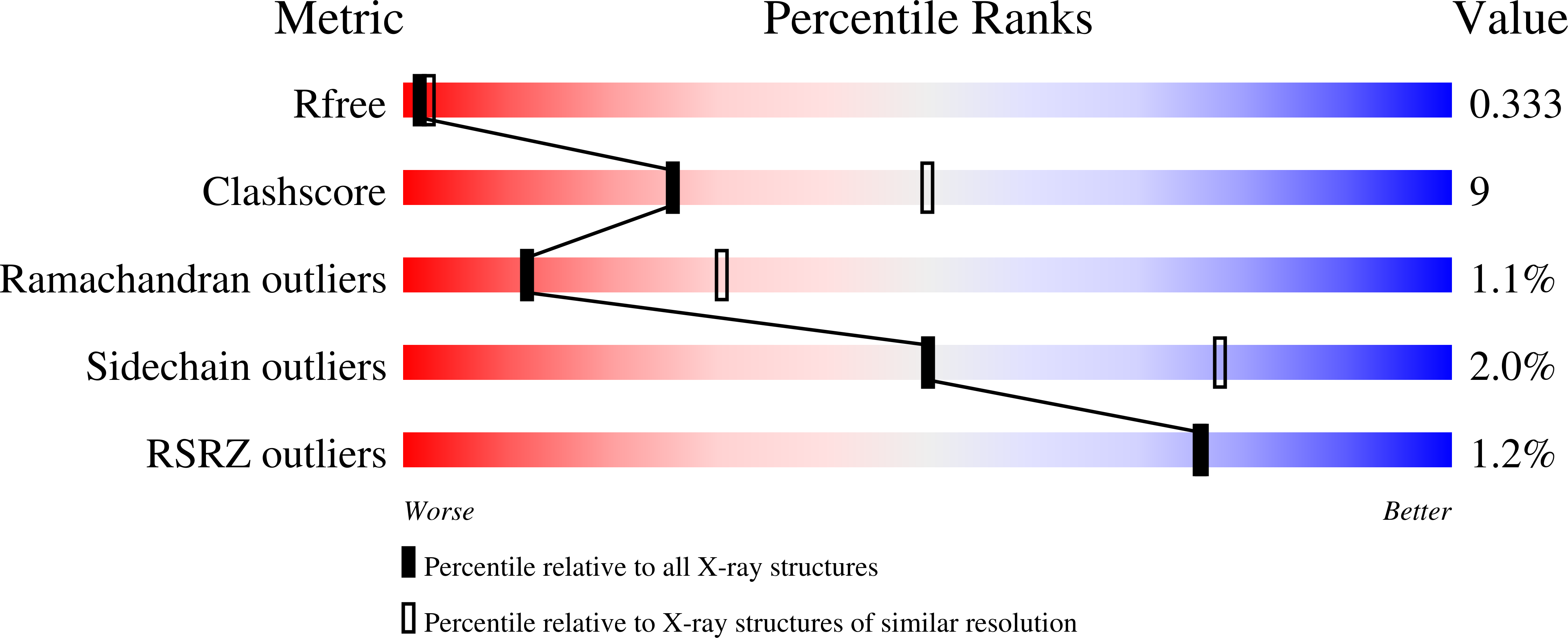
R-Value Free:
0.33
R-Value Work:
0.27
Space Group:
P 43 21 2
Macromolecular Entities
Structures with similar UniProt ID
Protein Blast
Polymer Type:polypeptide(L)
Molecule:Ectonucleotide pyrophosphatase/phosphodiesterase family member 3
Gene (Uniprot):ENPP3
Mutagens:Q244K, E275D
Chain IDs:A
Chain Length:820
Number of Molecules:1
Biological Source:Homo sapiens
Primary Citation
ENPP1 inhibitor with ultralong drug-target residence time as an innate immune checkpoint blockade cancer therapy.
Cell Rep Med 6 102336 102336 (2025)
PMID: 40914167 DOI: 10.1016/j.xcrm.2025.102336

Abstact

Only one in five patients respond to immune checkpoint inhibitors, which primarily target adaptive immunity. Ectonucleotide pyrophosphatase/phophodiesterase 1 (ENPP1), the dominant hydrolase of 2'3'-cyclic-GMP-AMP (cGAMP) that suppresses downstream stimulator of interferon genes (STING) signaling, has emerged as a promising innate immunotherapy target. However, existing ENPP1 inhibitors have been optimized for prolonged systemic residence time rather than effective target inhibition within tumors. Here, we report the characterization of STF-1623, a highly potent ENPP1 inhibitor with an exceptionally long tumor residence time despite rapid systemic clearance, enabled by its high ENPP1 binding affinity and slow dissociation rate. We show that membrane-bound ENPP1 on tumor cells, not the abundant soluble ENPP1 in serum, drives tumor progression. Consequently, STF-1623 unleashes anti-tumor immunity to produce robust anti-tumor and anti-metastatic effects across multiple tumor models. Conceptually, this work establishes a noncovalent small-molecule inhibitor of ENPP1 with ultralong drug-target engagement as a safe and precise strategy to activate STING within tumors.

Legend

Protein

Chemical

Disease

Primary Citation of related structures
Feedback Form
Name
Email
Institute
Feedback