Abstact
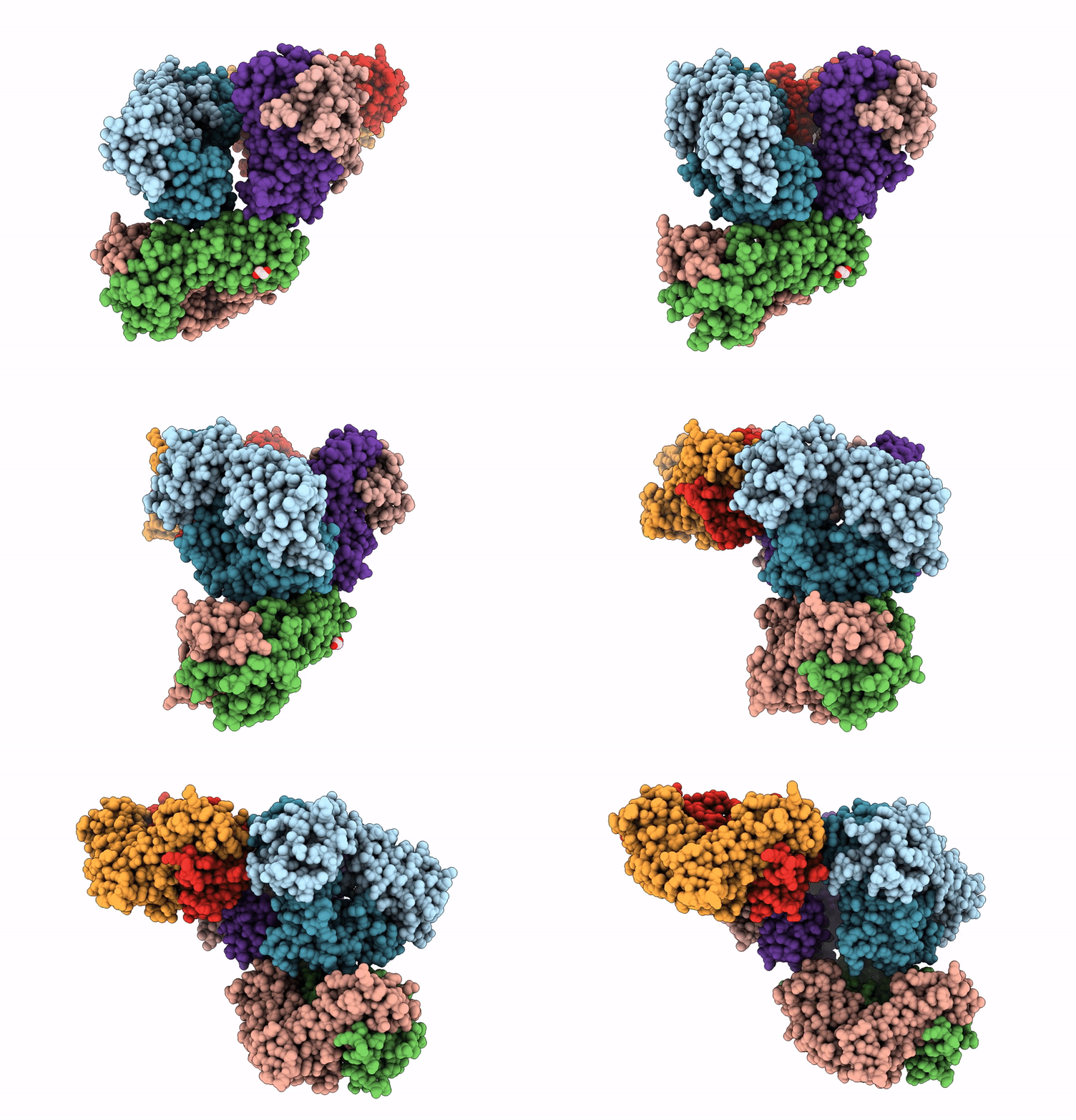
CD4+ T cell autoreactivity against citrullinated (cit) self-epitopes presented by HLA-DRB1 is associated with rheumatoid arthritis (RA) pathogenesis. We understand the molecular bases of T cell receptor (TCR) recognition of cit-fibrinogen, cit-vimentin, and cit-α-enolase epitopes, and the role of citrulline in shaping TCR repertoire usage. Nevertheless, how TCRs recognize other cit-epitopes, including tenascin-C (TNC) and how alternative citrullination positions may modulate the T cell recognition remains unclear. Here, we examined TNC1014,1016cit peptide, which contains citrullination at position P-1 and P2, to study the underlying TCR-HLA-DRB1∗04:01-TNC1014,1016cit molecular interactions. Crystal structure of HLA-DRB1∗04:01TNC1014,1016cit at 2.4 Å resolution revealed a conserved peptide binding register to the established HLA-DRB1∗04:01-peptide structures, where both citrullines protruded upward. Next, we determined the crystal structure of a RA patient-derived TRAV35+/TRBV10-2+ (PB) TCR in complex with HLA-DRB1∗04:01TNC1014,1016cit at 3.2 Å resolution. The CDR3α loop (109VGNTN113) of PB TCR formed a secondary helical conformation at the N-terminus of the peptide binding cleft, allowing extensive interactions between the P-1 and P2 citrullines of TNC1014,1016cit peptide. Surface plasmon resonance, tetramer staining, and CD69 activation assays revealed that the PB TCR did not cross-react to other RA autoantigens, and the P-1-Cit, P2-Cit, and P5-Tyr of TNC1014,1016cit are the key determinants underlying the strict specificity of the PB TCR. Collectively, we provide molecular insight into citrullination in modulating TCR recognition.