9NH3 image
Deposition Date 2025-02-23
Release Date 2025-07-23
Last Version Date 2025-07-23
Entry Detail
PDB ID:
9NH3
Keywords:
Title:
Helicobacter pylori strain SS1 KatA
Biological Source:
Source Organism:
Host Organism:
Method Details:
Experimental Method:
Resolution:
1.87 Å
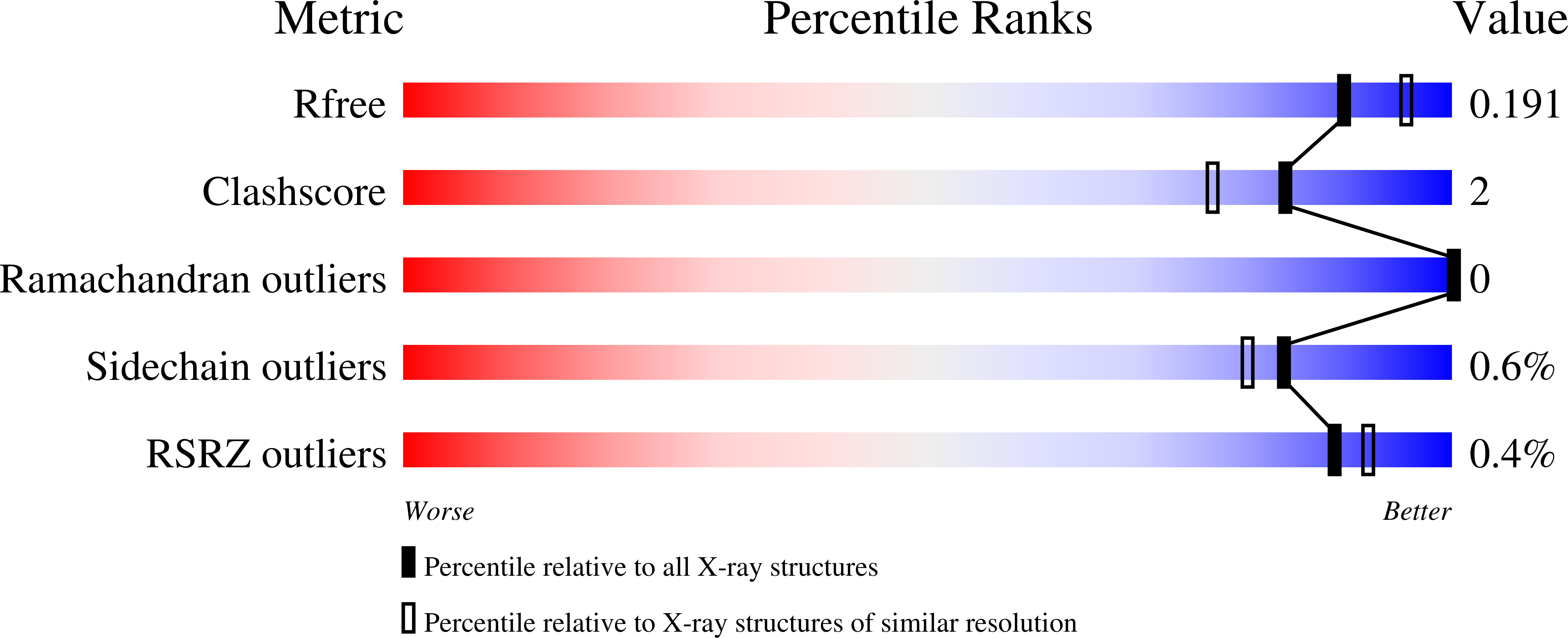
R-Value Free:
0.19
R-Value Work:
0.14
R-Value Observed:
0.14
Space Group:
P 21 2 21
Macromolecular Entities
Structures with similar UniProt ID
Protein Blast
Polymer Type:polypeptide(L)
Molecule:Catalase
Gene (Uniprot):katA
Chain IDs:A, B
Chain Length:505
Number of Molecules:2
Biological Source:Helicobacter pylori SS1
Primary Citation
AlphaFold 3 accurately models natural variants of Helicobacter pylori catalase KatA.
Biorxiv ? ? ? (2025)
PMID: 40501634 DOI: 10.1101/2025.06.02.657526

Abstact

Subtle changes in protein sequence can equate to large changes in function, such as enabling pathogens to evade the immune system, hindering antibody recognition of antigens, or conferring antibiotic resistance. Even single amino acid substitutions may alter ligand binding affinity, enzymatic activity, and protein stability. Yet, due to limitations in time and resources, proteins closely related in sequence to those already characterized often remain unexamined. AlphaFold has emerged as a promising tool for protein structure prediction, though its utility in modeling single amino acid substitutions remains uncertain. In this study, we assessed AlphaFold 3's accuracy in modeling natural variants of the Helicobacter pylori catalase KatA by comparing its predictions to a novel high-resolution crystal structure of KatA from strain SS1. This variant contains key substitutions at residues 234, 237, 255, and 421 relative to the well-characterized strain 26695. AlphaFold 3 models accurately reproduced the global structure and local conformations of most variant residues, with high fidelity in conservative substitutions but variable accuracy in more flexible or interface-exposed sites. We further explored how user inputs, such as incorrect oligomeric states or sequence modifications, influence prediction quality. While AlphaFold 3 consistently produced high-quality models, deviations at variant sites occurred when incorrect oligomeric states were specified. Our findings highlight both the strengths and limitations of AlphaFold 3 in modeling natural protein variants and underscore the importance of accurate user input for reliable structural predictions.

Legend

Protein

Chemical

Disease

Primary Citation of related structures
Feedback Form
Name
Email
Institute
Feedback