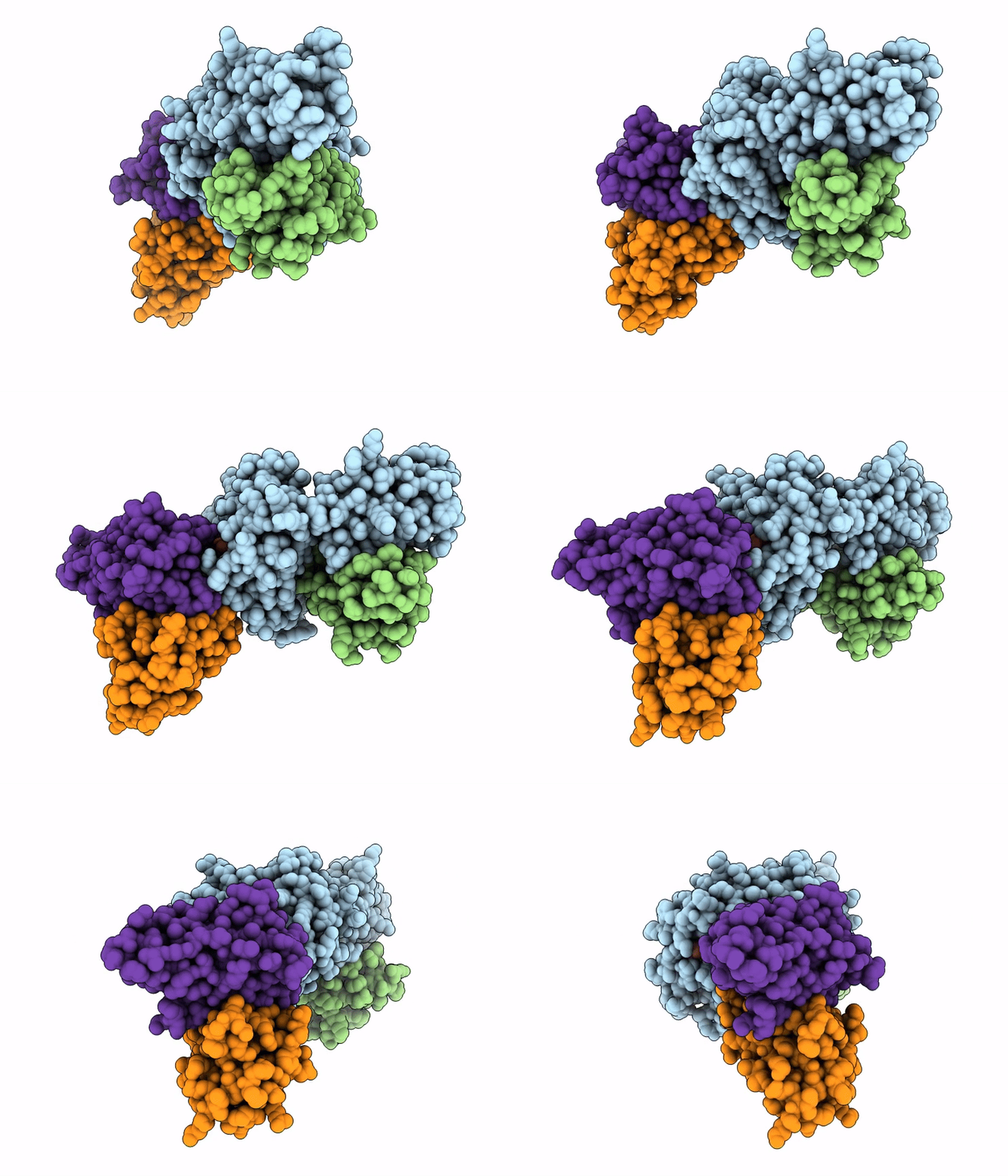
9NFB image
Deposition Date 2025-02-21
Release Date 2025-10-08
Last Version Date 2025-12-31
Entry Detail
PDB ID:
9NFB
Keywords:
Title:
Structure of the cross-HLA supertype antibody R302 bound to a class I MHC presenting a divarasib-modified KRAS-G12C peptide on HLA-A*02
Biological Source:
Source Organism(s):
Homo sapiens (Taxon ID: 9606)
Expression System(s):
Method Details:
Experimental Method:
Resolution:
3.23 Å
Aggregation State:
PARTICLE
Reconstruction Method:
SINGLE PARTICLE
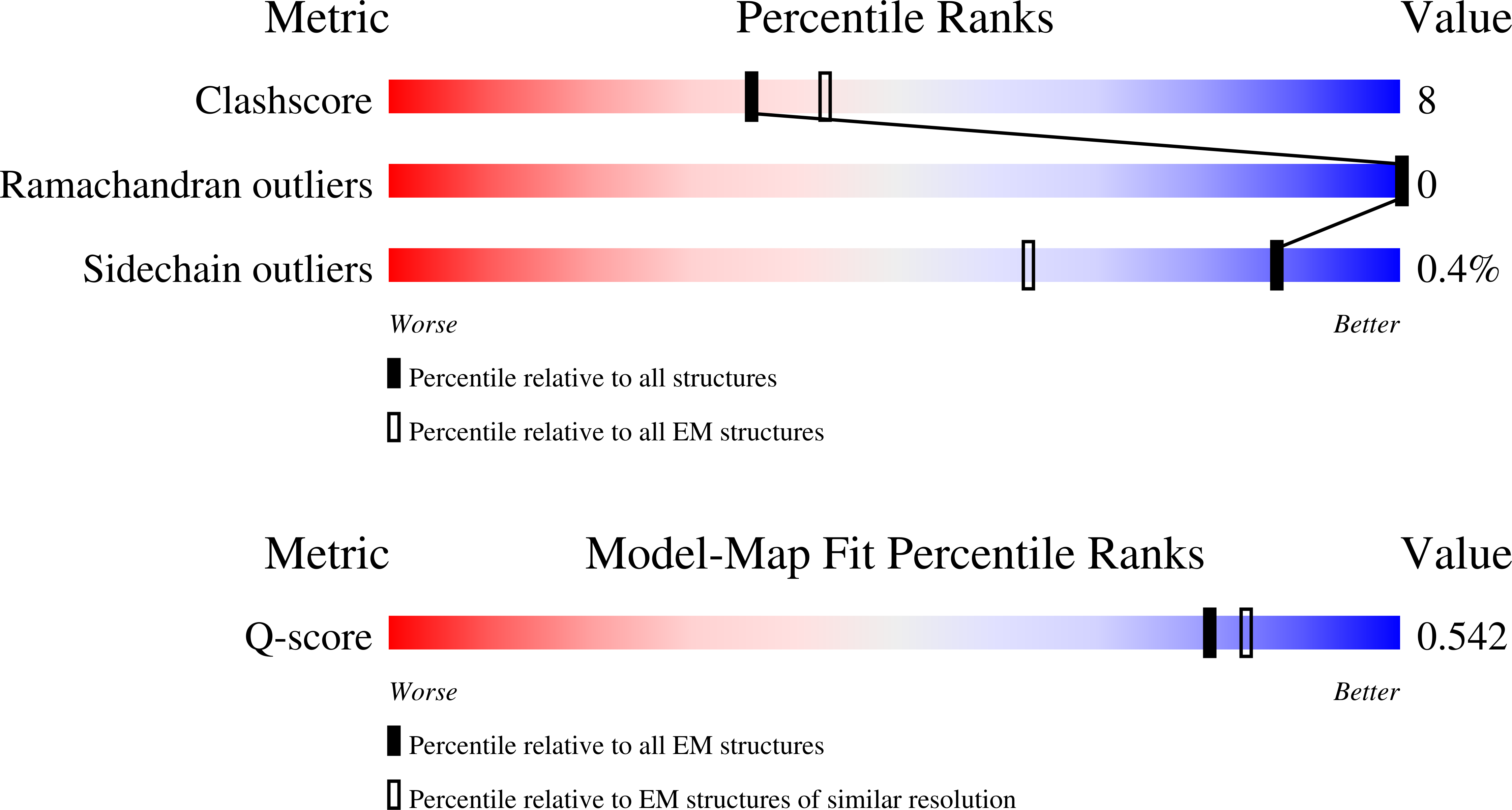
Macromolecular Entities
Structures with similar UniProt ID
Protein Blast
Polymer Type:polypeptide(L)
Molecule:MHC class I antigen
Gene (Uniprot):HLA-A
Chain IDs:A
Chain Length:307
Number of Molecules:1
Biological Source:Homo sapiens
Structures with similar UniProt ID
Protein Blast
Polymer Type:polypeptide(L)
Molecule:Beta-2-microglobulin
Gene (Uniprot):B2M
Chain IDs:B
Chain Length:101
Number of Molecules:1
Biological Source:Homo sapiens
Structures with similar UniProt ID
Protein Blast
Polymer Type:polypeptide(L)
Molecule:GTPase KRas
Gene (Uniprot):KRAS
Mutagens:G12C
Chain IDs:C
Chain Length:10
Number of Molecules:1
Biological Source:Homo sapiens
Polymer Type:polypeptide(L)
Molecule:R302 Fab light chain
Chain IDs:D
Chain Length:224
Number of Molecules:1
Biological Source:Homo sapiens
Polymer Type:polypeptide(L)
Molecule:R302 Fab heavy chain
Chain IDs:E
Chain Length:225
Number of Molecules:1
Biological Source:Homo sapiens
Ligand Molecules
Primary Citation
Engineered antibodies that stabilize drug-modified KRAS G12C neoantigens enable selective and potent cross-HLA immunotherapy.
Nat Commun 16 11264 11264 (2025)
PMID: 41408054 DOI: 10.1038/s41467-025-66132-w

Abstact

Covalent inhibitors of oncoprotein KRAS have initial efficacy, but responses lack durability. Covalently modified oncoproteins are presented as MHC-restricted hapten-peptides (p*MHC) on the cancer cell surface, enabling combination of targeted therapy with immunotherapy to overcome drug resistance. Building on indirect evidence of KRASG12C-derived p*MHCs, we use immunopeptidomics to identify and directly quantify these synthetic neoantigens. To address challenges by their low copy number, we develop AETX-R114, a T cell engaging bispecific antibody with picomolar affinity for MHC-restricted sotorasib-modified KRASG12C peptides presented by three HLA-A3 supertype alleles. AETX-R114 dramatically increases the half-life and thereby the number of presented p*MHCs, enabling selective and potent killing of resistant cancer cells both in vitro and in vivo. To broaden the therapeutic potential of creating and targeting synthetic neoantigens, we further develop AETX-R302, which recognizes divarasib-modified KRASG12C peptides presented on alleles from the HLA-A2 and A3 supertypes. Cryo-EM structure determination reveals the molecular basis for breaking HLA supertype restriction. Collectively, our study illustrates how engineered antibodies can transform synthetic neoantigens into actionable cancer immunotherapy targets.

Legend

Protein

Chemical

Disease

Primary Citation of related structures
Feedback Form
Name
Email
Institute
Feedback