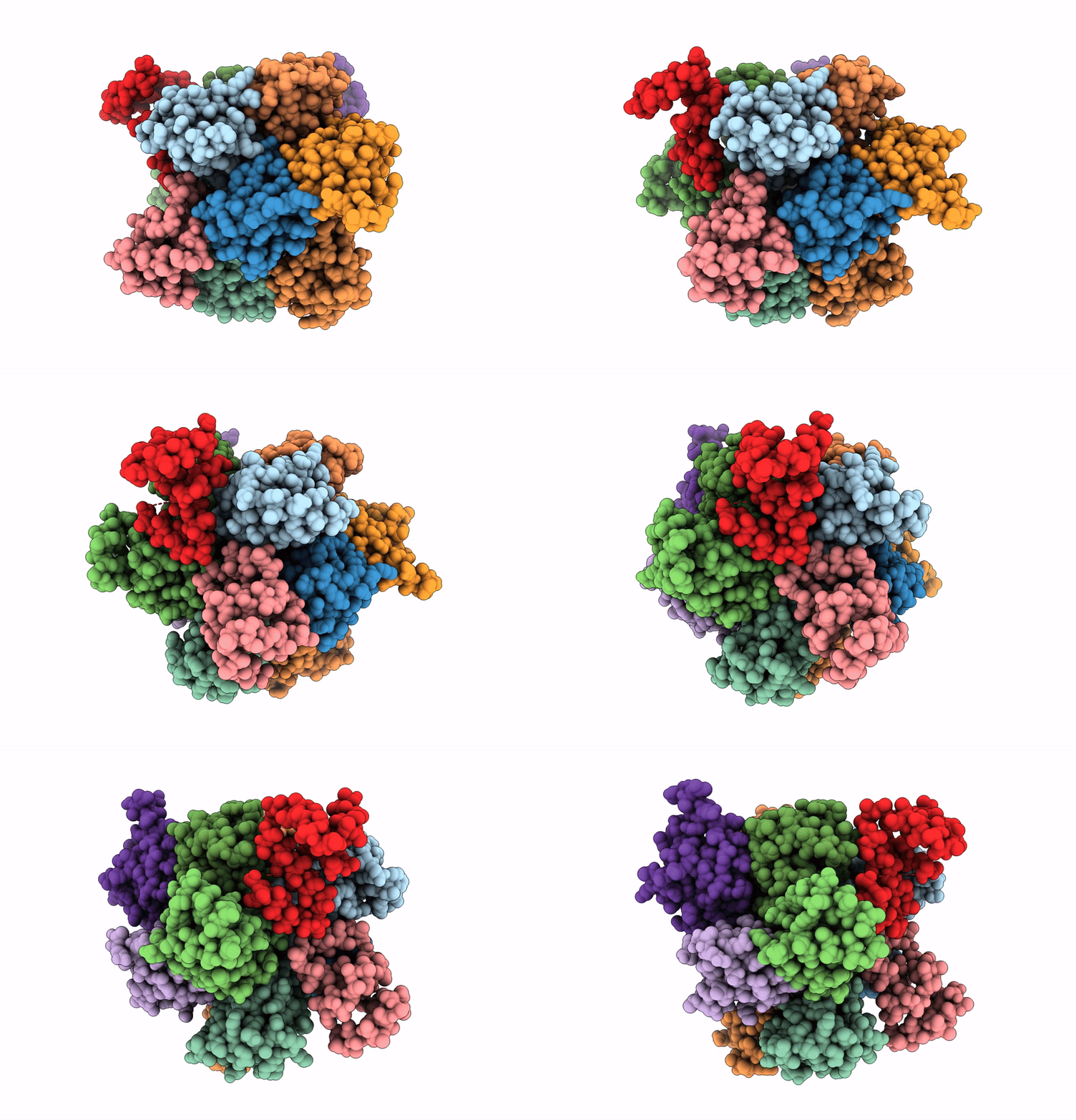
9NCQ image
Deposition Date 2025-02-17
Release Date 2025-11-05
Last Version Date 2025-11-12
Entry Detail
PDB ID:
9NCQ
Keywords:
Title:
Cryo-EM structure of Fas-FADD complex
Biological Source:
Source Organism:
Homo sapiens (Taxon ID: 9606)
Method Details:
Experimental Method:
Resolution:
3.51 Å
Aggregation State:
PARTICLE
Reconstruction Method:
SINGLE PARTICLE
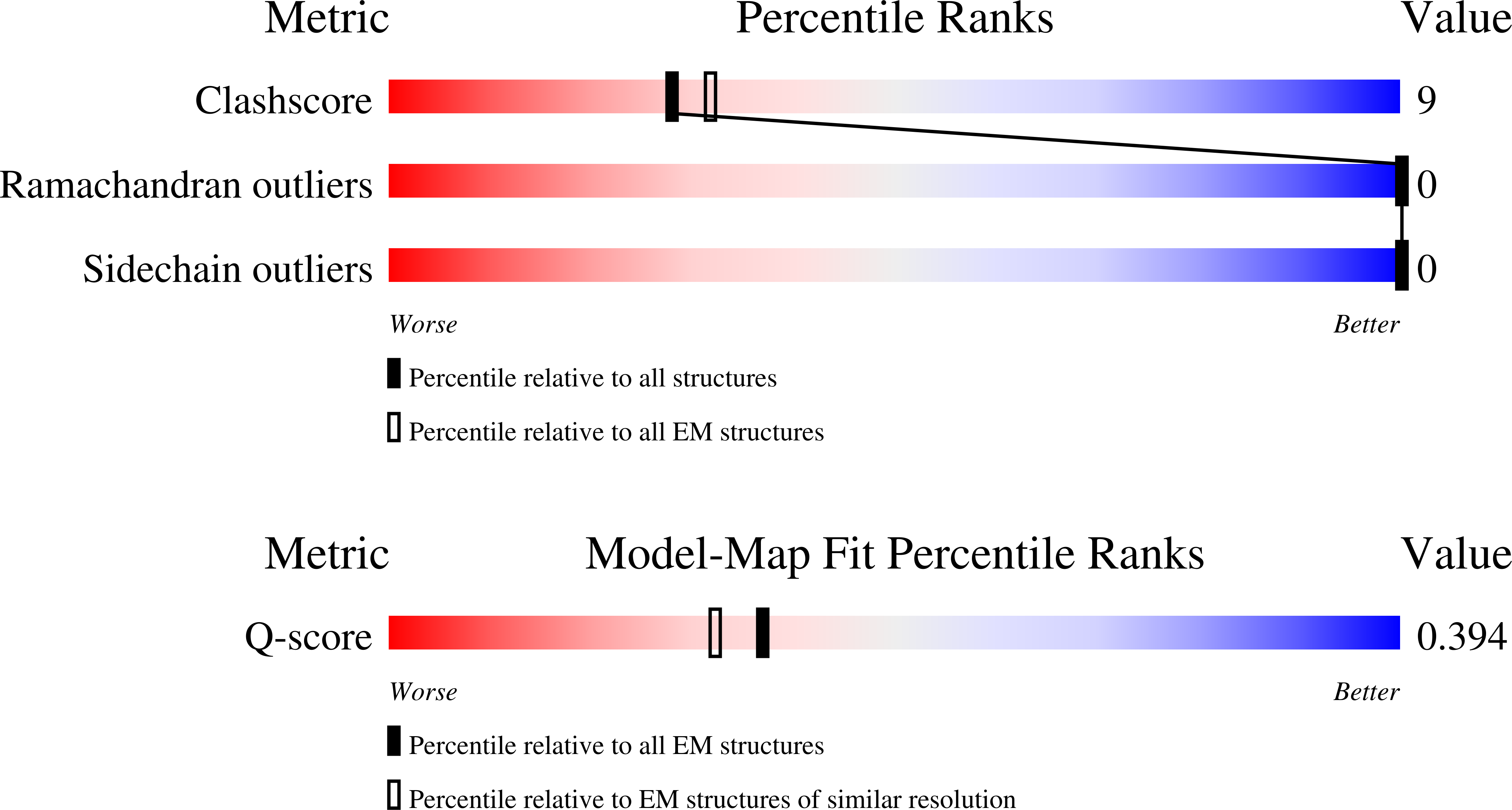
Macromolecular Entities
Structures with similar UniProt ID
Protein Blast
Polymer Type:polypeptide(L)
Molecule:Tumor necrosis factor receptor superfamily member 6
Gene (Uniprot):FAS
Chain IDs:A, B, C (auth: E), D (auth: G), E (auth: C), F, G (auth: D)
Chain Length:96
Number of Molecules:7
Biological Source:Homo sapiens
Structures with similar UniProt ID
Protein Blast
Polymer Type:polypeptide(L)
Molecule:FAS-associated death domain protein
Gene (Uniprot):FADD
Chain IDs:H, I, J (auth: L), K, L (auth: J)
Chain Length:101
Number of Molecules:5
Biological Source:Homo sapiens
Ligand Molecules
Primary Citation
Assembly and activation of the death-inducing signaling complex.
Proc.Natl.Acad.Sci.USA 122 e2504819122 e2504819122 (2025)
PMID: 40465623 DOI: 10.1073/pnas.2504819122

Abstact

The death-inducing signaling complex (DISC), comprising Fas, Fas-associated death domain (FADD), and caspase-8, initiates extrinsic apoptosis. Using cryogenic electron microscopy (cryo-EM), we show that Fas and FADD death domains (DDs) form an asymmetric 7:5 oligomer, which promotes FADD death effector domain (DED) filament formation. Structural analysis reveals that FADD DED filaments closely resemble caspase-8 tandem DED filaments, suggesting that FADD DED serves as a nucleation scaffold for caspase-8 assembly. These findings provide a mechanistic framework for how DISC assembly initiates apoptosis and amplifies signaling via higher-order oligomerization.

Legend

Protein

Chemical

Disease

Primary Citation of related structures
Feedback Form
Name
Email
Institute
Feedback