9N8P image
Deposition Date 2025-02-09
Release Date 2025-04-16
Last Version Date 2025-04-30
Entry Detail
PDB ID:
9N8P
Keywords:
Title:
Subtomogram average of dimers of influenza HA trimers
Biological Source:
Method Details:
Experimental Method:
Resolution:
9.00 Å
Aggregation State:
PARTICLE
Reconstruction Method:
SUBTOMOGRAM AVERAGING
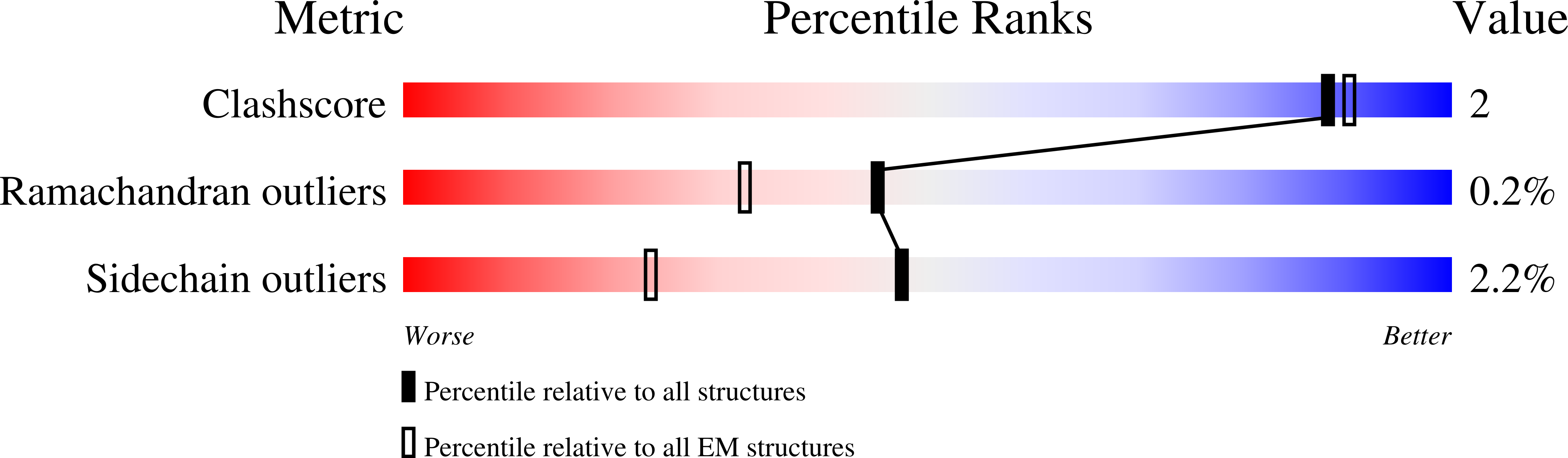
Macromolecular Entities
Structures with similar UniProt ID
Protein Blast
Polymer Type:polypeptide(L)
Molecule:Hemagglutinin
Gene (Uniprot):HA
Chain IDs:A, C, E, G, I, K
Chain Length:327
Number of Molecules:6
Biological Source:Influenza A virus (A/Puerto Rico/8/1934(H1N1))
Structures with similar UniProt ID
Protein Blast
Polymer Type:polypeptide(L)
Molecule:Hemagglutinin HA2 chain
Gene (Uniprot):HA
Chain IDs:B, D, F, H, J, L
Chain Length:160
Number of Molecules:6
Biological Source:Influenza A virus (A/Puerto Rico/8/1934(H1N1))
Ligand Molecules
Primary Citation
Virion-associated influenza hemagglutinin clusters upon sialic acid binding visualized by cryoelectron tomography.
Proc.Natl.Acad.Sci.USA 122 e2426427122 e2426427122 (2025)
PMID: 40244672 DOI: 10.1073/pnas.2426427122

Abstact

Influenza viruses are enveloped, negative-sense single-stranded RNA viruses covered in a dense layer of glycoproteins. Hemagglutinin (HA) accounts for 80 to 90% of influenza glycoprotein and plays a role in host cell binding and membrane fusion. While previous studies have characterized structures of purified receptor-free and receptor-bound HA, the effect of receptor binding on HA organization and structure on virions remains unknown. Here, we used cryoelectron tomography to visualize influenza virions bound to a sialic acid receptor mimic. Overall, receptor binding did not result in significant changes in viral morphology; however, we observed rearrangements of HA trimer organization and orientation. Compared to the even interglycoprotein spacing of unliganded HA trimers, receptor binding promotes HA trimer clustering and the formation of a triplet of trimers. Subtomogram averaging and refinement yielded 8 to 10 Å reconstructions that allowed us to visualize specific contacts between HAs from neighboring trimers and identify molecular features that mediate clustering. Taken together, we present structural evidence that receptor binding triggers clustering of HA trimers, revealing an additional layer of HA dynamics and plasticity.

Legend

Protein

Chemical

Disease

Primary Citation of related structures
Feedback Form
Name
Email
Institute
Feedback