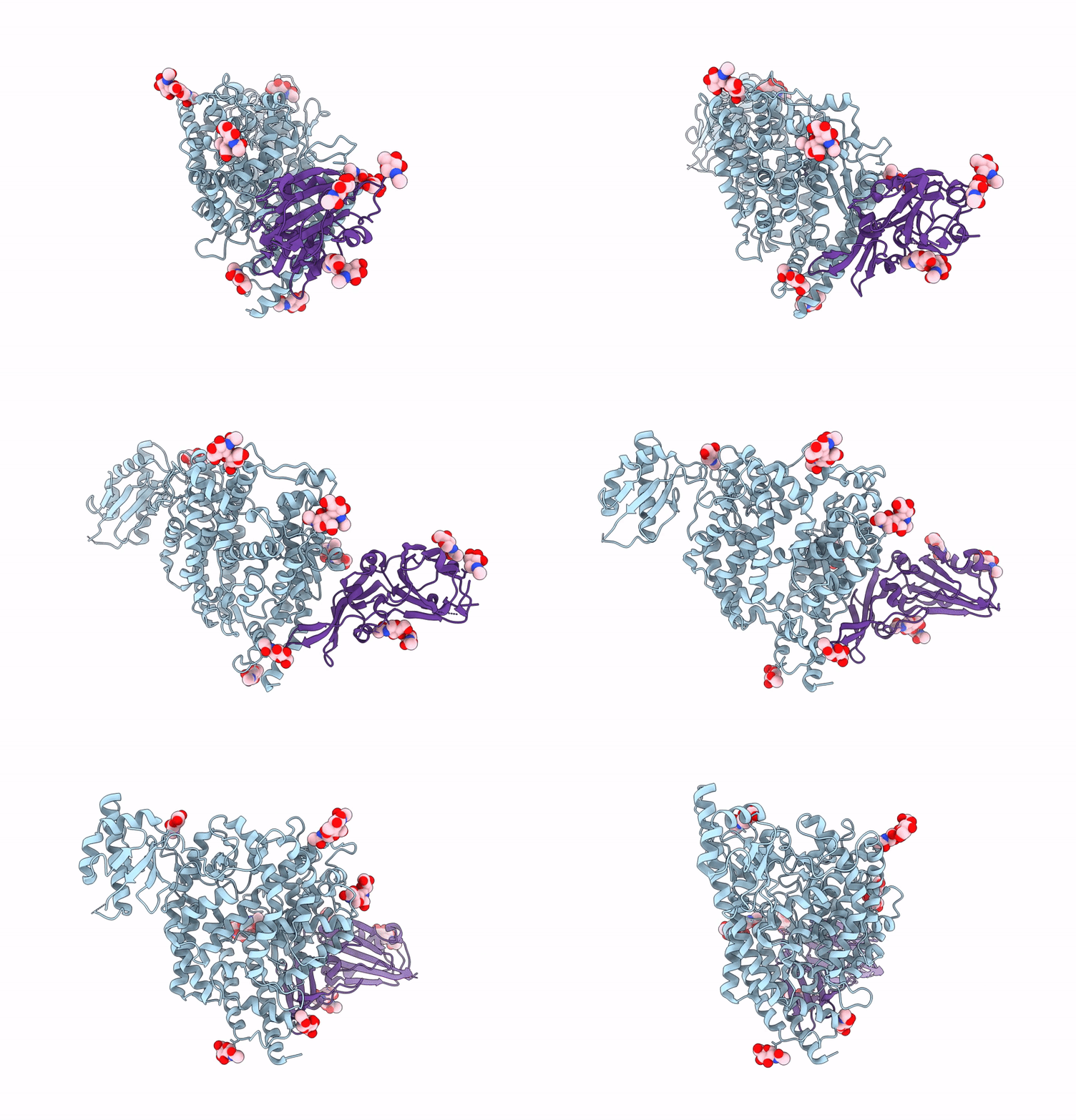
9N7D image
Deposition Date 2025-02-05
Release Date 2025-08-27
Last Version Date 2025-08-27
Entry Detail
PDB ID:
9N7D
Title:
Structure of the Rattus norvegicus ACE2 receptor bound HsItaly2011 RBD complex
Biological Source:
Source Organism:
Host Organism:
Method Details:
Experimental Method:
Resolution:
2.50 Å
Aggregation State:
PARTICLE
Reconstruction Method:
SINGLE PARTICLE

Macromolecular Entities
Structures with similar UniProt ID
Protein Blast
Polymer Type:polypeptide(L)
Molecule:Angiotensin-converting enzyme 2
Gene (Uniprot):Ace2
Chain IDs:A
Chain Length:767
Number of Molecules:1
Biological Source:Rattus norvegicus
Structures with similar UniProt ID
Protein Blast
Polymer Type:polypeptide(L)
Molecule:Spike glycoprotein
Gene (Uniprot):S
Chain IDs:B
Chain Length:271
Number of Molecules:1
Biological Source:Merbecovirus
Primary Citation
ACE2 utilization of HKU25 clade MERS-related coronaviruses with broad geographic distribution.
Biorxiv ? ? ? (2025)
PMID: 40027745 DOI: 10.1101/2025.02.19.639017

Abstact

Dipeptidyl peptidase-4 (DPP4) is a well-established receptor for several MERS-related coronaviruses (MERSr-CoVs) isolated from humans, camels, pangolins, and bats (1-6). However, the receptor usage of many genetically diverse bat MERSr-CoVs with broad geographical distributions remains poorly understood. Recent studies have identified angiotensin-converting enzyme 2 (ACE2) as an entry receptor for multiple merbecovirus clades. Here, using viral antigen and pseudovirus-based functional assays, we demonstrate that several bat merbecoviruses from the HKU25 clade previously thought to utilize DPP4 (7), employ ACE2 as their functional receptor. Cryo-electron microscopy analysis revealed that HsItaly2011 and VsCoV-a7 recognize ACE2 with a binding mode sharing similarity with that of HKU5 but involving remodeled interfaces and distinct ortholog selectivity, suggesting a common evolutionary origin of ACE2 utilization for these two clades of viruses. EjCoV-3, a strain closely related to the DPP4-using MERSr-CoV BtCoV-422, exhibited relatively broad ACE2 ortholog tropism and could utilize human ACE2 albeit suboptimally. Despite differences in entry mechanisms and spike proteolytic activation compared to MERS-CoV, these viruses remain sensitive to several broadly neutralizing antibodies and entry inhibitors. These findings redefine our understanding of the evolution of receptor usage among MERSr-CoVs and highlight the versatility of ACE2 as a functional receptor for diverse coronaviruses.

Legend

Protein

Chemical

Disease

Primary Citation of related structures
Feedback Form
Name
Email
Institute
Feedback