9N6C image
Deposition Date 2025-02-05
Release Date 2025-04-23
Last Version Date 2025-11-12
Entry Detail
PDB ID:
9N6C
Title:
Structure of the Retron IA Complex without the HNH Nuclease
Biological Source:
Source Organism:
Escherichia coli (Taxon ID: 562)
Host Organism:
Method Details:
Experimental Method:
Resolution:
2.99 Å
Aggregation State:
PARTICLE
Reconstruction Method:
SINGLE PARTICLE
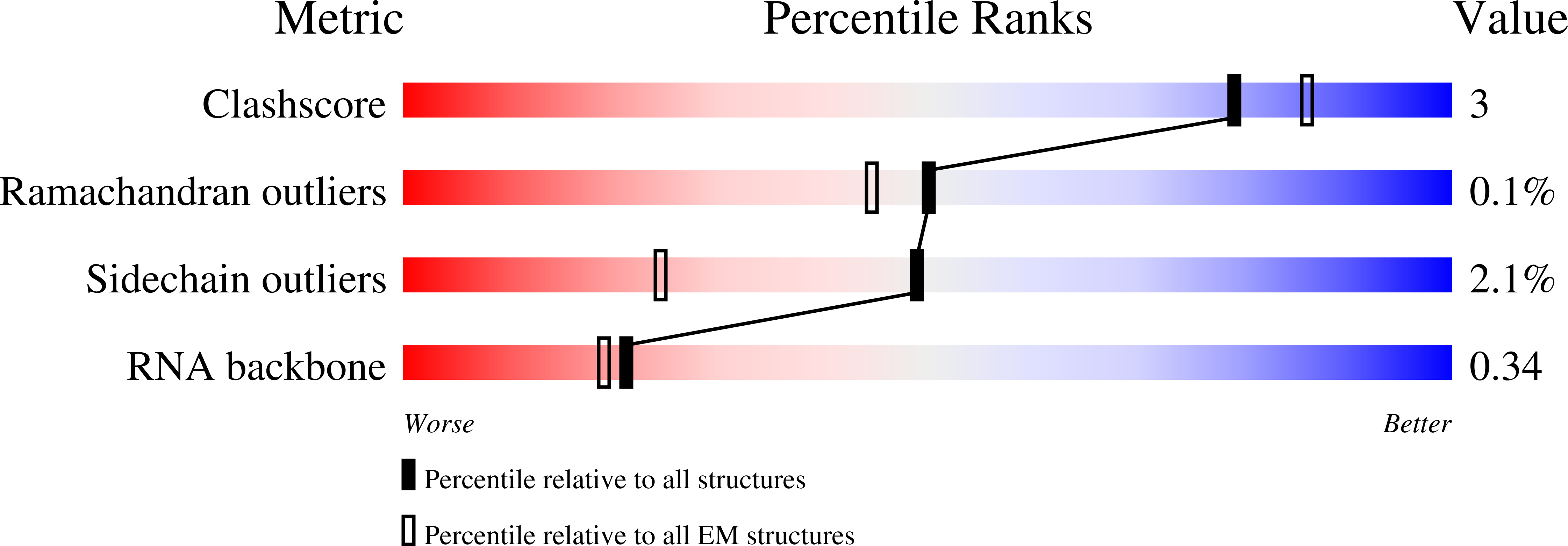
Macromolecular Entities
Structures with similar UniProt ID
Protein Blast
Polymer Type:polypeptide(L)
Molecule:AAA family ATPase
Gene (Uniprot):QY721_001703
Mutagens:N-terminal MWSHPQFEK, del native fMet
Chain IDs:A, B, C, D
Chain Length:552
Number of Molecules:4
Biological Source:Escherichia coli
Structures with similar UniProt ID
Protein Blast
Polymer Type:polypeptide(L)
Molecule:RNA-directed DNA polymerase
Gene (Uniprot):QY721_001704
Chain IDs:E
Chain Length:311
Number of Molecules:1
Biological Source:Escherichia coli
Polymer Type:polydeoxyribonucleotide
Molecule:Retron IA msDNA
Chain IDs:F (auth: H)
Chain Length:162
Number of Molecules:1
Biological Source:Escherichia coli
Polymer Type:polyribonucleotide
Molecule:Retron IA ncRNA
Chain IDs:G (auth: I)
Chain Length:162
Number of Molecules:1
Biological Source:Escherichia coli
Ligand Molecules
Primary Citation

Abstact

Reverse transcriptases (RTs) have well-established roles in the replication and spread of retroviruses and retrotransposons. However, recent evidence suggests that RTs have been conscripted by cells for diverse roles in antiviral defence. Here we determine structures of a type I-A retron, which explain how RNA, DNA, RT, HNH-nuclease and four molecules of a structure maintenance of chromosome (SMC)-family ATPase assemble into a 364 kDa complex that provides phage defence. We show that phage-encoded nucleases trigger degradation of the retron-associated DNA, leading to activation of the HNH nuclease. The HNH nuclease cleaves tRNASer, stalling protein synthesis and arresting viral replication. Taken together, these data reveal diverse and paradoxical roles for RTs in the perpetuation and elimination of genetic parasites.

Legend

Protein

Chemical

Disease

Primary Citation of related structures
Feedback Form
Name
Email
Institute
Feedback