Abstact
UNLABELLED
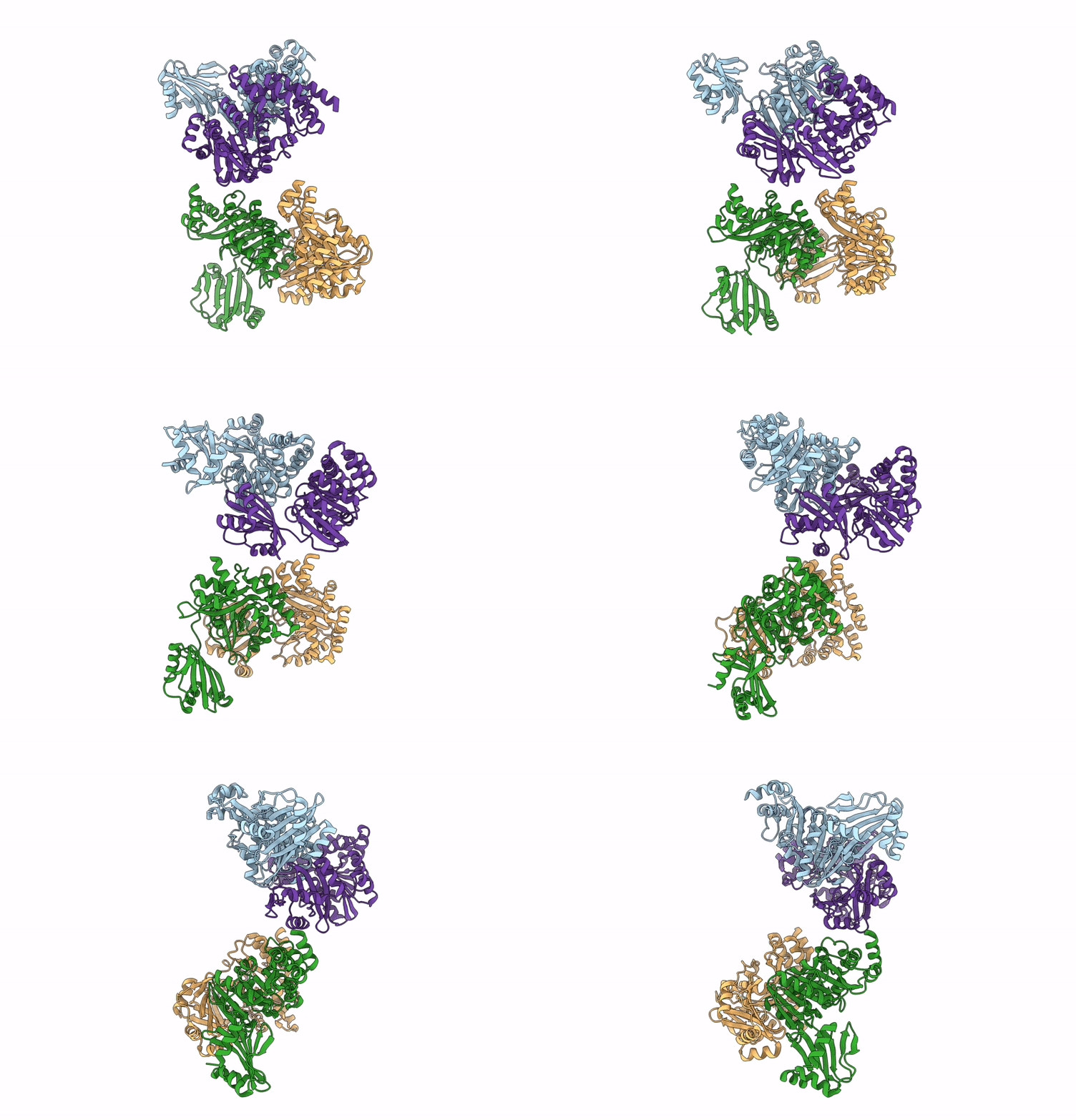
Many functions of Pseudomonas aeruginosa type IVa pili, including twitching motility and surface sensing, depend on dynamic cycles of filament assembly and disassembly powered by the cytoplasmic ATPases PilB, PilT, and PilU. Deletion of pilT results in loss of twitching and pilus-specific bacteriophage susceptibility, while non-twitching pilU mutants remain susceptible to pilus-specific phages, indicating that they still produce retractable pili. pilU mutants have high basal levels of the secondary messenger cyclic AMP (cAMP) that normally increases following surface contact, suggesting aberrant surface sensing. To better understand PilU's role in pilus biology, we solved its X-ray crystal structure and used phylogenetic analyses to identify conserved differences between PilT and PilU. Chemical mutagenesis followed by whole-genome sequencing was used to identify suppressors in the ΔpilU mutant background that restored twitching motility. The mutations mapped to the major pilin, PilA, or the pilus tip adhesin, PilY1. Both the position and nature of the substitutions in PilA impacted restoration of motility, and it was dependent on functional PilT. Complementation of most pilU suppressors with PilU in trans further increased motility, while the expression of wild-type PilA in trans decreased motility in a dose-dependent manner. Notably, cAMP levels remained elevated in most twitching pilU suppressor mutants, showing that surface sensing and motility can be uncoupled. Together, our data suggest that the bacterial response to surfaces reflects a complex interaction of PilU function with specific alleles of PilY1 and PilA that together modulate pilus dynamics and function.
IMPORTANCE
The ability of bacteria to sense and respond to contact with surfaces is important for triggering changes in secondary messenger levels and gene expression, leading to the formation of biofilms and increased production of virulence factors. For Pseudomonas aeruginosa, the expression of functional type IVa pili is important for the accumulation of cyclic AMP (cAMP) following surface contact. Deletion of the PilT retraction ATPase paralog PilU leads to loss of pilus-mediated twitching motility but also high intracellular levels of cAMP, a phenotype mimicking that of surface-adapted cells. Here, we isolated twitching suppressors of a pilU deletion mutant that mapped to the pilin subunit PilA or pilus-tip adhesin PilY1 and showed that for most, elevated cAMP levels did not decrease when motility was restored. Twitching was dependent on functional PilT, and complementation with PilU further increased twitching for most mutants. These data show that in permissive contexts, PilU is not required for twitching motility, providing new insights into mechanisms of bacterial surface sensing and evolution of type IVa pilus motor function.