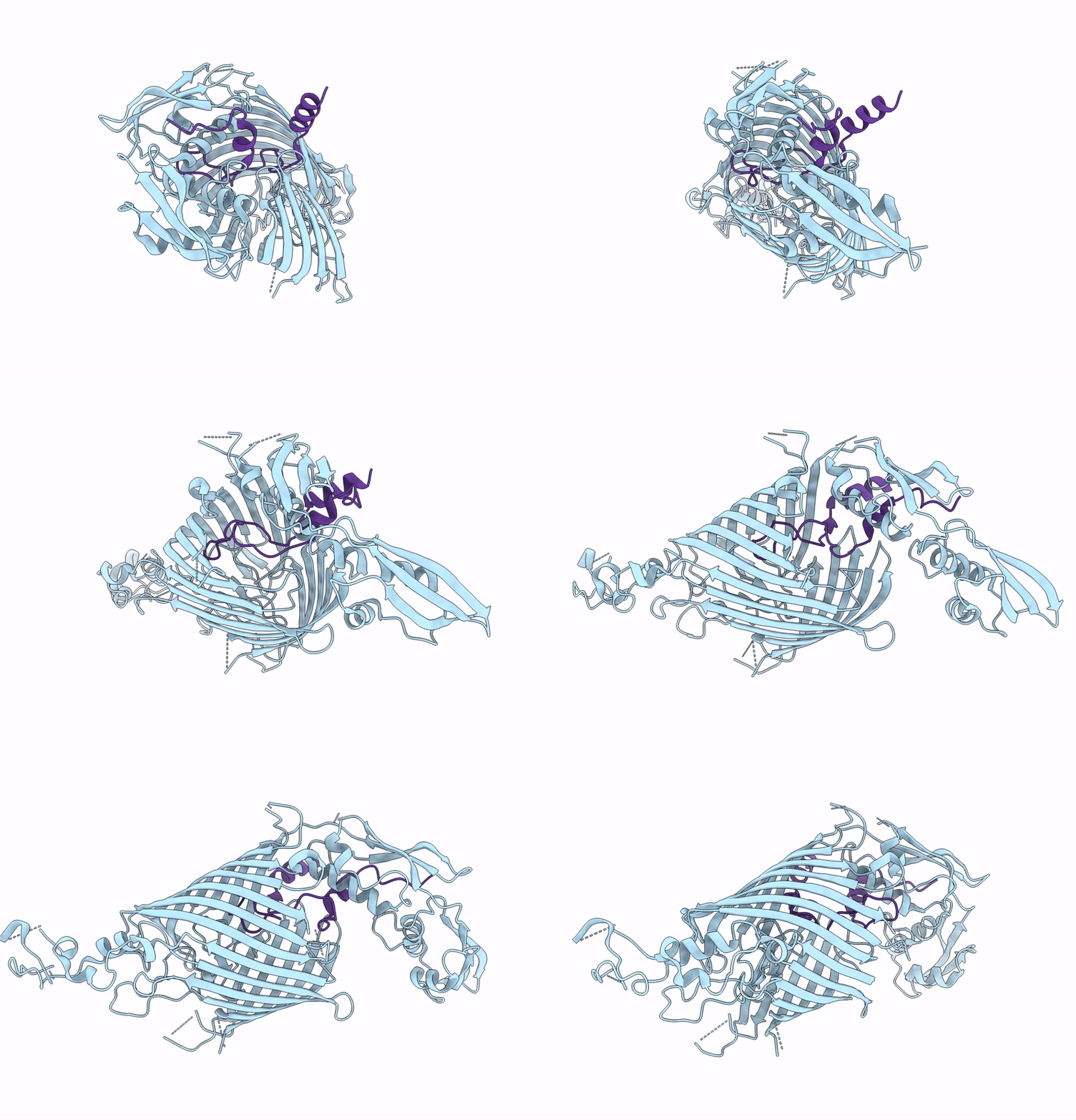
9N2E image
Deposition Date 2025-01-28
Release Date 2025-07-09
Last Version Date 2026-01-21
Entry Detail
PDB ID:
9N2E
Title:
Cryo-EM structure of F. johnsoniae BamAP
Biological Source:
Source Organism(s):
Method Details:
Experimental Method:
Resolution:
3.70 Å
Aggregation State:
PARTICLE
Reconstruction Method:
SINGLE PARTICLE
Macromolecular Entities
Structures with similar UniProt ID
Protein Blast
Polymer Type:polypeptide(L)
Molecule:Surface antigen (D15)
Gene (Uniprot):Fjoh_1690
Chain IDs:A
Chain Length:900
Number of Molecules:1
Biological Source:Flavobacterium johnsoniae UW101
Structures with similar UniProt ID
Protein Blast
Polymer Type:polypeptide(L)
Molecule:CarboxypepD_reg-like domain-containing protein
Gene (Uniprot):Fjoh_1771
Chain IDs:B (auth: E)
Chain Length:249
Number of Molecules:1
Biological Source:Flavobacterium johnsoniae UW101
Ligand Molecules
Primary Citation
A shared mechanism for Bacteroidota protein transport and gliding motility.
Nat Commun 16 10217 10217 (2025)
PMID: 41266322 DOI: 10.1038/s41467-025-65003-8

Abstact

Bacteria of the phylum Bacteroidota are major human commensals and pathogens in addition to being abundant members of the wider biosphere. Bacteroidota move by gliding and they export proteins using the Type 9 Secretion System (T9SS). Here we discover that gliding motility and the T9SS share an unprecedented mechanism of energisation in which outer membrane proteins are covalently attached by disulfide bonds to a moving internal track structure that propels them laterally through the membrane. We determined the structure of an exemplar Bacteroidota mobile track by obtaining the cryoEM structure of a 3 MDa circular mini-track from Porphyromonas gingivalis. Our discoveries identify a mechanistic and evolutionary link between gliding motility and T9SS-dependent protein transport.

Legend

Protein

Chemical

Disease

Primary Citation of related structures
Feedback Form
Name
Email
Institute
Feedback