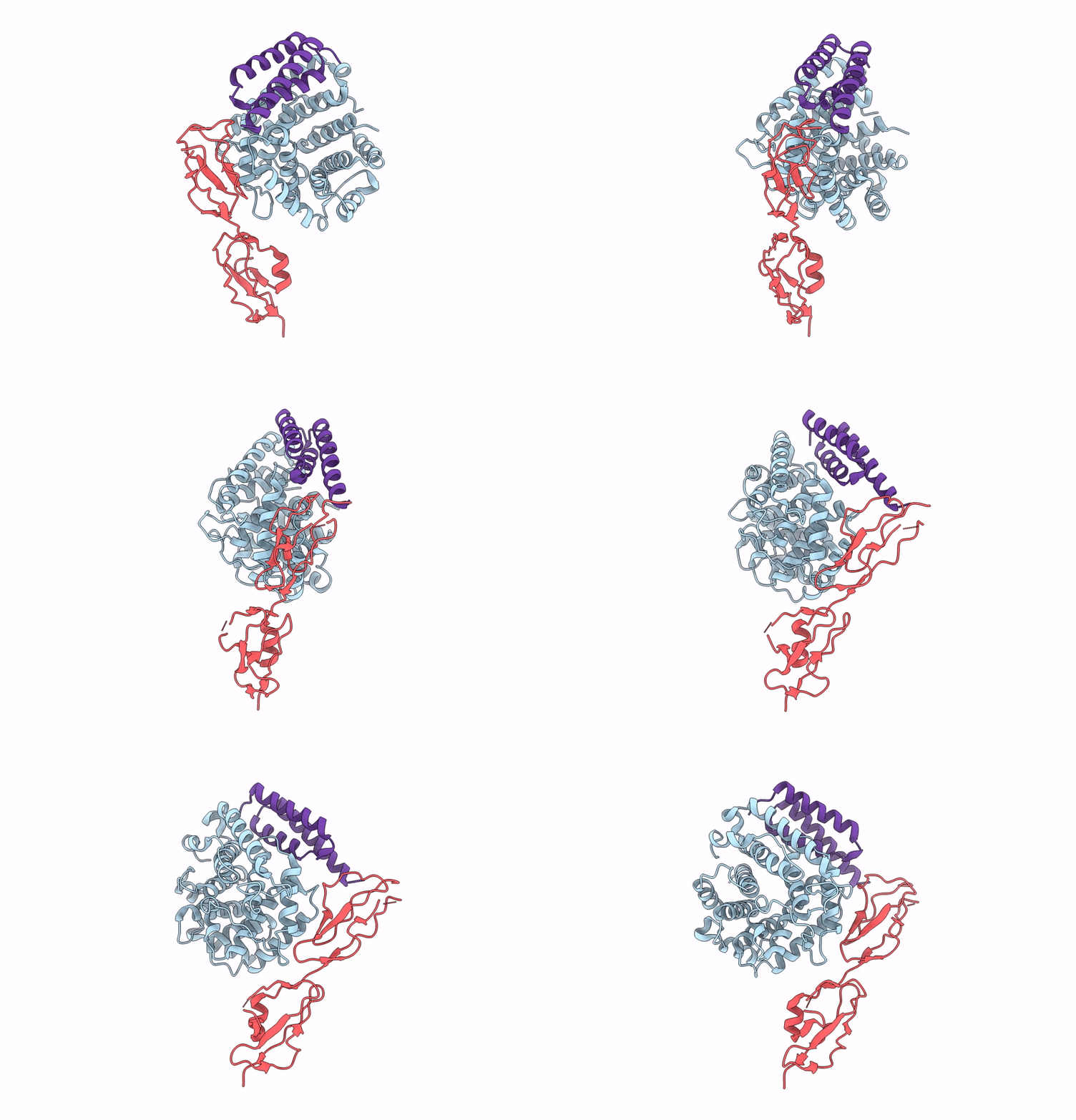
9N20 image
Deposition Date 2025-01-27
Release Date 2025-12-10
Last Version Date 2025-12-10
Entry Detail
PDB ID:
9N20
Keywords:
Title:
Structure of C3d Bound to a Fragment of FHR-2 and S. aureus Efb-C
Biological Source:
Source Organism:
Method Details:
Experimental Method:
Resolution:
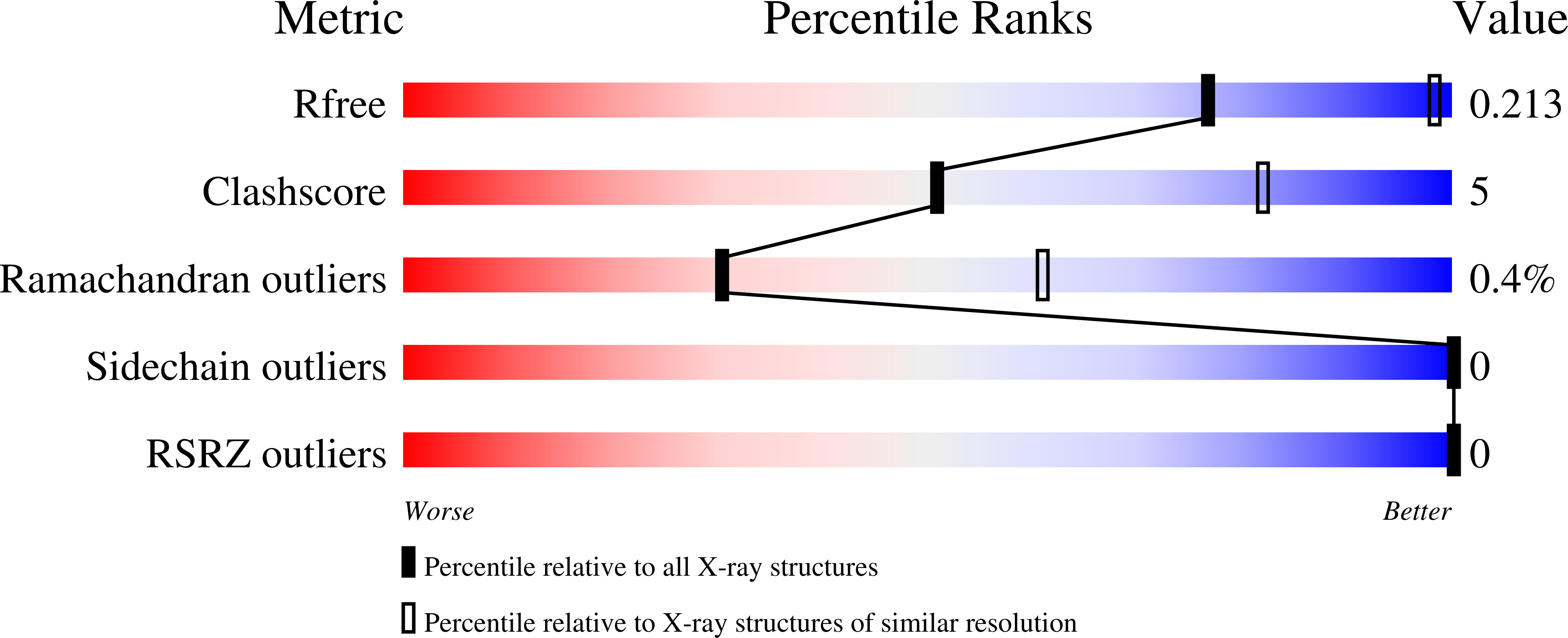
3.30 Å
R-Value Free:
0.21
R-Value Work:
0.17
R-Value Observed:
0.18
Space Group:
P 61
Macromolecular Entities
Structures with similar UniProt ID
Protein Blast
Polymer Type:polypeptide(L)
Molecule:Complement C3dg fragment
Gene (Uniprot):C3
Chain IDs:A
Chain Length:297
Number of Molecules:1
Biological Source:Homo sapiens
Structures with similar UniProt ID
Protein Blast
Polymer Type:polypeptide(L)
Molecule:Complement factor H-related protein 2
Gene (Uniprot):CFHR2
Chain IDs:C (auth: B)
Chain Length:131
Number of Molecules:1
Biological Source:Homo sapiens
Structures with similar UniProt ID
Protein Blast
Polymer Type:polypeptide(L)
Molecule:Fibrinogen-binding protein
Gene (Uniprot):fib
Chain IDs:B (auth: C)
Chain Length:75
Number of Molecules:1
Biological Source:Staphylococcus aureus subsp. aureus Mu50
Ligand Molecules
Primary Citation
The C-terminal domain of Staphylococcus aureus Efb recruits FHR-2 to C3b, synergistically inhibiting the terminal complement pathway.
J Immunol. ? ? ? (2025)
PMID: 41273729 DOI: 10.1093/jimmun/vkaf316

Abstact

The extracellular fibrinogen-binding protein (Efb) is one of nearly a dozen proteins secreted by Staphylococcus aureus to inhibit complement activation or amplification. The C-terminal domain of Efb (Efb-C) forms a high-affinity interaction with the thioester-containing domain of C3b (TED/C3d), thereby blocking formation of the C3 proconvertase complex through an allosteric mechanism. However, further functional consequences of Efb-C binding to C3b remain unexplored. Here, we identified a previously unknown interaction between Efb-C, C3b, and the complement regulatory molecule FHR2 (factor H-related protein 2). Since the FHR2/C3b interaction is centered upon the 2 C-terminal-most domains of FHR2 (FHR2[3-4]) and the TED/C3d domain of C3b, we tested whether Efb-C could influence the FHR2(3-4)/C3d interaction. We observed a significant enhancement of FHR2(3-4)/C3d binding in the presence of Efb-C. We studied the FHR2(3-4)/C3d/Efb-C complex by X-ray crystallography and found that Efb-C forms few direct interactions with FHR2(3-4). Yet, the presence of Efb-C also enhanced binding of FHR2(3-4) and full-length FHR2 to C3b, suggesting that the effect of Efb-C on the FHR2/C3b interaction arises from increased accessibility of the FHR2-binding site. We found that enhanced FHR2 binding did not impact the rate of C3 convertase formation more than Efb-C alone, nor did it impart decay acceleration or cofactor activity. However, we observed potent, synergistic inhibition of complement downstream of C5 activation by Efb-C and FHR2 but not by Efb-C and FHR2(3-4). Our results show that Efb-C binding to C3b exerts additional inhibitory effects on the central complement components beyond blocking formation of the C3 proconvertase alone.

Legend

Protein

Chemical

Disease

Primary Citation of related structures
Feedback Form
Name
Email
Institute
Feedback