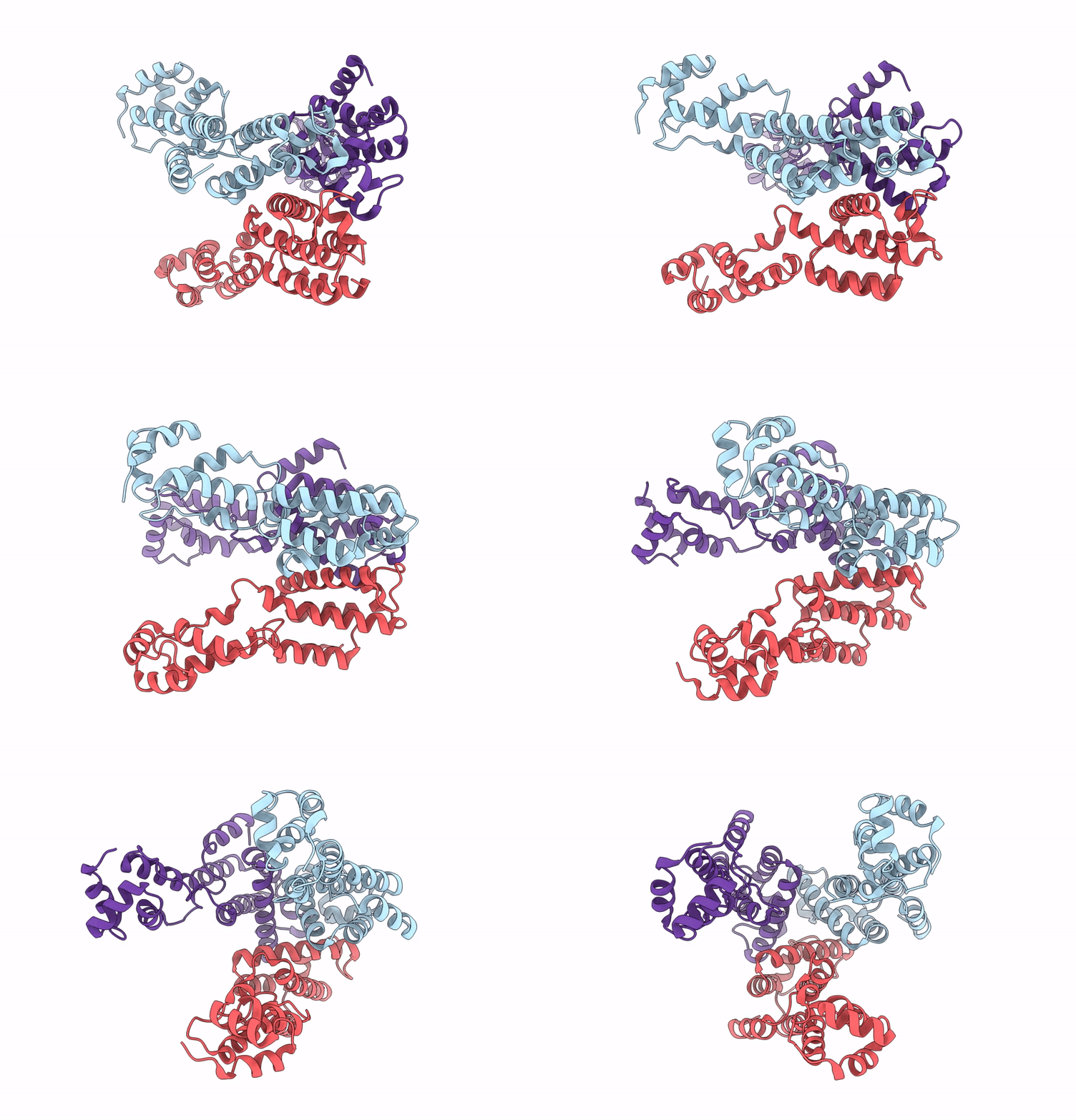
9N0W image
Deposition Date 2025-01-24
Release Date 2025-12-24
Last Version Date 2025-12-24
Entry Detail
PDB ID:
9N0W
Keywords:
Title:
HTLV-1 Gag capsid from immature particles
Biological Source:
Source Organism:
Host Organism:
Method Details:
Experimental Method:
Resolution:
3.44 Å
Aggregation State:
PARTICLE
Reconstruction Method:
SINGLE PARTICLE
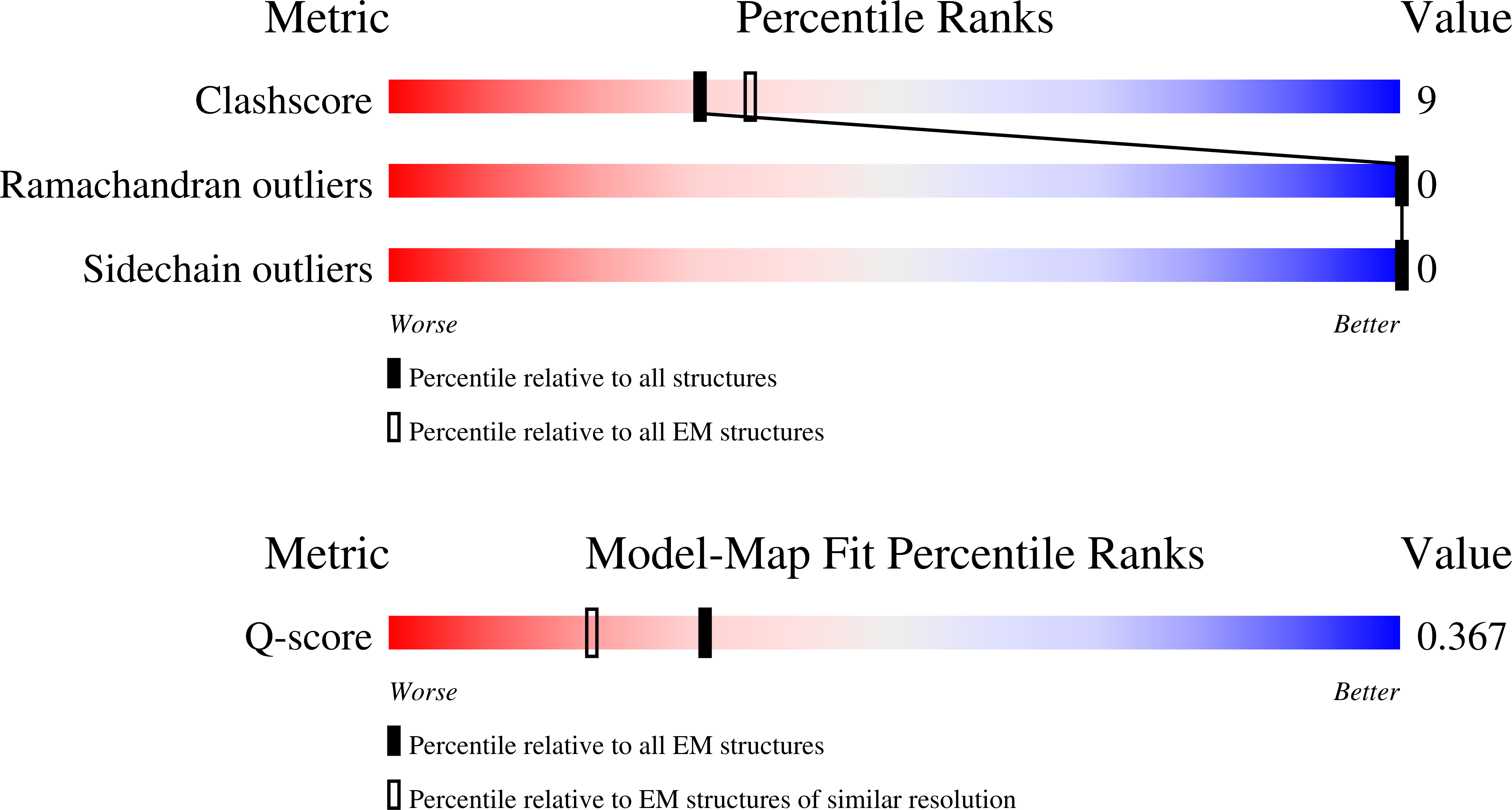
Macromolecular Entities
Structures with similar UniProt ID
Protein Blast
Polymer Type:polypeptide(L)
Molecule:Gag protein
Gene (Uniprot):gag
Chain IDs:A (auth: B), B (auth: C), C (auth: A)
Chain Length:193
Number of Molecules:3
Biological Source:Human T-cell leukemia virus type I
Ligand Molecules
Primary Citation
High-resolution analysis of the human T-cell leukemia virus capsid protein reveals insights into immature particle morphology.
Nat Commun ? ? ? (2025)
PMID: 41381513 DOI: 10.1038/s41467-025-67129-1

Abstact

Infection with human T-cell leukemia virus type 1 (HTLV-1) can result in adult T-cell leukemia/lymphoma and HTLV-1 associated-myelopathy/tropical spastic paraparesis. The Gag polyprotein - the major structural protein - is crucial for driving virus particle assembly, with the capsid (CA) domain as the key determinant for Gag multimerization. Here, we characterize the immature CA lattice from immature virus particles by using cryo-electron microscopy and tomography (cryo-EM/ET). We report resolving the immature CA lattice to 3.4 Å resolution by single particle analysis (SPA). Our reconstruction reveals that the lattice is stabilized through a trimeric NTD inter-hexamer interface and a dimeric CTD inter-hexamer interface. Further analysis by cryo-ET reveals clear heterogeneity, notably the varying lattice curvatures and the varying distances from the CA layer to the membrane. Intriguingly, inositol hexakisphosphate (IP6) is dispensable for HTLV-1 immature particle assembly and proper immature lattice formation. These observations provide deeper insights into the molecular basis of HTLV-1 immature particle morphology as well as aid in revealing therapeutic targets.

Legend

Protein

Chemical

Disease

Primary Citation of related structures
Feedback Form
Name
Email
Institute
Feedback