9MYE image
Deposition Date 2025-01-21
Release Date 2025-12-17
Last Version Date 2026-01-21
Entry Detail
PDB ID:
9MYE
Keywords:
Title:
C28 Polymerase Incorporating RNA, n+1
Biological Source:
Source Organism(s):
Expression System(s):
Method Details:
Experimental Method:
Resolution:
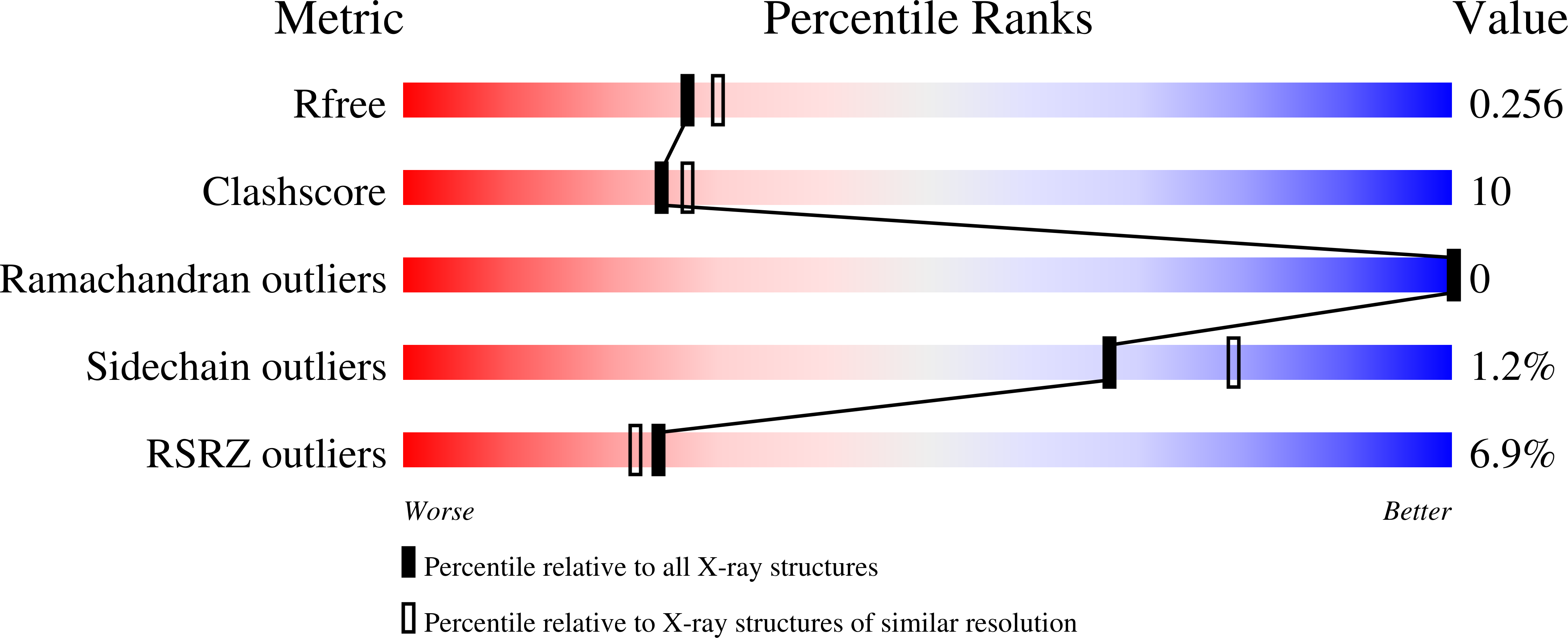
2.22 Å
R-Value Free:
0.27
R-Value Work:
0.24
Space Group:
P 21 21 21
Macromolecular Entities
Structures with similar UniProt ID
Protein Blast
Polymer Type:polypeptide(L)
Molecule:DNA polymerase
Gene (Uniprot):pol
Chain IDs:A
Chain Length:774
Number of Molecules:1
Biological Source:Thermococcus gorgonarius
Polymer Type:polydeoxyribonucleotide/polyribonucleotide hybrid
Molecule:Primer
Chain IDs:C (auth: P)
Chain Length:12
Number of Molecules:1
Biological Source:synthetic construct
Polymer Type:polydeoxyribonucleotide
Molecule:Template
Chain IDs:B (auth: T)
Chain Length:18
Number of Molecules:1
Biological Source:synthetic construct
Primary Citation
Rapid evolution of a highly efficient RNA polymerase by homologous recombination.
Nat.Chem.Biol. ? ? ? (2026)
PMID: 41501182 DOI: 10.1038/s41589-025-02124-7

Abstact

Engineering DNA polymerases to efficiently synthesize artificial or noncognate nucleic acids remains an essential challenge in synthetic biology. Here we describe an evolutionary campaign designed to convert a family of highly selective DNA polymerases into an unnatural homolog with strong RNA synthesis activity. Starting from a homologous recombination library, a short evolutionary path was achieved using a single-cell droplet-based microfluidic selection strategy to produce C28, a newly engineered polymerase that can synthesize RNA with a rate of ~3 nt s-1 and of >99% fidelity. C28 is capable of long-range RNA synthesis, reverse transcription and chimeric DNA-RNA amplification using the PCR. Despite strong discrimination against other genetic systems, C28 readily accepts several 2'F and base-modified RNA analogs. Together, these findings highlight the power of directed evolution as an approach for reprogramming DNA polymerases with activities that could help drive future applications in biotechnology and medicine.

Legend

Protein

Chemical

Disease

Primary Citation of related structures
Feedback Form
Name
Email
Institute
Feedback