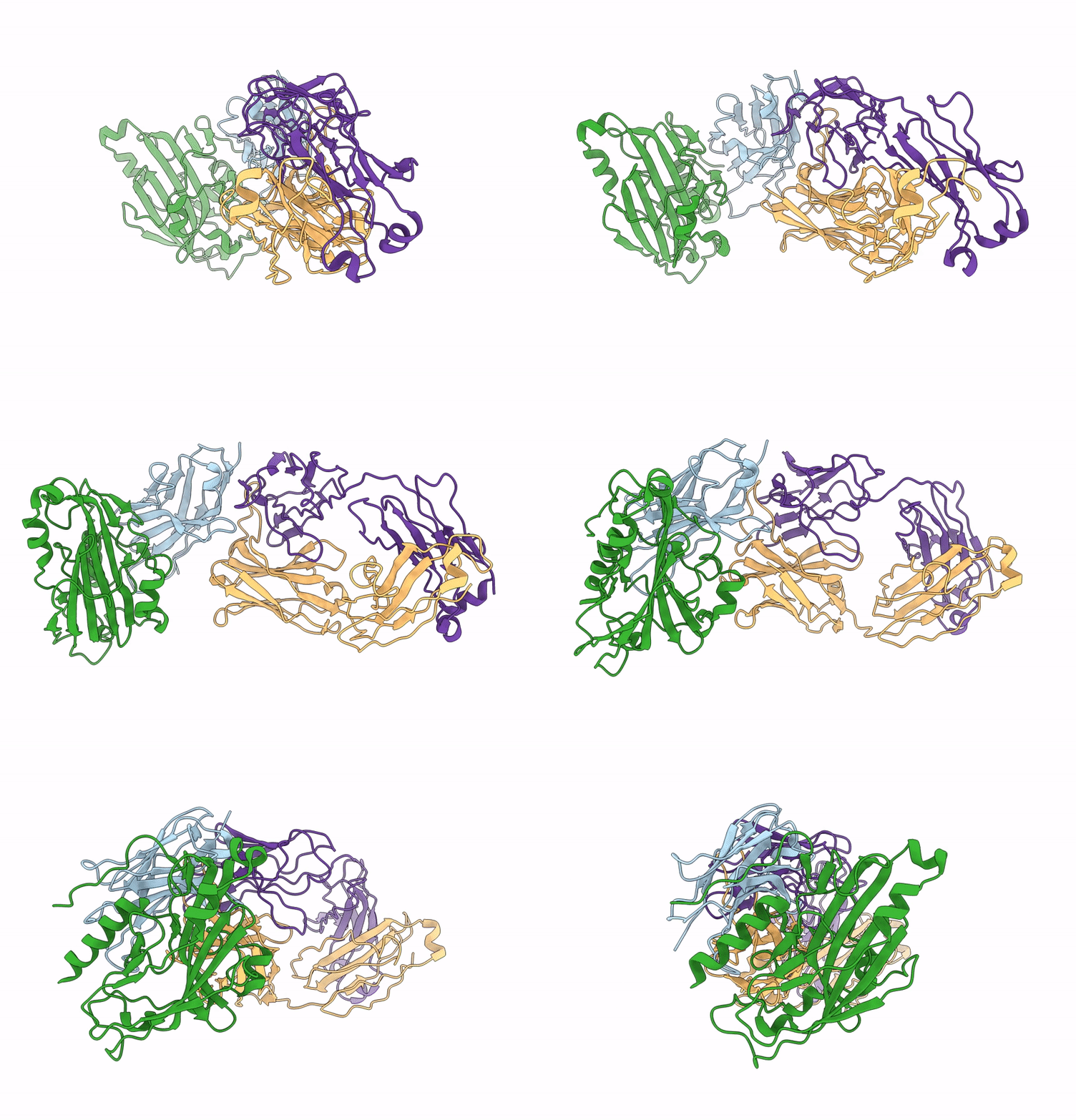
9MY8 image
Deposition Date 2025-01-21
Release Date 2025-08-13
Last Version Date 2025-08-13
Entry Detail
PDB ID:
9MY8
Title:
D7 Herpes Virus Simplex Neutralizing Nanobody Bound to HSV Glycoprotein gD
Biological Source:
Source Organism:
Lama glama (Taxon ID: 9844)
Homo sapiens (Taxon ID: 9606)
Human herpesvirus 2 (Taxon ID: 10310)
Host Organism:
Method Details:
Experimental Method:
Resolution:
2.30 Å
Aggregation State:
PARTICLE
Reconstruction Method:
SINGLE PARTICLE

Macromolecular Entities
Polymer Type:polypeptide(L)
Molecule:D7 Neutralizing Nanobody against HSV Glycoprotein D
Chain IDs:C (auth: A)
Chain Length:125
Number of Molecules:1
Biological Source:Homo sapiens
Structures with similar UniProt ID
Protein Blast
Polymer Type:polypeptide(L)
Molecule:Glycoprotein D
Gene (Uniprot):US6
Chain IDs:D (auth: B)
Chain Length:327
Number of Molecules:1
Biological Source:Human herpesvirus 2
Polymer Type:polypeptide(L)
Molecule:Anti-Nb Fab Heavy chain
Chain IDs:A (auth: H)
Chain Length:244
Number of Molecules:1
Biological Source:Lama glama
Structures with similar UniProt ID
Protein Blast
Polymer Type:polypeptide(L)
Molecule:Ig-like domain-containing protein
Chain IDs:B (auth: L)
Chain Length:214
Number of Molecules:1
Biological Source:Lama glama
Primary Citation
Identification and engineering of potent bispecific antibodies that protect against herpes simplex virus recurrent disease.
Cell Rep 44 116063 116063 (2025)
PMID: 40716063 DOI: 10.1016/j.celrep.2025.116063

Abstact

Herpes simplex virus (HSV) causes lifelong infections, including oral and genital herpes. There is no vaccine, and current antivirals are only partially effective at reducing symptoms and transmission. Therapeutic antibodies offer a potentially long-acting treatment option, although efforts to pursue this have been limited. We performed an alpaca immunization campaign and discovered high-affinity antibodies that both neutralized and completely blocked cell-to-cell spread (CCS), a key mechanism by which HSV evades neutralizing antibodies. Unexpectedly, we found that engineering antibodies into a bispecific format targeting two viral glycoproteins dramatically increased antiviral potency. Solving the structures of three antibodies using cryo-electron microscopy (cryo-EM) revealed a mechanistic understanding of how the bispecific format could enhance potency. Lastly, these bispecific antibodies significantly reduced lesion development in the guinea pig model of genital herpes, demonstrating that delayed dosing after latency establishment can reduce disease and confirming their potential as a transformative treatment option.

Legend

Protein

Chemical

Disease

Primary Citation of related structures
Feedback Form
Name
Email
Institute
Feedback