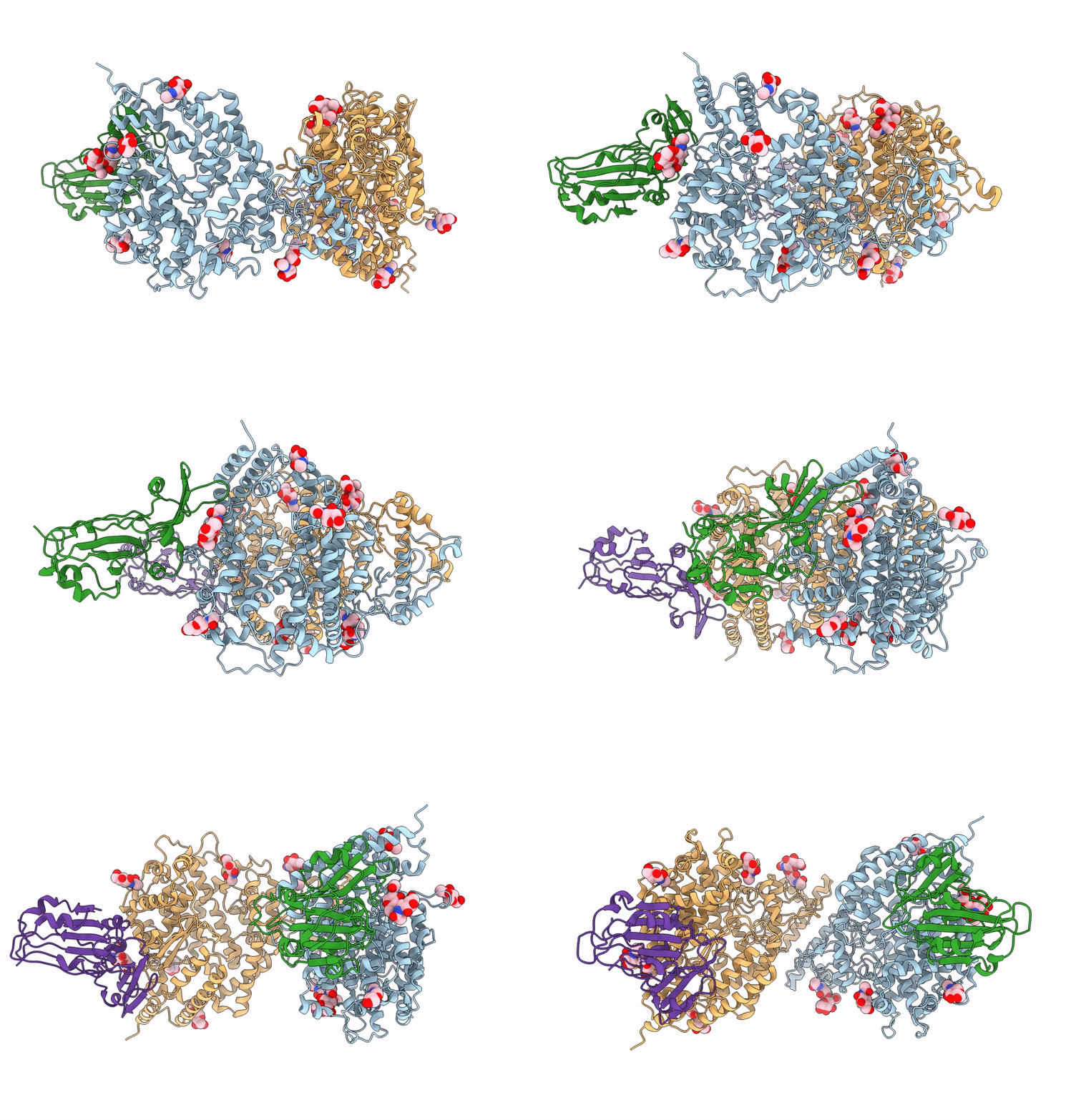
9MV0 image
Deposition Date 2025-01-15
Release Date 2025-07-30
Last Version Date 2025-08-06
Entry Detail
PDB ID:
9MV0
Keywords:
Title:
Structure of HKU5 spike C-terminal domain in complex with ACE2 from Pipistrellus abramus
Biological Source:
Host Organism:
Method Details:
Experimental Method:
Resolution:
4.20 Å
Aggregation State:
PARTICLE
Reconstruction Method:
SINGLE PARTICLE

Macromolecular Entities
Structures with similar UniProt ID
Protein Blast
Polymer Type:polypeptide(L)
Molecule:Angiotensin-converting enzyme
Chain IDs:A, C
Chain Length:803
Number of Molecules:2
Biological Source:Pipistrellus abramus
Structures with similar UniProt ID
Protein Blast
Polymer Type:polypeptide(L)
Molecule:Spike glycoprotein
Gene (Uniprot):S
Chain IDs:B, D
Chain Length:1352
Number of Molecules:2
Biological Source:Pipistrellus bat coronavirus HKU5
Ligand Molecules
Primary Citation

Abstact

Identifying receptors for bat coronaviruses is critical for spillover risk assessment, countermeasure development, and pandemic preparedness. While Middle East respiratory syndrome coronavirus (MERS-CoV) uses DPP4 for entry, the receptors of many MERS-related betacoronaviruses remain unknown. The bat merbecovirus HKU5 was previously shown to have an entry restriction in human cells. Using both pseudotyped and full-length virus, we show that HKU5 uses Pipistrellus abramus bat ACE2 but not human ACE2 or DPP4 as a receptor. Cryo-electron microscopy analysis of the virus-receptor complex and structure-guided mutagenesis reveal a spike and ACE2 interaction that is distinct from other ACE2-using coronaviruses. MERS-CoV vaccine sera poorly neutralize HKU5 informing pan-merbecovirus vaccine design. Notably, HKU5 can also engage American mink and stoat ACE2, revealing mustelids as potential intermediate hosts. These findings highlight the versatility of merbecovirus receptor use and underscore the need for continued surveillance of bat and mustelid species.

Legend

Protein

Chemical

Disease

Primary Citation of related structures
Feedback Form
Name
Email
Institute
Feedback