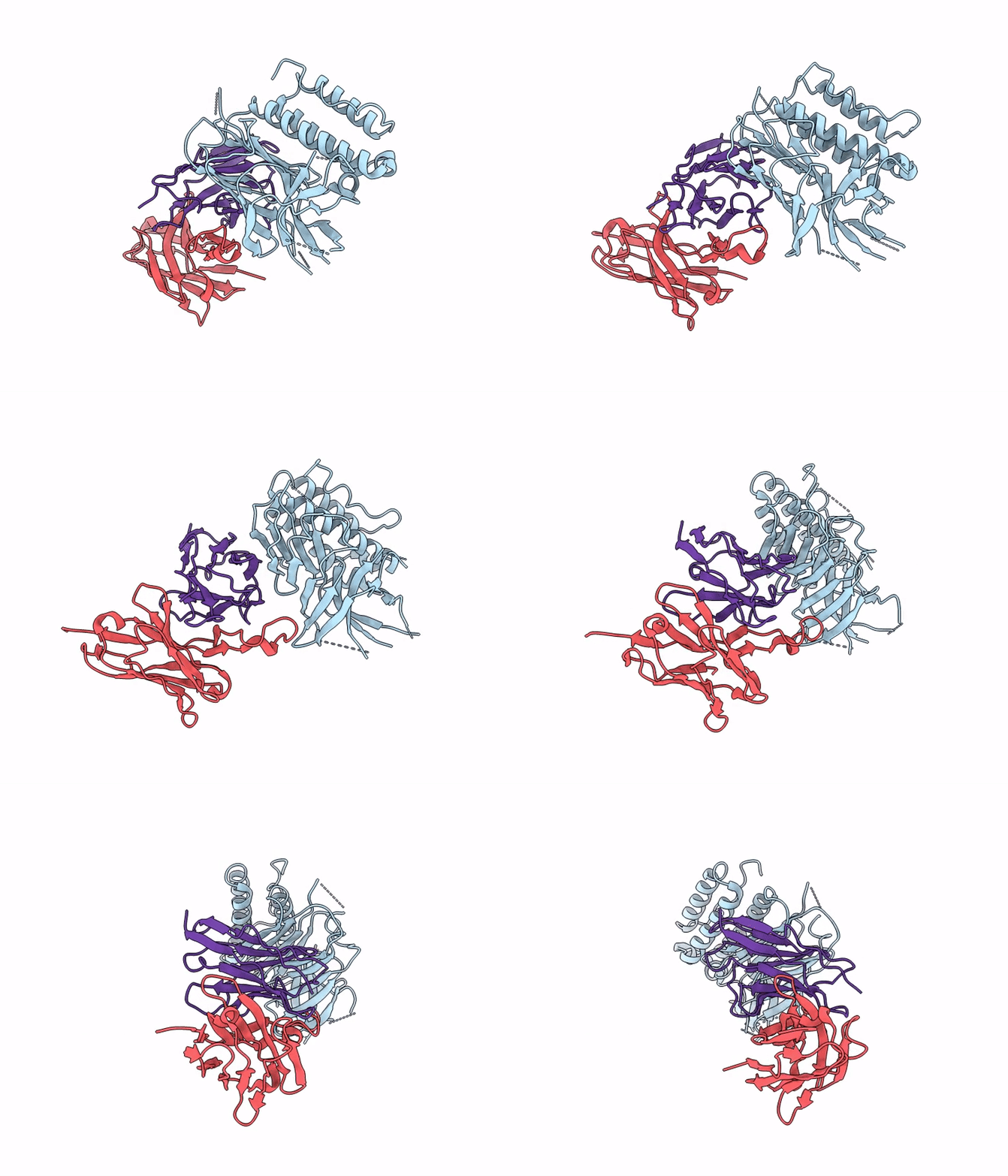
9MQR image
Deposition Date 2025-01-06
Release Date 2025-09-24
Last Version Date 2025-10-15
Entry Detail
PDB ID:
9MQR
Keywords:
Title:
A8 Fab in complex with CD97
Biological Source:
Source Organism:
Homo sapiens (Taxon ID: 9606)
Host Organism:
Method Details:
Experimental Method:
Resolution:
3.16 Å
Aggregation State:
PARTICLE
Reconstruction Method:
SINGLE PARTICLE

Macromolecular Entities
Structures with similar UniProt ID
Protein Blast
Polymer Type:polypeptide(L)
Molecule:Adhesion G protein-coupled receptor E5
Gene (Uniprot):ADGRE5
Mutagens:S531A
Chain IDs:A
Chain Length:542
Number of Molecules:1
Biological Source:Homo sapiens
Polymer Type:polypeptide(L)
Molecule:Heavy chain of A8 Fab
Chain IDs:B (auth: D)
Chain Length:240
Number of Molecules:1
Biological Source:Homo sapiens
Polymer Type:polypeptide(L)
Molecule:Light chain of A8 Fab
Chain IDs:C (auth: E)
Chain Length:214
Number of Molecules:1
Biological Source:Homo sapiens
Ligand Molecules
Primary Citation

Abstact

Adhesion G protein-coupled receptors (aGPCRs) are key cell-adhesion molecules involved in many cellular functions and contribute to human diseases, including cancer. aGPCRs are characterized by large extracellular regions that could serve as readily accessible antigens. However, the potential of aGPCRs as targets for biologic therapeutics has not been extensively explored. CD97, also known as ADGRE5, is an aGPCR that is upregulated in various cancer types, including acute myeloid leukemia (AML) and glioblastoma (GBM), and their respective cancer stem cells. Here, we developed antibody-drug conjugates (ADCs) targeting CD97 and assessed their efficacy against AML and GBM cells. We generated a panel of synthetic human antibodies targeting distinct epitopes of CD97, from which we identified an antibody that was efficiently internalized. This antibody binds to all isoforms of human CD97 but not to its close homolog, EMR2. Structure determination by single-particle cryo-electron microscopy revealed that this antibody targets the CD97 GPCR autoproteolysis-inducing (GAIN) domain, whose presence is conserved in aGPCRs, through an unconventional binding mode where it extensively utilizes the light chain framework for antigen recognition. Screening of conjugation methods and payloads resulted in a stable ADC that effectively killed AML and GBM cell lines, as well as patient-derived GBM stem cells, with minimal cytotoxicity against peripheral blood mononuclear cells from healthy donors. Our study demonstrates the therapeutic potential of targeting CD97, as well as the aGPCR GAIN domain in general, and uncovers a previously unrecognized surface that an antibody can utilize for antigen recognition.

Legend

Protein

Chemical

Disease

Primary Citation of related structures
Feedback Form
Name
Email
Institute
Feedback