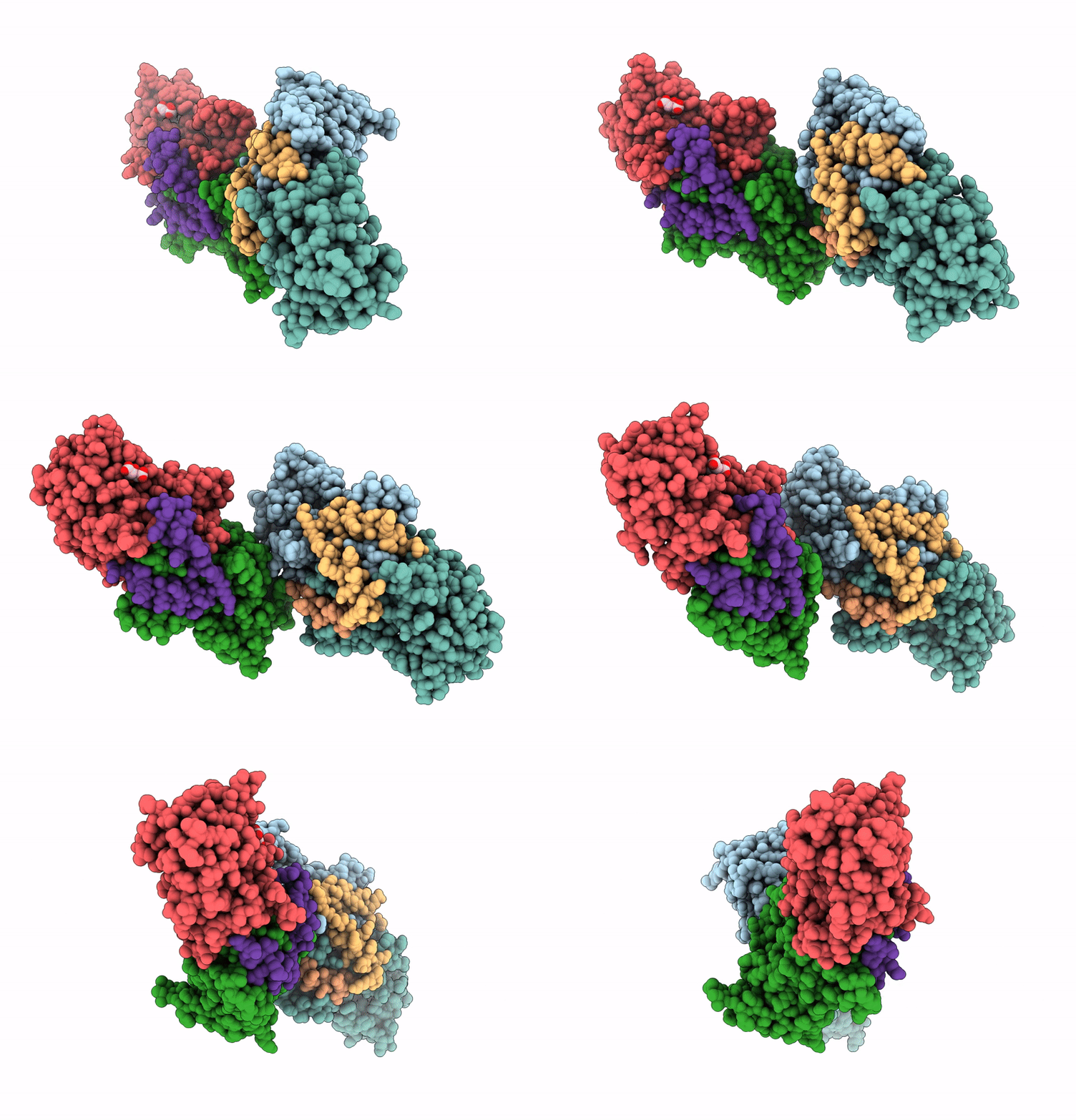
9MNO image
Deposition Date 2024-12-23
Release Date 2025-11-05
Last Version Date 2025-11-05
Entry Detail
PDB ID:
9MNO
Keywords:
Title:
Structure of the TelA-associated type VII secretion system chaperone LcpA in complex with the chaperone binding site of TelA
Biological Source:
Source Organism:
Method Details:
Experimental Method:
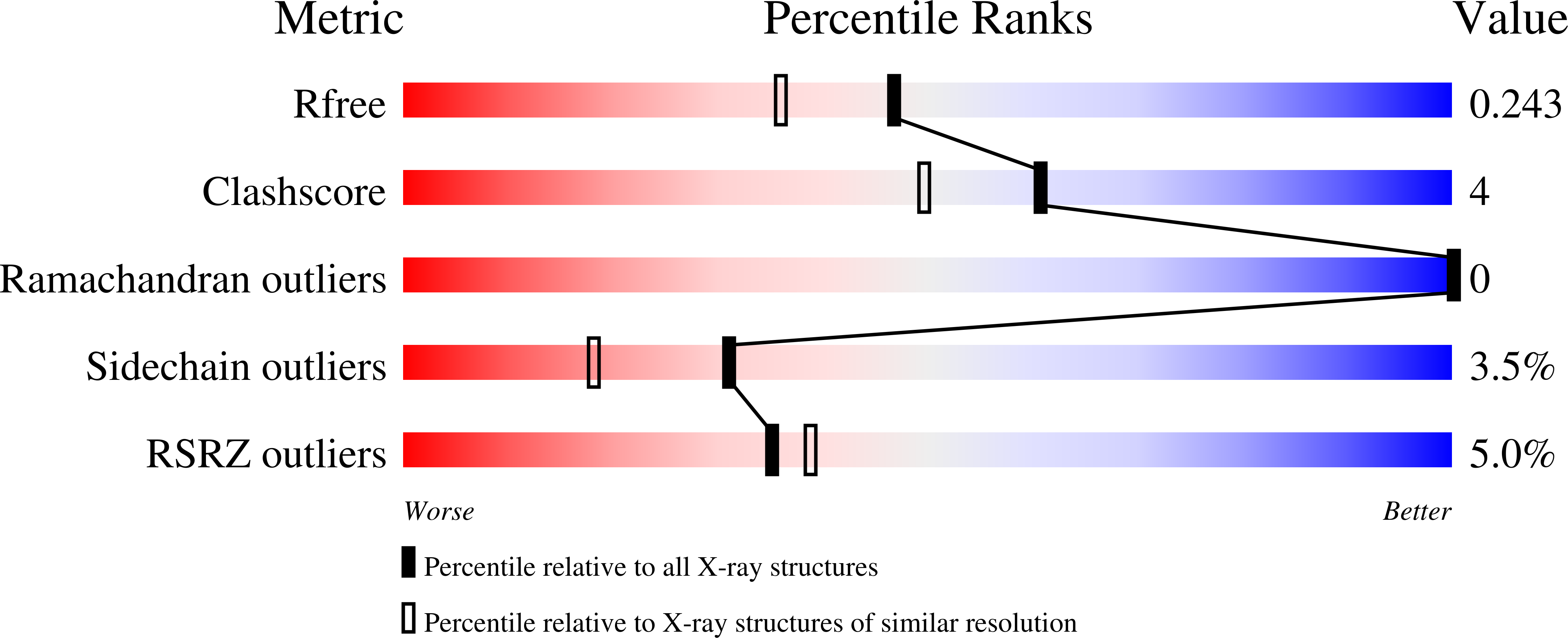
Resolution:
1.94 Å
R-Value Free:
0.24
R-Value Work:
0.20
R-Value Observed:
0.20
Space Group:
P 1
Macromolecular Entities
Structures with similar UniProt ID
Protein Blast
Polymer Type:polypeptide(L)
Molecule:DUF4176 domain-containing protein
Gene (Uniprot):SIR_0168
Chain IDs:A, B, C, D
Chain Length:219
Number of Molecules:4
Biological Source:Streptococcus intermedius B196
Structures with similar UniProt ID
Protein Blast
Polymer Type:polypeptide(L)
Molecule:LXG domain-containing protein
Gene (Uniprot):SIR_0169
Chain IDs:E, F, G
Chain Length:64
Number of Molecules:3
Biological Source:Streptococcus intermedius B196
Ligand Molecules
Primary Citation
A widespread family of molecular chaperones promotes the intracellular stability of type VIIb secretion system-exported toxins.
Proc.Natl.Acad.Sci.USA 122 e2503581122 e2503581122 (2025)
PMID: 40953262 DOI: 10.1073/pnas.2503581122

Abstact

To survive in highly competitive environments, bacteria use specialized secretion systems to deliver antibacterial toxins into neighboring cells, thereby inhibiting their growth. In many Gram-positive bacteria, the export of such toxins requires a membrane-bound molecular apparatus known as the type VIIb secretion system (T7SSb). Recently, it was shown that toxin recruitment to the T7SSb requires a physical interaction between a toxin and two or more so-called targeting factors, which harbor key residues required for T7SS-dependent protein export. However, in addition to these targeting factors, some toxins additionally require a protein belonging to the DUF4176 protein family. Here, by examining two toxin-DUF4176 protein pairs, we demonstrate that DUF4176 constitutes a family of toxin-specific molecular chaperones. In addition to being required for toxin stability in producing cells, we find that DUF4176 proteins facilitate toxin export by specifically interacting with a previously uncharacterized intrinsically disordered region found in many T7SS toxins. Using X-ray crystallography, we determine structures of several DUF4176 chaperones in their unbound state, and of a DUF4176 chaperone in complex with the binding site of its cognate toxin. These structures reveal that this binding site consists of a disordered amphipathic α-helix that requires interaction with its cognate chaperone for proper folding. Overall, we have identified a family of secretion system associated molecular chaperones found throughout T7SSb-containing Gram-positive bacteria.

Legend

Protein

Chemical

Disease

Primary Citation of related structures
Feedback Form
Name
Email
Institute
Feedback