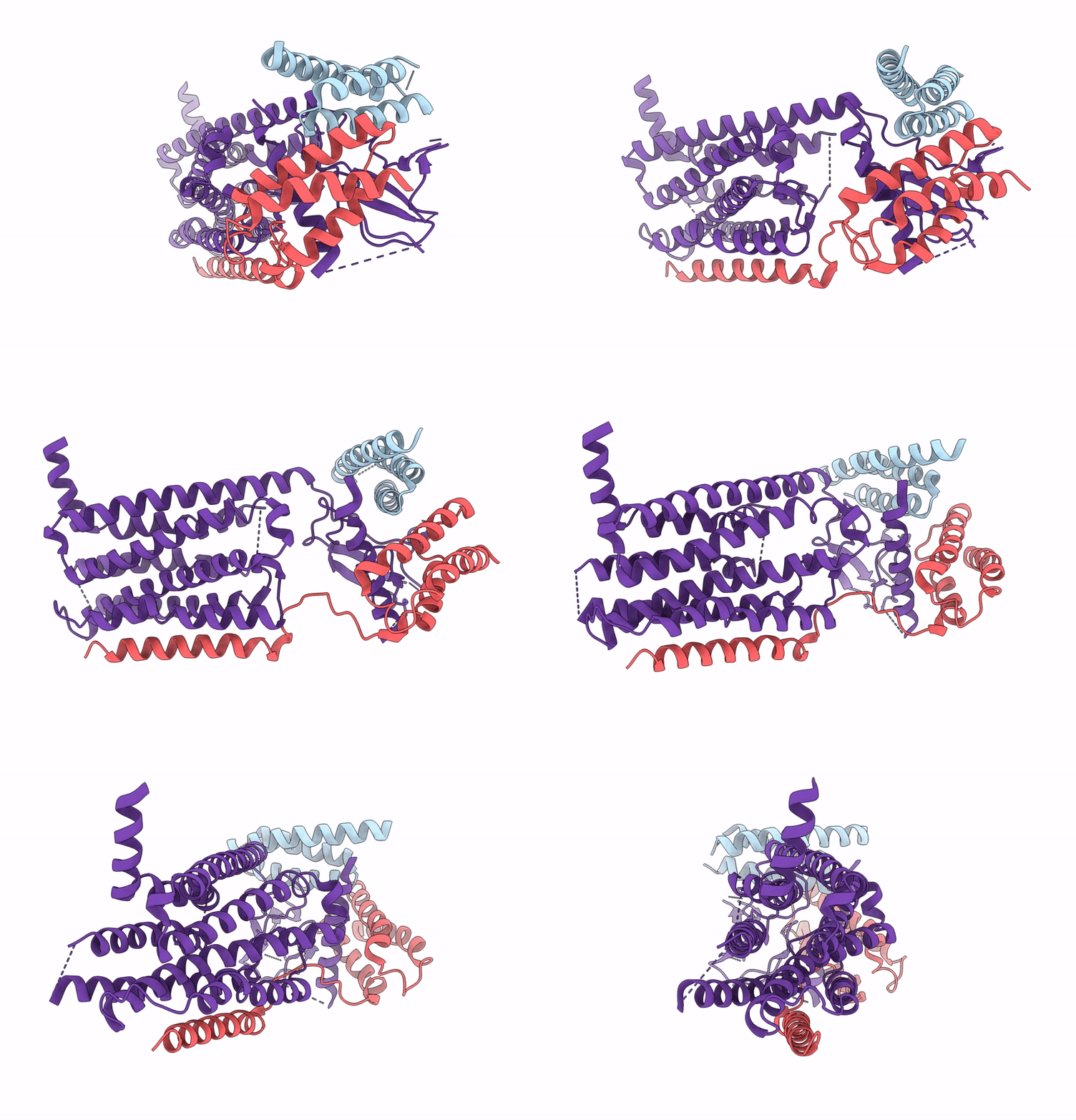
9MNI image
Deposition Date 2024-12-21
Release Date 2025-10-22
Last Version Date 2025-10-22
Entry Detail
PDB ID:
9MNI
Title:
CGRP Receptor in complex with dC2_050
Biological Source:
Source Organism:
Host Organism:
Method Details:
Experimental Method:
Resolution:
4.06 Å
Aggregation State:
PARTICLE
Reconstruction Method:
SINGLE PARTICLE
Macromolecular Entities
Polymer Type:polypeptide(L)
Molecule:De novo designed minibinder - dC2_050
Chain IDs:C (auth: A)
Chain Length:69
Number of Molecules:1
Biological Source:synthetic construct
Structures with similar UniProt ID
Protein Blast
Polymer Type:polypeptide(L)
Molecule:Receptor activity-modifying protein 1
Gene (Uniprot):RAMP1
Chain IDs:A (auth: E)
Chain Length:149
Number of Molecules:1
Biological Source:Homo sapiens
Structures with similar UniProt ID
Protein Blast
Polymer Type:polypeptide(L)
Molecule:Calcitonin gene-related peptide type 1 receptor
Gene (Uniprot):CALCRL
Chain IDs:B (auth: R)
Chain Length:490
Number of Molecules:1
Biological Source:Homo sapiens
Ligand Molecules
Primary Citation

Abstact

G protein-coupled receptors (GPCRs) play key roles in physiology and are central targets for drug discovery and development, yet the design of protein agonists and antagonists has been challenging as GPCRs are integral membrane proteins and conformationally dynamic. Here we describe computational de novo design methods and a high throughput "receptor diversion" microscopy-based screen for generating GPCR binding miniproteins with high affinity, potency and selectivity, and the use of these methods to generate MRGPRX1 agonists and CXCR4, GLP1R, GIPR, GCGR and CGRPR antagonists. Cryo-electron microscopy data reveals atomic-level agreement between designed and experimentally determined structures for CGRPR-bound antagonists and MRGPRX1-bound agonists, confirming precise conformational control of receptor function. Our de novo design and screening approach opens new frontiers in GPCR drug discovery and development.

Legend

Protein

Chemical

Disease

Primary Citation of related structures
Feedback Form
Name
Email
Institute
Feedback