9ME4 image
Deposition Date 2024-12-06
Release Date 2025-11-26
Last Version Date 2025-12-10
Entry Detail
PDB ID:
9ME4
Title:
Antibody fragments from mAb475 and mAb824 bound to the adhesin protein FimH
Biological Source:
Source Organism:
Host Organism:
Method Details:
Experimental Method:
Resolution:
3.20 Å
Aggregation State:
PARTICLE
Reconstruction Method:
SINGLE PARTICLE
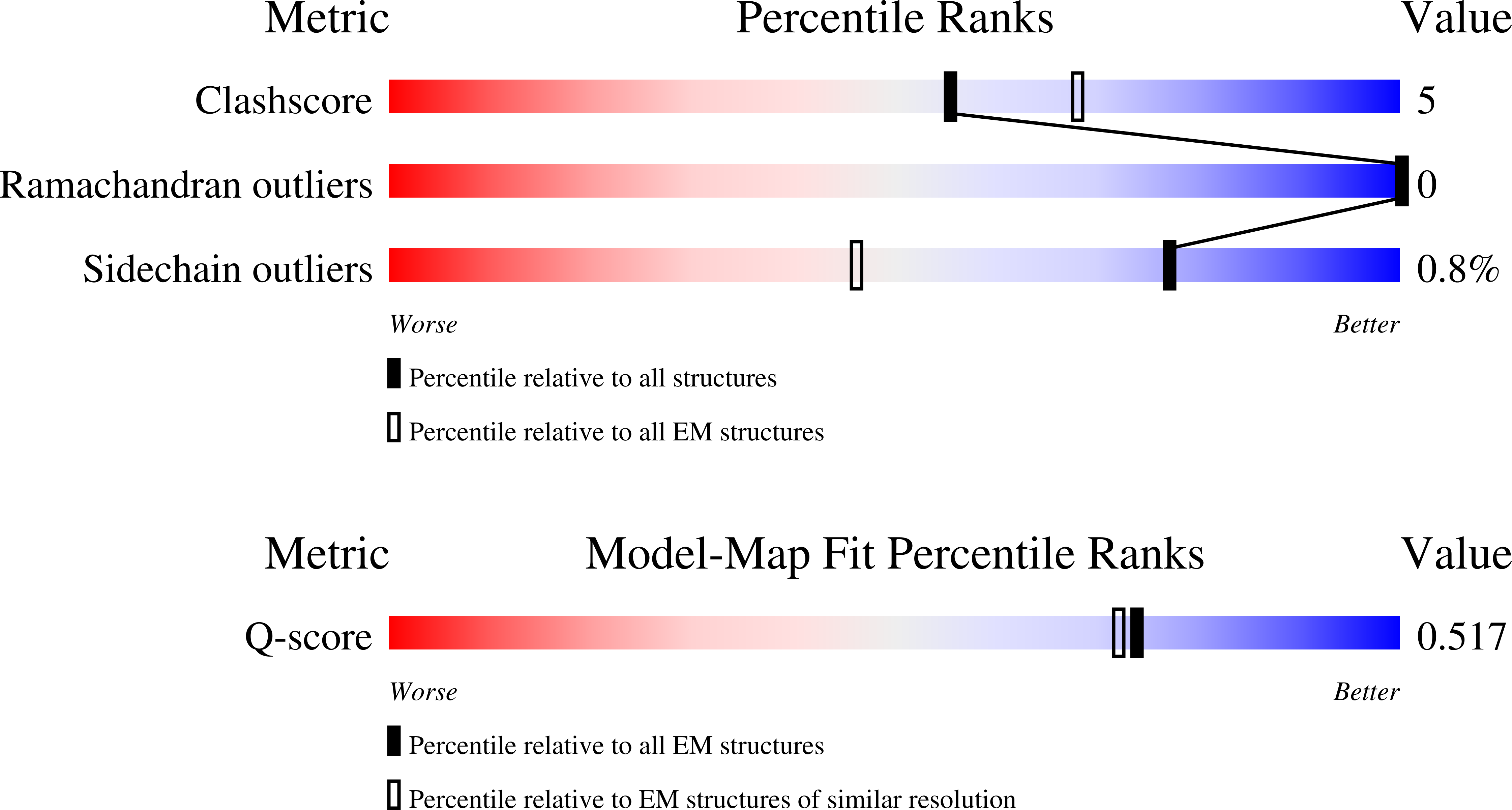
Macromolecular Entities
Structures with similar UniProt ID
Protein Blast
Polymer Type:polypeptide(L)
Molecule:Type 1 fimbrin D-mannose specific adhesin
Gene (Uniprot):fimH
Chain IDs:A
Chain Length:300
Number of Molecules:1
Biological Source:Escherichia coli
Structures with similar UniProt ID
Protein Blast
Polymer Type:polypeptide(L)
Molecule:Protein FimG
Gene (Uniprot):fimG
Chain IDs:B (auth: G)
Chain Length:167
Number of Molecules:1
Biological Source:Escherichia coli K-12
Polymer Type:polypeptide(L)
Molecule:mAb475 Heavy Chain Fragment
Chain IDs:C (auth: H)
Chain Length:215
Number of Molecules:1
Biological Source:Mus musculus
Polymer Type:polypeptide(L)
Molecule:mAb824 Heavy Chain Fragment
Chain IDs:D (auth: I)
Chain Length:208
Number of Molecules:1
Biological Source:Mus musculus
Polymer Type:polypeptide(L)
Molecule:mAb475 Light Chain Fragment
Chain IDs:E (auth: L)
Chain Length:213
Number of Molecules:1
Biological Source:Mus musculus
Polymer Type:polypeptide(L)
Molecule:mAb824 Light Chain Fragment
Chain IDs:F (auth: M)
Chain Length:197
Number of Molecules:1
Biological Source:Mus musculus
Ligand Molecules
Primary Citation
Antibodies disrupt bacterial adhesion by ligand mimicry and allosteric interference.
Nat Commun 16 10590 10590 (2025)
PMID: 41298446 DOI: 10.1038/s41467-025-65666-3

Abstact

A critical step in infections is the attachment of microorganisms to host cells using lectins that bind glycans, making lectins promising antimicrobial targets. Upon binding mannosylated glycans, FimH, an adhesin in E. coli, undergoes an allosteric transition from an inactive to an active conformation that can act as a catch-bond. Distinct monoclonal antibodies that alter FimH glycan binding are available, but the mechanisms of action remain unclear. Here, we use cryo-electron microscopy, mass spectrometry, adhesion assays, and molecular dynamics simulations to determine the structure-function relationships underlying antibody-FimH binding. Our study demonstrates four mechanisms of action: ligand mimicry by an N-linked, high-mannose glycan; stabilization of the ligand pocket in the inactive state; conformational trapping of the active and inactive states; and locking of the ligand pocket through long-range allosteric effects. These structures reveal multiple mechanisms of antibody responses to an allosteric protein and provide blueprints for antimicrobials that target adhesins.

Legend

Protein

Chemical

Disease

Primary Citation of related structures
Feedback Form
Name
Email
Institute
Feedback