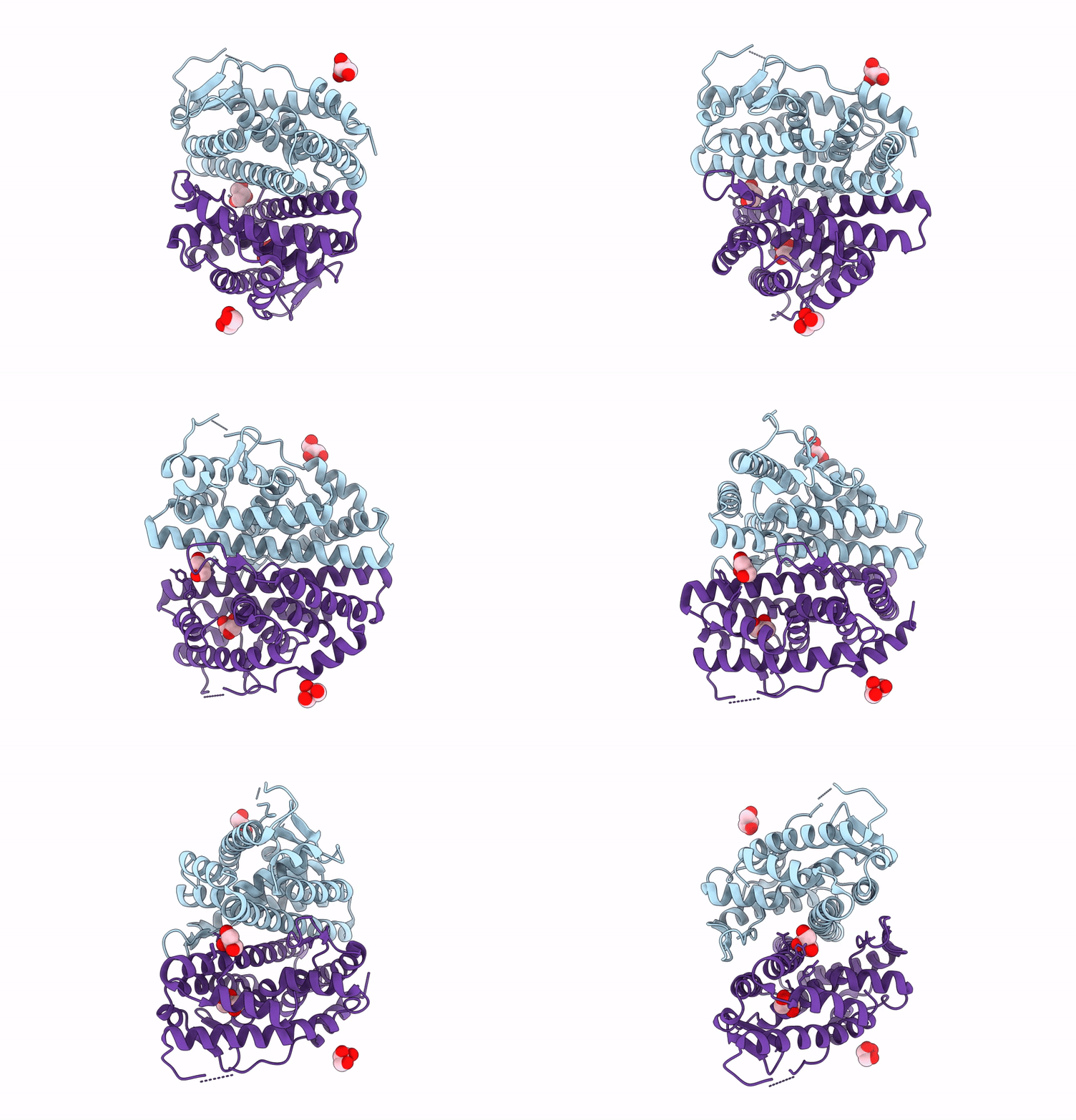
9MDV image
Deposition Date 2024-12-05
Release Date 2025-10-22
Last Version Date 2025-12-24
Entry Detail
PDB ID:
9MDV
Keywords:
Title:
Apo form of the estrogen receptor alpha ligand binding domain of Melanotaenia fluviatilis
Biological Source:
Source Organism(s):
Expression System(s):
Method Details:
Experimental Method:
Resolution:
2.00 Å
R-Value Free:
0.28
R-Value Work:
0.24
R-Value Observed:
0.24
Space Group:
P 1 21 1

Macromolecular Entities
Structures with similar UniProt ID
Protein Blast
Polymer Type:polypeptide(L)
Molecule:Estrogen receptor
Gene (Uniprot):ESR1
Chain IDs:A, B
Chain Length:251
Number of Molecules:2
Biological Source:Melanotaenia fluviatilis
Ligand Molecules
Primary Citation
A ternary switch model governing ER alpha ligand binding domain conformation.
Nat Commun 16 10363 10363 (2025)
PMID: 41285747 DOI: 10.1038/s41467-025-65323-9

Abstact

The transcription factor estrogen receptor α is the primary driver of ER+ breast cancer progression and a target of multiple FDA-approved anticancer drugs. Ligand-dependent activity of ERα is determined by helix-12 conformation within the ligand binding domain. However, how helix-12 transitions from an unliganded (apo) state to active (estrogen-bound) or inactive (SERM/SERD-bound) states remains unresolved. Here, we present the crystal structure of an apo estrogen receptor α ligand binding domain from the teleost Melanotaenia fluviatilis, revealing a third distinct helix-12 conformation. Structural mass spectrometry and molecular dynamics simulations reveal that apo helix-12 is maintained in a stable and distinct conformation prior to ligand binding. Clashes between ligand and evolutionarily conserved residues L525, L536 and L540 displace helix-12, to promote activation or inactivation of the receptor. The crystal structure further reveals that breast cancer-associated mutations, Y537S and D538G, disrupt residue contacts critical for stabilising apo helix-12 conformation. We propose a model whereby helix-12 functions as a ternary molecular switch to determine receptor activity. These findings provide critical insights into the ligand-dependent and -independent regulation of estrogen receptor α and have significant implications for therapeutic intervention.

Legend

Protein

Chemical

Disease

Primary Citation of related structures
Feedback Form
Name
Email
Institute
Feedback