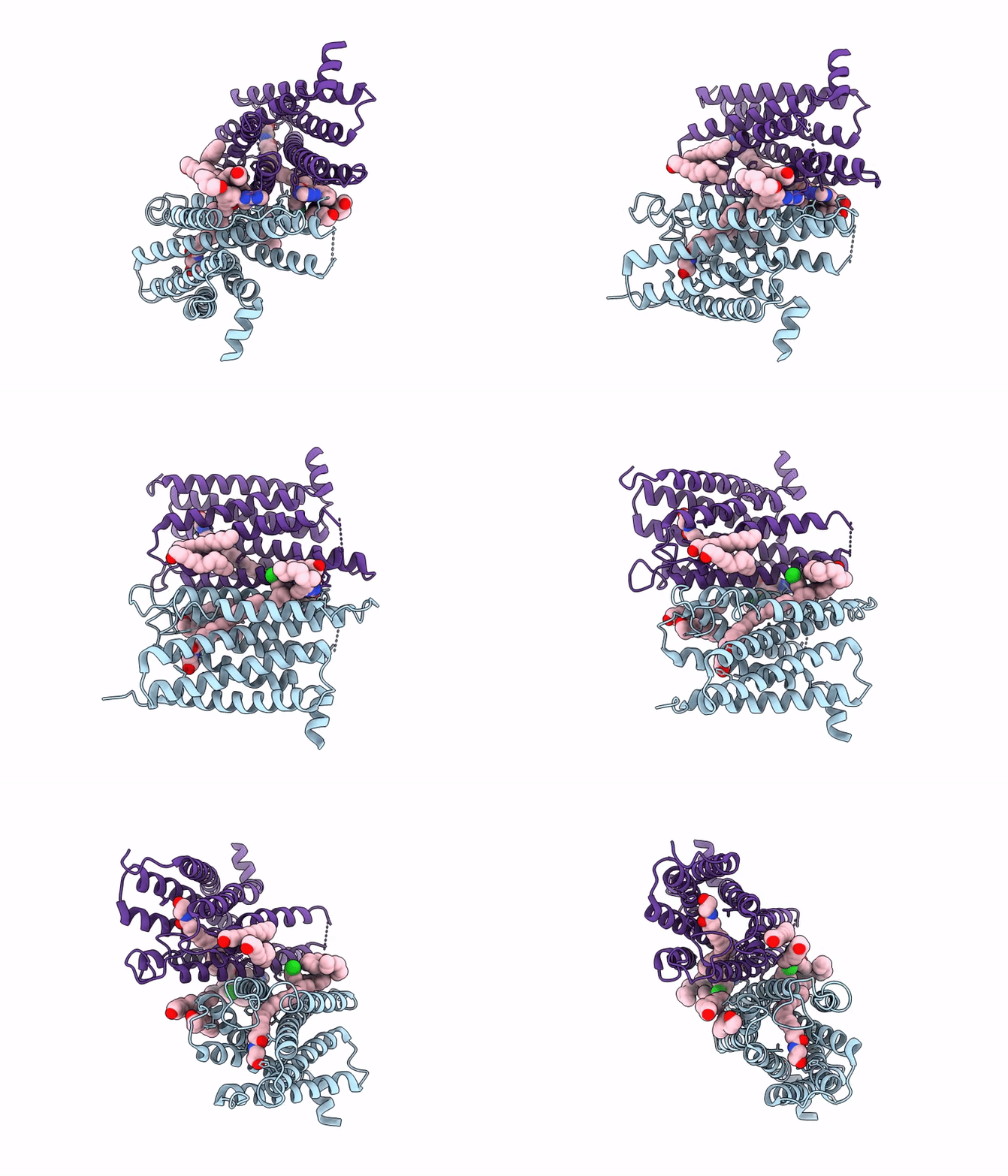
9M8P image
Deposition Date 2025-03-12
Release Date 2025-09-24
Last Version Date 2025-10-01
Entry Detail
PDB ID:
9M8P
Title:
GPR3 dimer with antagonist AF64394
Biological Source:
Source Organism:
Escherichia coli (Taxon ID: 562)
Homo sapiens (Taxon ID: 9606)
Method Details:
Experimental Method:
Resolution:
3.42 Å
Aggregation State:
PARTICLE
Reconstruction Method:
SINGLE PARTICLE

Macromolecular Entities
Protein Blast
Polymer Type:polypeptide(L)
Molecule:Soluble cytochrome b562,G-protein coupled receptor 3
Gene (Uniprot):cybC, GPR3
Chain IDs:A, B
Chain Length:466
Number of Molecules:2
Biological Source:Escherichia coli, Homo sapiens
Primary Citation
Mechanism and function of GPR3 regulated by a negative allosteric modulator.
Nat Commun 16 7988 7988 (2025)
PMID: 40866348 DOI: 10.1038/s41467-025-63422-1

Abstact

Allosteric modulators have gained substantial interest in current GPCR drug discovery. Here, we present a mechanism of allosteric modulation involving the dimerization of GPR3, a promising drug target for metabolic diseases and central nervous system disorders. We show that GPR3 forms constitutive homodimers in live cells and reveal that the inhibitor AF64394 functions as a negative allosteric modulator (NAM) specifically targeting dimeric GPR3. Using cryogenic electron microscopy (cryo-EM), we determine the structures of the AF64394-bound GPR3 dimer and its dimer-Gs signaling complex. These high-resolution structures reveal that AF64394 binds to the transmembrane dimer interface. AF64394 binding prevents the dissociation of the GPR3 dimer upon engagement with Gs and restrains transmembrane helix 5 in an inactive-like intermediate conformation, leading to reduced coupling with Gs. Our studies unveil a mechanism of dimer-specific inhibition of signaling with significant implications for the discovery of drugs targeting GPCRs capable of dimerization.

Legend

Protein

Chemical

Disease

Primary Citation of related structures
Feedback Form
Name
Email
Institute
Feedback