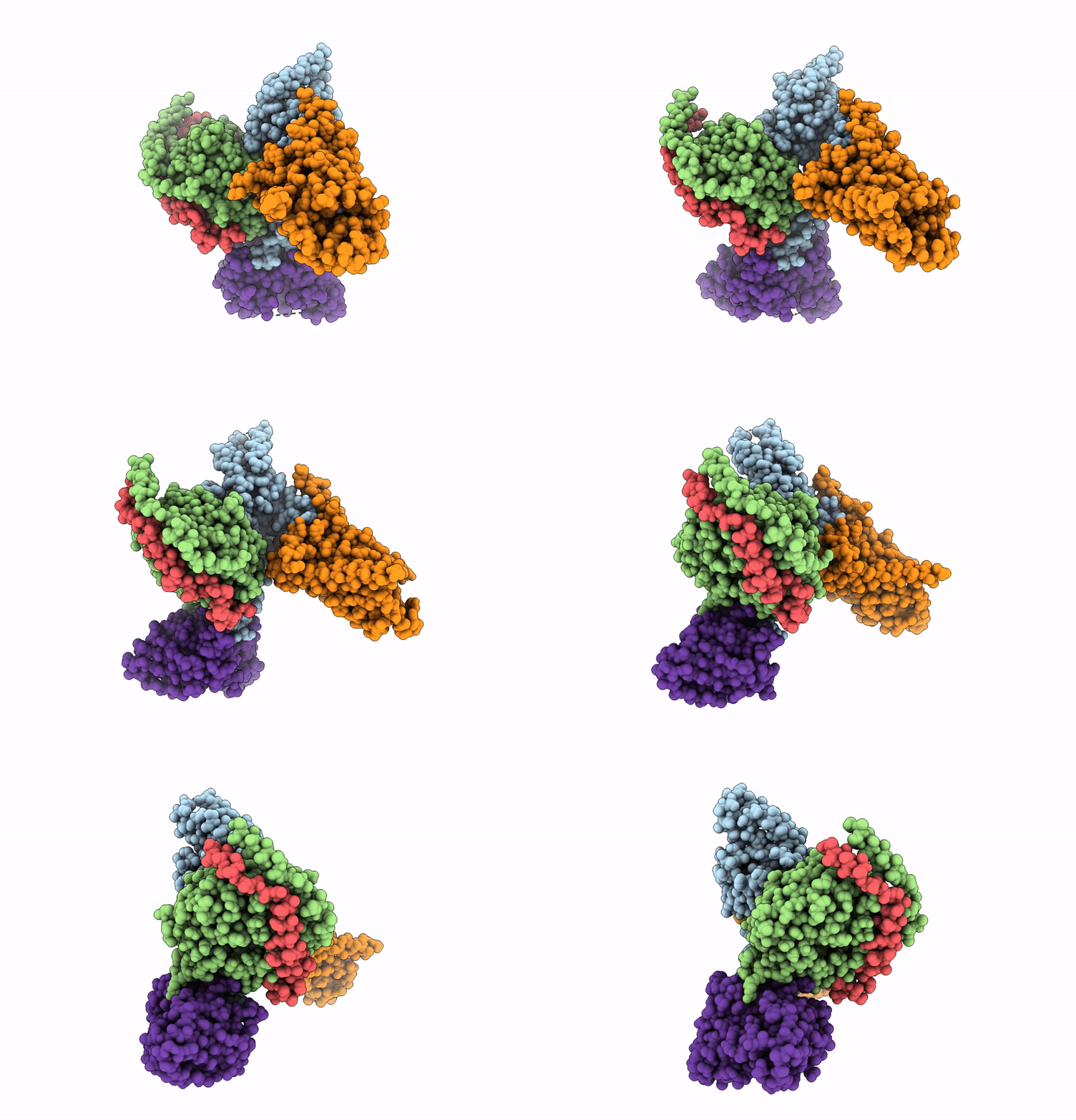
9M57 image
Deposition Date 2025-03-05
Release Date 2025-12-17
Last Version Date 2025-12-31
Entry Detail
PDB ID:
9M57
Title:
Structural insight into determinants of endogenous agonist selectivity of aminergic receptors from octopamine b2 receptor structure
Biological Source:
Source Organism(s):
Ixodes scapularis (Taxon ID: 6945)
Homo sapiens (Taxon ID: 9606)
Mus musculus (Taxon ID: 10090)
Method Details:
Experimental Method:
Resolution:
3.65 Å
Aggregation State:
PARTICLE
Reconstruction Method:
SINGLE PARTICLE
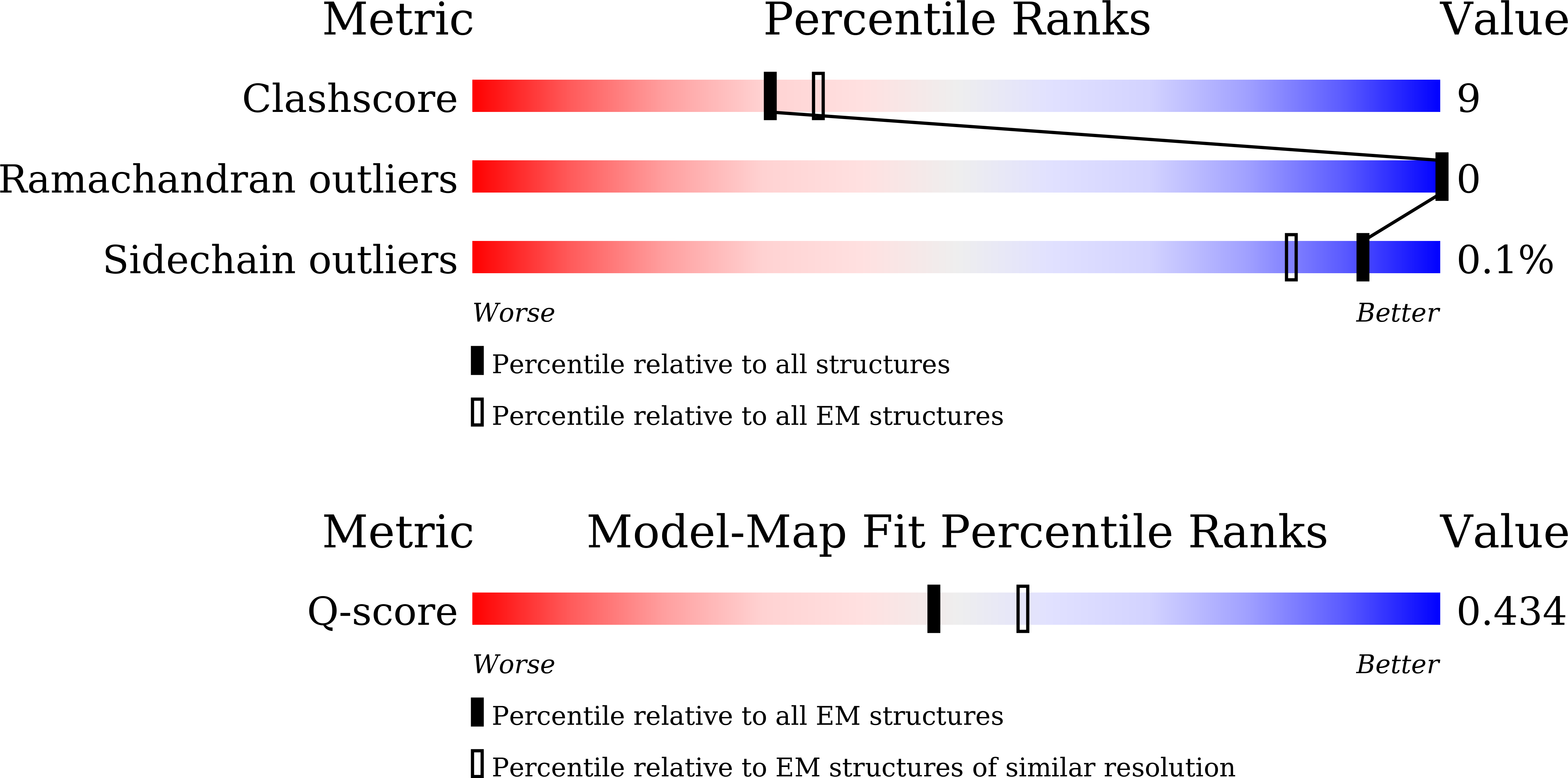
Macromolecular Entities
Polymer Type:polypeptide(L)
Molecule:G-protein alpha subunit
Chain IDs:A
Chain Length:402
Number of Molecules:1
Biological Source:Ixodes scapularis
Structures with similar UniProt ID
Protein Blast
Polymer Type:polypeptide(L)
Molecule:Guanine nucleotide-binding protein G(I)/G(S)/G(T) subunit beta-1
Gene (Uniprot):GNB1
Chain IDs:B
Chain Length:358
Number of Molecules:1
Biological Source:Homo sapiens
Polymer Type:polypeptide(L)
Molecule:G-protein gamma subunit
Chain IDs:C (auth: G)
Chain Length:99
Number of Molecules:1
Biological Source:Homo sapiens
Polymer Type:polypeptide(L)
Molecule:octopamine b2 receptor
Chain IDs:D (auth: R)
Chain Length:425
Number of Molecules:1
Biological Source:Ixodes scapularis
Polymer Type:polypeptide(L)
Molecule:single chain Fv
Chain IDs:E (auth: S)
Chain Length:308
Number of Molecules:1
Biological Source:Mus musculus
Ligand Molecules
Primary Citation
Structural insights into endogenous agonist selectivity of aminergic receptors from the octopamine beta 2 receptor.
Pnas Nexus 4 ? ? (2025)
PMID: 41393170 DOI: 10.1093/pnasnexus/pgaf376

Abstact

Tyrosine-derived amines (TDAs), such as octopamine, noradrenaline, dopamine, and tyramine, are essential neurotransmitters that play diverse roles in various physiological processes. The distinct receptor selectivity of these structurally similar molecules is vital for their specific functions. However, all these receptors belong to the same subfamily of G-protein-coupled receptors and share high sequence homology within their orthosteric binding sites. The molecular basis of this selectivity remains unclear because of the absence of structural data on octopamine and tyramine receptors. In this study, we present cryo-electron microscopy structures of the deer tick octopamine β2 receptor (octβ2R) bound to octopamine or N-2,4-dimethylphenyl-N'-methylformamidine (DPMF), an acaricidal amitraz metabolite. Octopamine and DPMF formed aromatic interactions with Y3076.55 and F3287.39, residues crucial for octβ2R activation. The lower potency of other TDAs for octβ2R stems from the subtle effect of functional groups on both interactions, i.e. the meta-hydroxyl group of noradrenaline and dopamine hinders edge-to-edge interaction with Y3076.55, and the absence of a 1-hydroxyl group in dopamine and tyramine prevents π-hydrogen bonding with F3287.39. These structural insights into octβ2R selectivity are likely applicable across other TDA receptors, highlighting the pivotal role of residues 6.55 and 7.39. Consequently, the elucidated selection mechanism provides fundamental knowledge of aminergic ligand recognition, a process crucial for neurotransmission and overall organismal function.

Legend

Protein

Chemical

Disease

Primary Citation of related structures
Feedback Form
Name
Email
Institute
Feedback