9M3K image
Deposition Date 2025-03-02
Release Date 2026-01-07
Last Version Date 2026-01-07
Entry Detail
PDB ID:
9M3K
Title:
Crystal structure of GinKR1
Biological Source:
Source Organism(s):
Expression System(s):
Method Details:
Experimental Method:
Resolution:
2.25 Å
R-Value Free:
0.25
R-Value Work:
0.20
R-Value Observed:
0.20
Space Group:
P 1 2 1
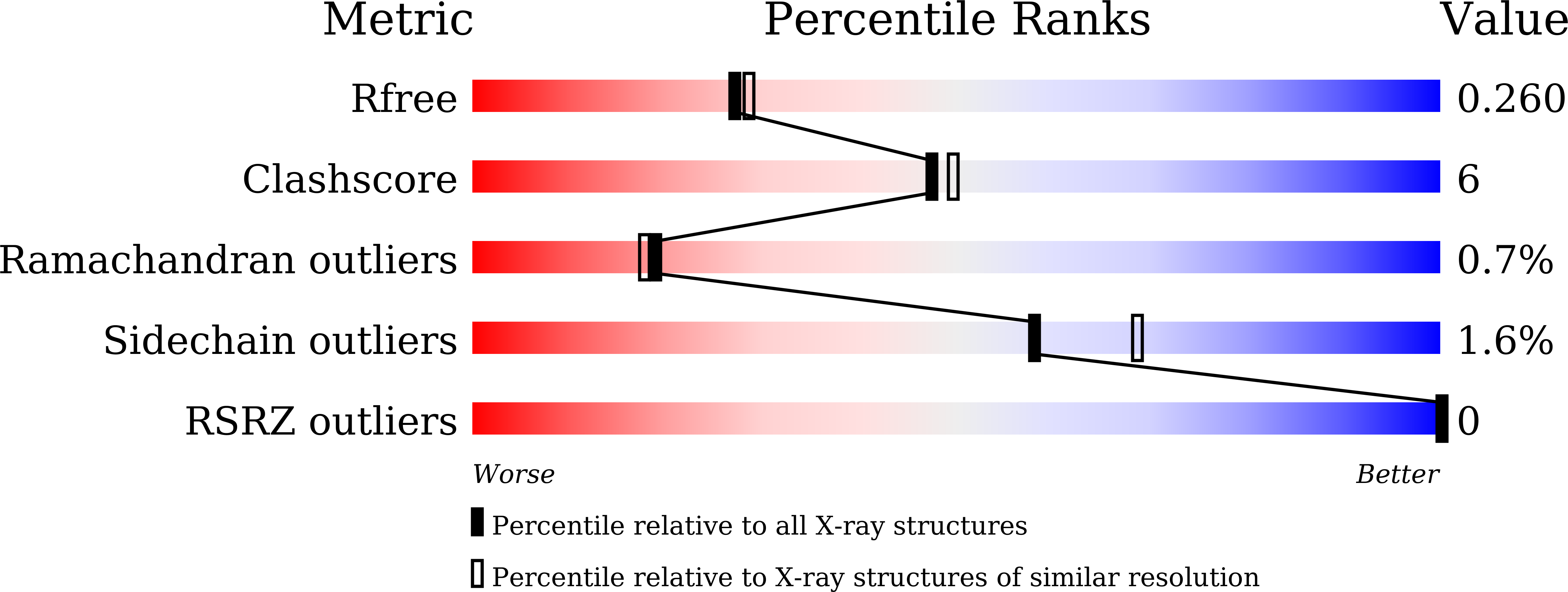
Macromolecular Entities
Polymer Type:polypeptide(L)
Molecule:ketoreductase
Chain IDs:A, B, C, D
Chain Length:339
Number of Molecules:4
Biological Source:Glycyrrhiza inflata
Primary Citation
Elucidating the Biosynthetic Pathway and Mechanisms of Retrochalcones.
J.Am.Chem.Soc. 147 29205 29214 (2025)
PMID: 40729162 DOI: 10.1021/jacs.5c08070

Abstact

Chalcone is a privileged natural product skeleton for drug discovery, and retrochalcone represents a group of nonclassical chalcones with a distinctive oxygen substitution pattern. Echinatin, a hepatoprotective agent, is a retrochalcone derived from Glycyrrhiza inflata. Despite their initial discovery half a century ago, the biosynthetic mechanisms of retrochalcones have remained elusive. In this work, we identified a ketoreductase, GinKR1, which selectively catalyzes the reduction of the 1″-carbonyl group of the dibenzoylmethane precursor 2'-O-methyllicodione, followed by spontaneous dehydration to form the retrochalcone skeleton. Our findings reveal that the A and B rings of retrochalcones are derived from the shikimate and polyketide pathways, respectively, which are reversed to normal chalcones. In addition, 18O isotope labeling verifies that the carbonyl oxygen of retrochalcones is derived from the hydroxyl group introduced by a flavanone 2-hydroxylase. The complete biosynthetic pathway of echinatin was elucidated by identifying six enzymes from G. inflata. Moreover, we determined the crystal structure of GinKR1 and identified a critical α10 helix responsible for its regioselectivity. With this α10 helix as a marker, we further discovered homologous genes of GinKR1 from 185 plant species. This study elucidates the biosynthetic pathway and underlying mechanisms of retrochalcones.

Legend

Protein

Chemical

Disease

Primary Citation of related structures
Feedback Form
Name
Email
Institute
Feedback