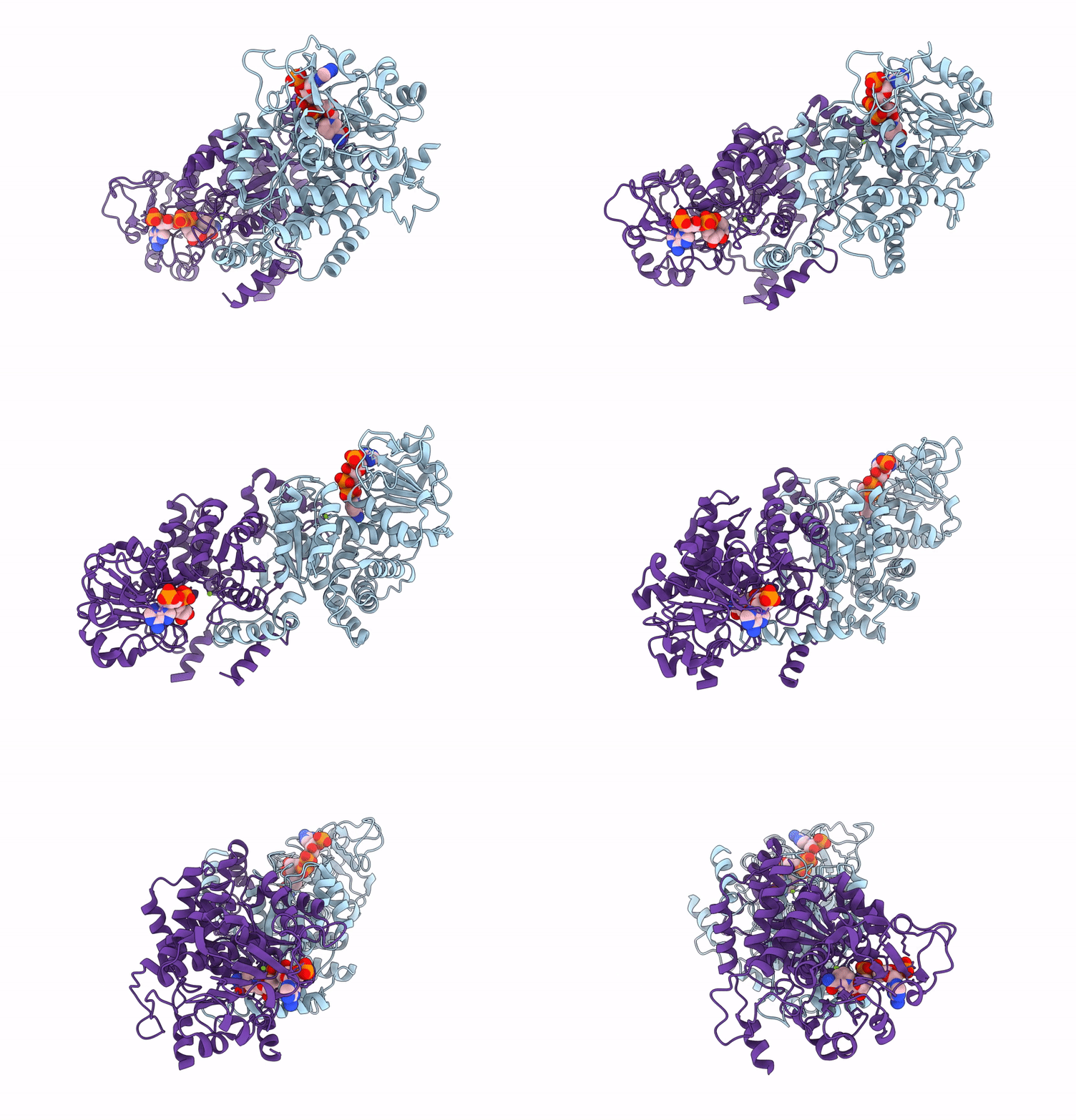
9M35 image
Deposition Date 2025-02-28
Release Date 2025-12-10
Last Version Date 2025-12-10
Entry Detail
PDB ID:
9M35
Title:
E. coli MaeB acetyl-CoA bound form ME domain dimer
Biological Source:
Source Organism:
Method Details:
Experimental Method:
Resolution:
2.39 Å
Aggregation State:
PARTICLE
Reconstruction Method:
SINGLE PARTICLE
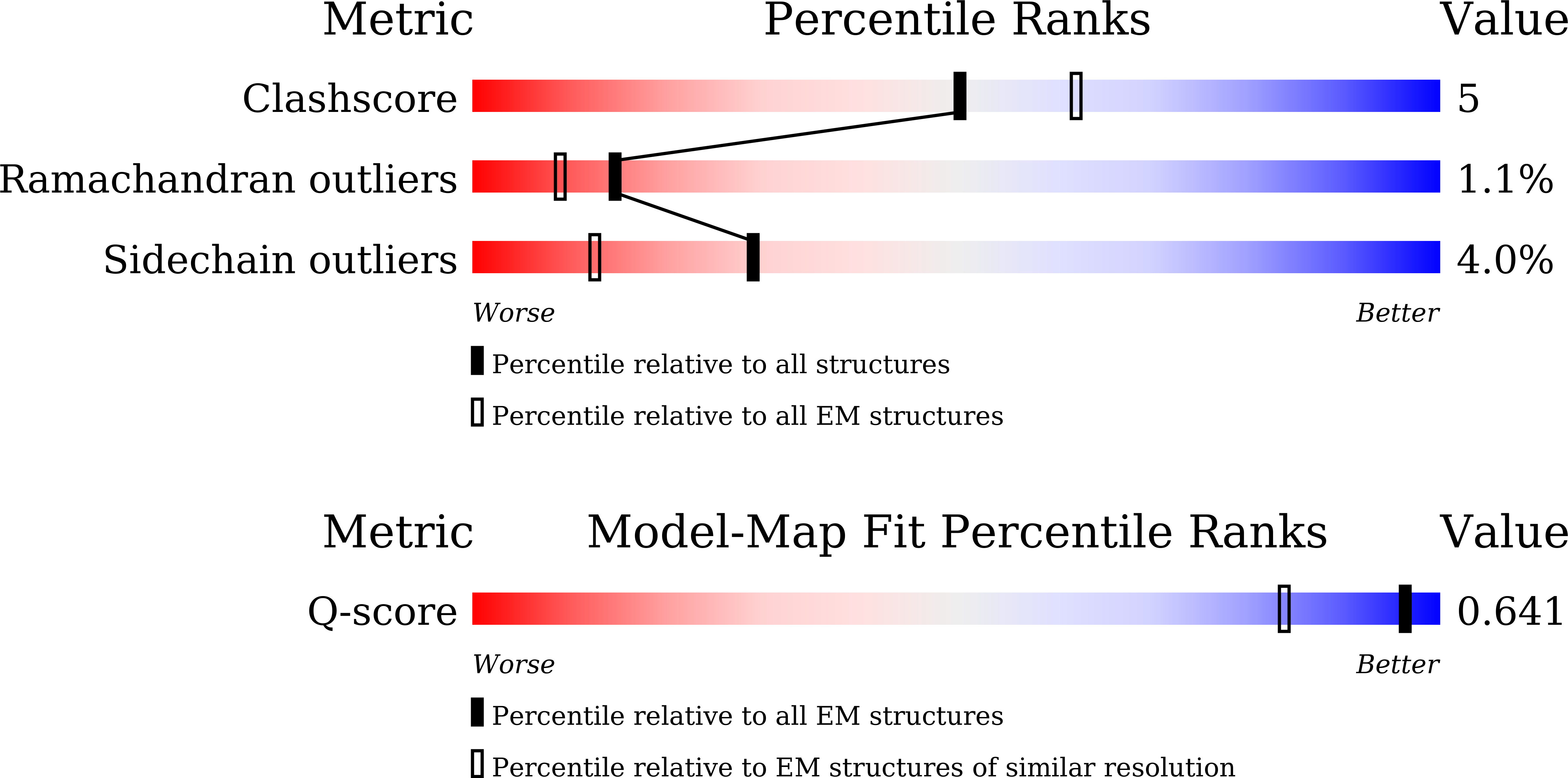
Macromolecular Entities
Structures with similar UniProt ID
Protein Blast
Polymer Type:polypeptide(L)
Molecule:NADP-dependent malic enzyme
Gene (Uniprot):maeB
Chain IDs:A, B
Chain Length:439
Number of Molecules:2
Biological Source:Escherichia coli K-12
Primary Citation
Divergent acetyl-CoA binding modes mediate allosteric inhibition of bacterial hybrid-type malic enzymes.
J.Biol.Chem. 301 110887 110887 (2025)
PMID: 41197718 DOI: 10.1016/j.jbc.2025.110887

Abstact

Malic enzymes (MEs) function as the bypass enzyme in the Krebs cycle and have attracted attention in a wide range of scientific and industrial fields. In contrast to eukaryotic MEs, there is currently a lack of understanding of the structure-function relationships of prokaryotic MEs. Especially, little is known about an allosteric inhibition mechanism by an effector ligand in multi-domain MEs called hybrid-type MEs. Many bacterial hybrid-type MEs are inhibited by acetyl-CoA; however, the proposed acetyl-CoA binding site is not conserved. Here, we determined crystal and cryo-EM structures of hybrid-type MEs from Escherichia coli (EcMaeB) and Bdellovibrio bacteriovorus including complexes with acetyl-CoA. They reveal that these MaeBs have totally different acetyl-CoA binding sites and show different overall structural changes. However, the binding acetyl-CoA molecules induce identical movements of several α helices near the ligand both in EcMaeB and BbMaeB. Enzymatic assays proved that residues at the acetyl-CoA binding site are needed for inhibition. Phylogenetic analysis uncovered that EcMaeB and BbMaeB are classified into different clades of hybrid-type MEs and that the amino acid residues at the acetyl-CoA binding sites in different clades have evolved exclusively from each other. These results not only provide insights into bacterial MEs but also expand our knowledge about allosteric regulation in enzymes.

Legend

Protein

Chemical

Disease

Primary Citation of related structures
Feedback Form
Name
Email
Institute
Feedback