9M0O image
Deposition Date 2025-02-25
Release Date 2025-10-15
Last Version Date 2025-10-15
Entry Detail
PDB ID:
9M0O
Keywords:
Title:
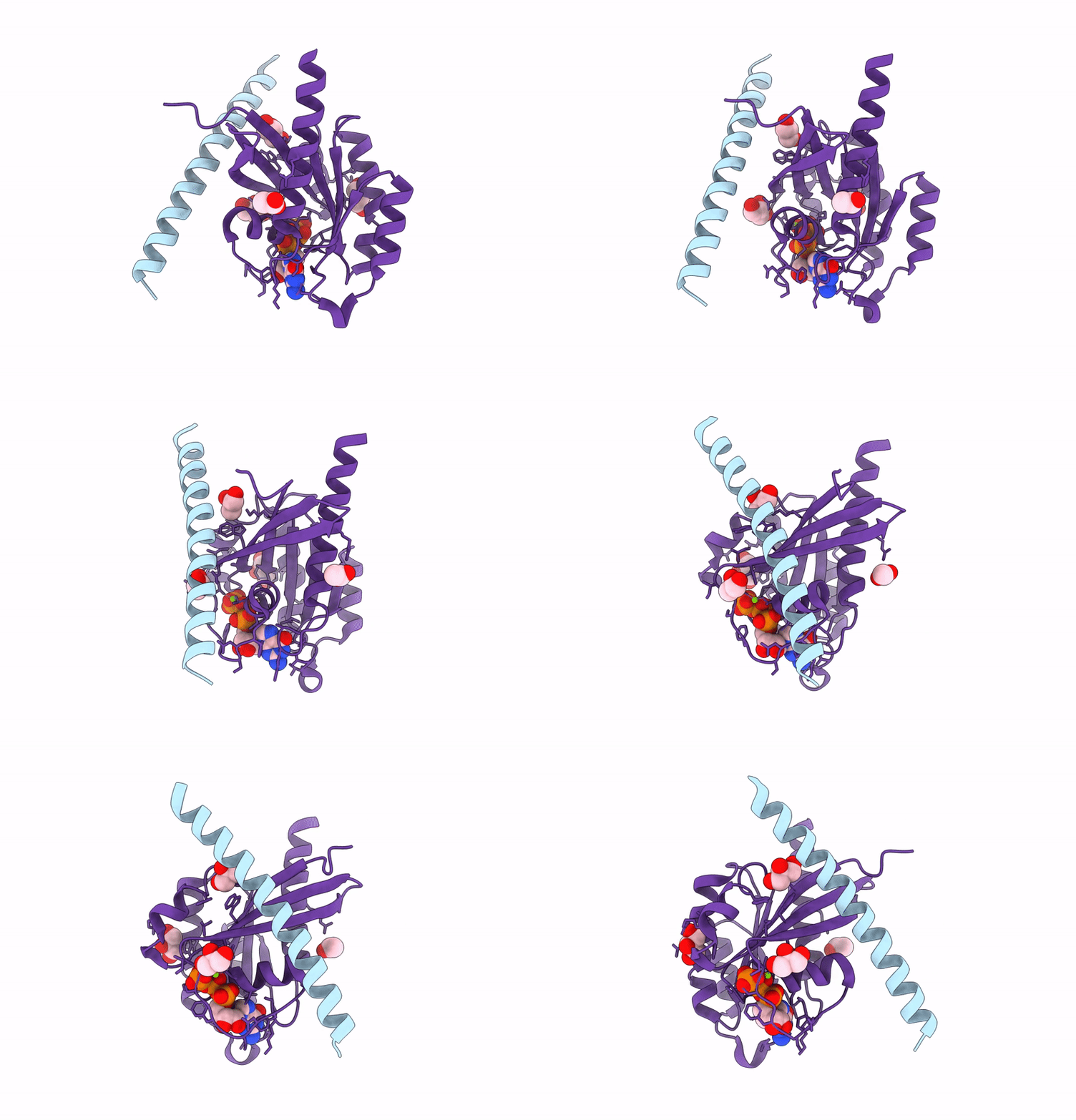
Crystal structure of OPTN 138-170 in complex with GTP-bound RAB8A1-176 (Q67L)
Biological Source:
Source Organism:
Homo sapiens (Taxon ID: 9606)
Host Organism:
Method Details:
Experimental Method:
Resolution:
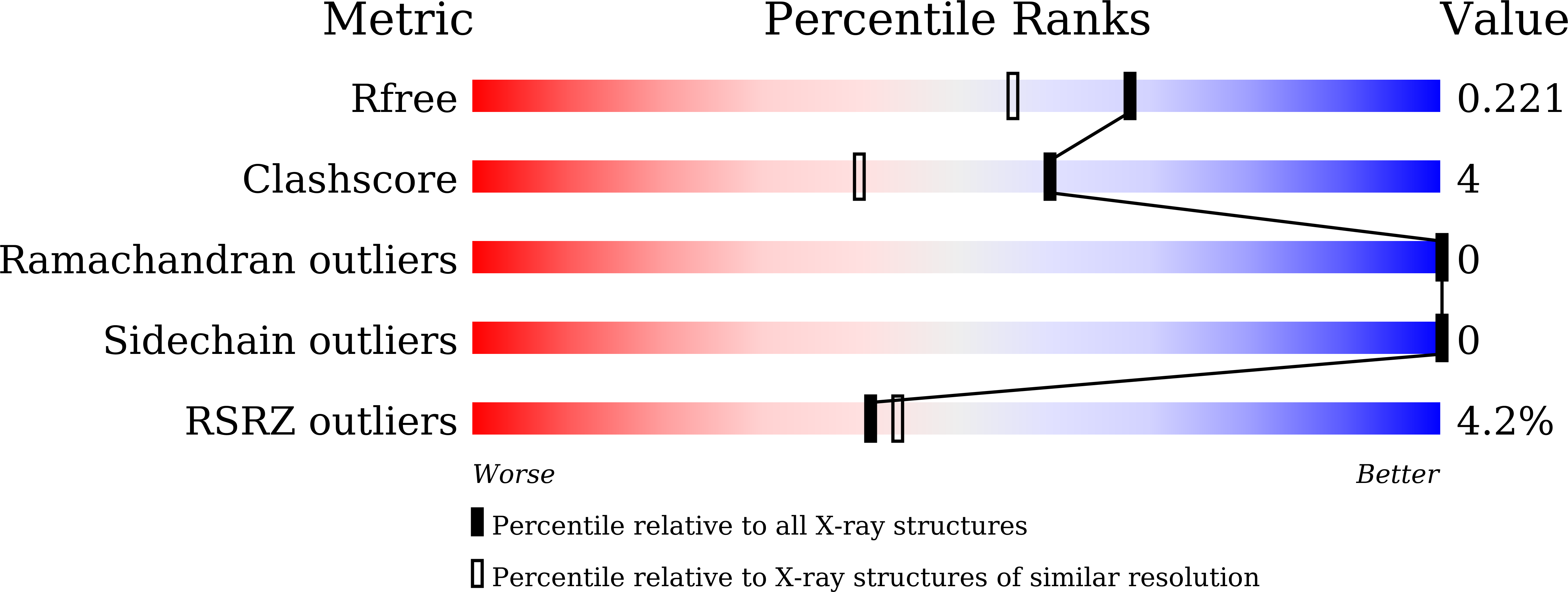
1.83 Å
R-Value Free:
0.22
R-Value Work:
0.18
R-Value Observed:
0.19
Space Group:
P 43 21 2
Macromolecular Entities
Structures with similar UniProt ID
Protein Blast
Polymer Type:polypeptide(L)
Molecule:Optineurin
Gene (Uniprot):OPTN
Chain IDs:B (auth: A)
Chain Length:36
Number of Molecules:1
Biological Source:Homo sapiens
Structures with similar UniProt ID
Protein Blast
Polymer Type:polypeptide(L)
Molecule:Ras-related protein Rab-8A
Gene (Uniprot):RAB8A
Mutagens:Q67L
Chain IDs:A (auth: D)
Chain Length:182
Number of Molecules:1
Biological Source:Homo sapiens
Primary Citation
Functional and Structural Insights Into Complex Formation Between OPTN Leucine Zipper Domain and RAB8A.
Genes Cells 30 e70043 e70043 (2025)
PMID: 40770829 DOI: 10.1111/gtc.70043

Abstact

Optineurin (OPTN) is a multifunctional adaptor protein involved in vesicular trafficking and selective autophagy. In this study, we investigated the molecular mechanism by which OPTN regulates these distinct processes through the leucine zipper (LZ) domain. OPTN interacts with the active form of RAB8A and closely related RAB proteins (RAB8B and RAB10). We determined the crystal structure of the OPTN-RAB8A complex at 1.83 Å resolution and elucidated the specific interaction mechanism between these proteins. Structure-guided mutational analysis at the molecular and cellular level suggested that OPTN interacts with RAB8A on two distinct surfaces. RAB8A-interacting surfaces of OPTN include residues that are located apart from the LZ-forming region. Furthermore, the interaction between OPTN and RAB8A was corroborated by cell biological approaches. Although RAB8A/8B/10 were not essential for mitophagy in experiments using their triple knockout cells, the RAB8A-binding residues of OPTN were critical for the recruitment of ATG9A vesicles. Therefore, our results provide molecular insights into the functional role of the LZ domain of OPTN in regulating vesicular trafficking and selective autophagy.

Legend

Protein

Chemical

Disease

Primary Citation of related structures
Feedback Form
Name
Email
Institute
Feedback