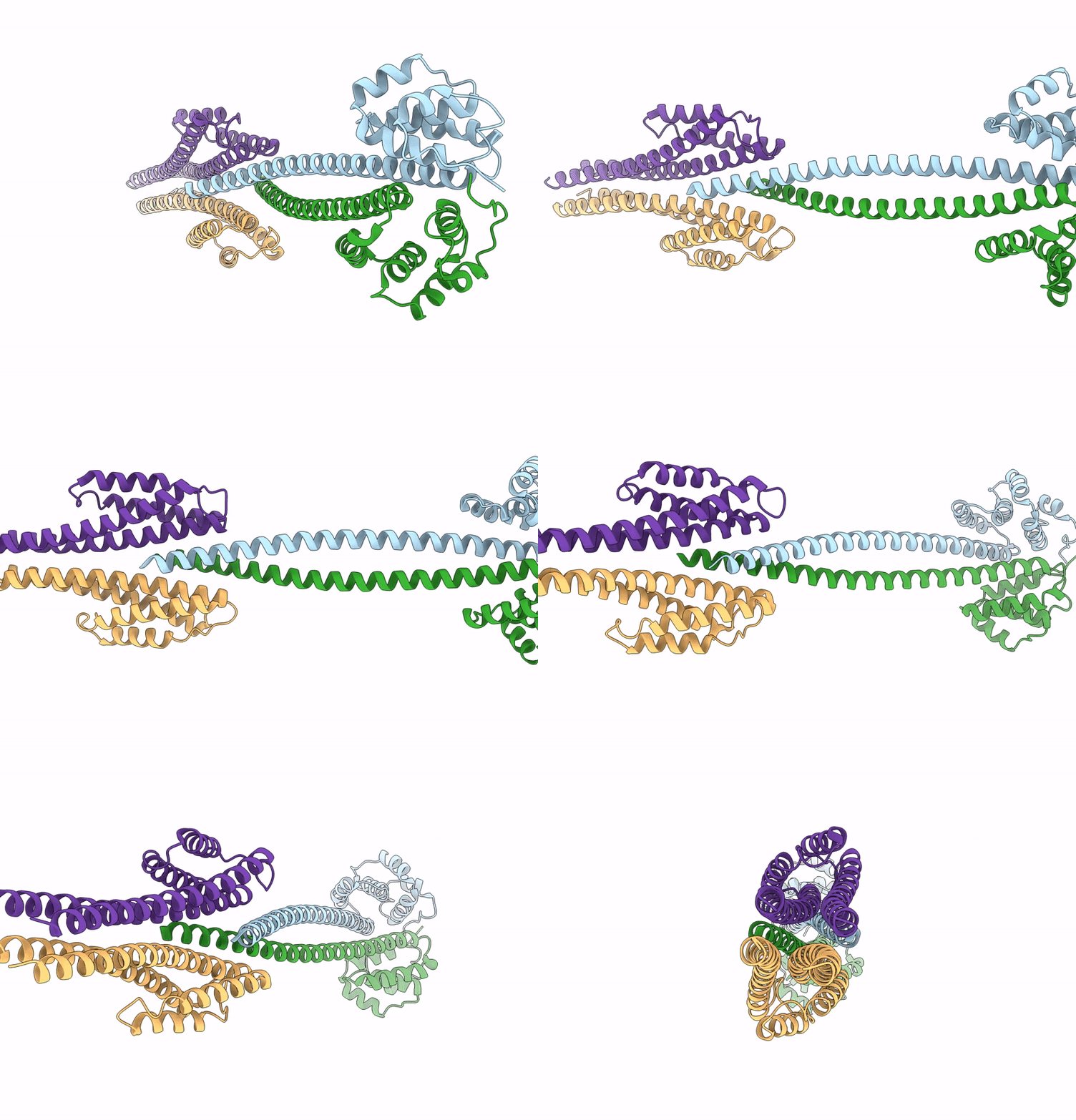
9M08 image
Deposition Date 2025-02-24
Release Date 2025-11-19
Last Version Date 2025-12-24
Entry Detail
PDB ID:
9M08
Title:
Structure of outer membrane lipoprotein QseG and histidine kinase QseE complex
Biological Source:
Method Details:
Experimental Method:
Resolution:
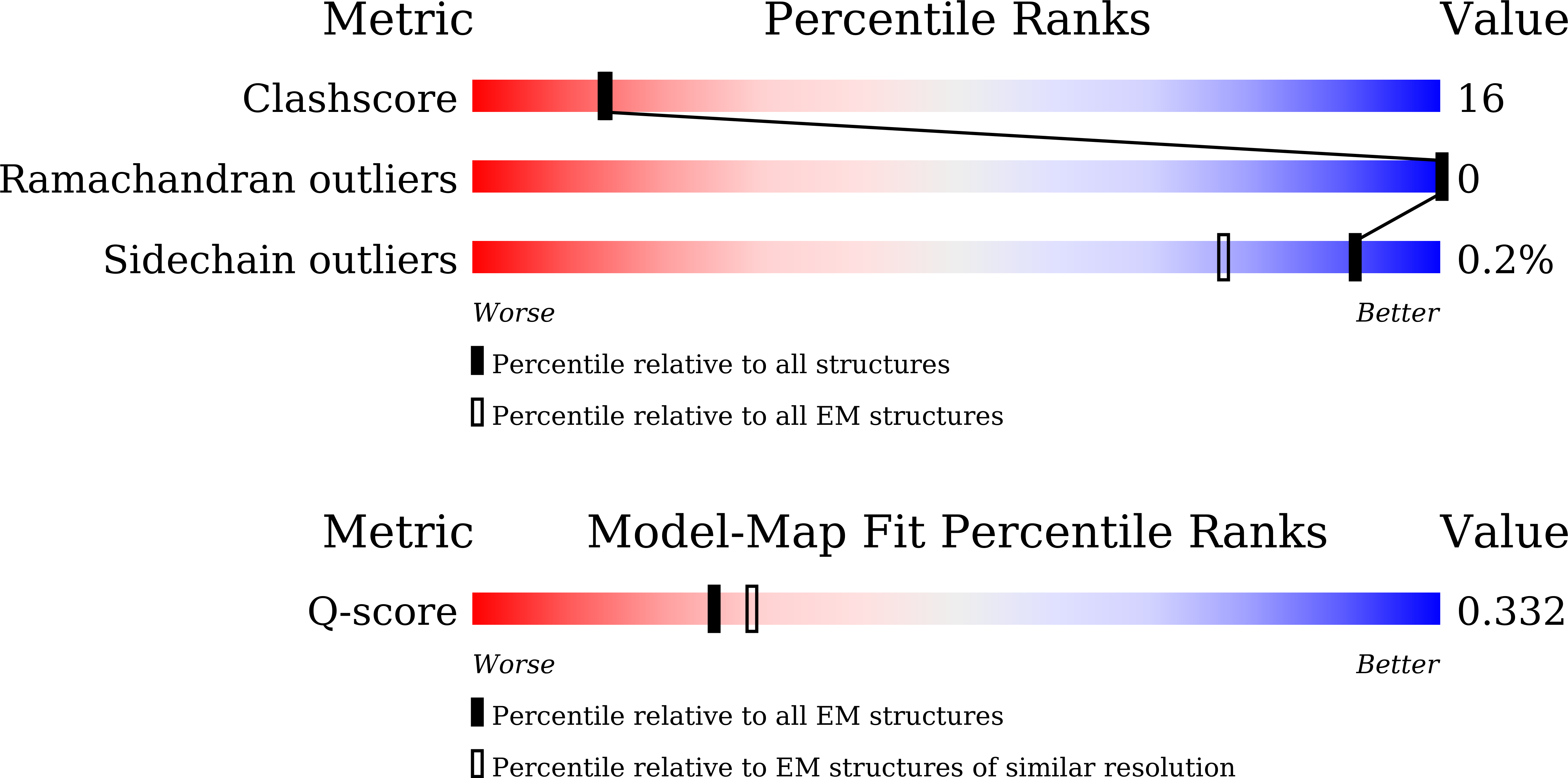
3.90 Å
Aggregation State:
PARTICLE
Reconstruction Method:
SINGLE PARTICLE
Macromolecular Entities
Structures with similar UniProt ID
Protein Blast
Polymer Type:polypeptide(L)
Molecule:Quorum-sensing regulator protein G
Gene (Uniprot):yfhG
Chain IDs:A, B
Chain Length:185
Number of Molecules:2
Biological Source:Salmonella enterica subsp. enterica serovar Typhimurium str. SL1344
Structures with similar UniProt ID
Protein Blast
Polymer Type:polypeptide(L)
Molecule:histidine kinase
Gene (Uniprot):G1W50_19185, G1W53_19065, G1W54_19655, G1W56_19530, G1W63_19330, G1W64_19360, G1W86_18040, G1W87_18980, G1W89_18825, G1W92_18730, G1X03_18690, G1X04_08455, G1X09_19675, G1X10_19585, G1X13_19665, G1X17_20465, G1X23_19060, G1X29_19375, G1X32_19625, G1X38_19920, G1X42_18735, G1X47_19350, G1X49_18695, G1X51_19675, G1X52_19365, G1X66_19040, G1X68_16395, G1X69_19945, G1X71_19680, G1X76_19335, G1X80_18175, G1X84_18730, G1X85_19490, G1X86_19665, G1X94_19185, G1X96_19670, G1X99_19365, G1Y02_19365
Chain IDs:C, D
Chain Length:486
Number of Molecules:2
Biological Source:Salmonella enterica subsp. enterica serovar Typhimurium str. SL1344
Ligand Molecules
Primary Citation
Cryo-EM structure of the QseG-QseE complex reveals an accessory protein-driven two-component system activation mechanism.
Mbio 16 e0286425 e0286425 (2025)
PMID: 41247015 DOI: 10.1128/mbio.02864-25

Abstact

The two-component system (TCS) enables bacteria to sense and respond to environmental changes through histidine kinase-mediated signaling cascades. Although the core components of TCSs have been extensively studied, the molecular basis of accessory proteins in modulating histidine kinase activity remains poorly understood. Here, we report that the outer membrane lipoprotein QseG functions as an accessory protein that directly binds to and activates the histidine kinase QseE via its C-terminal domain. Cryo-electron microscopy (Cryo-EM) structural analysis of the QseG-QseE complex reveals a novel yet conserved interaction mode between an accessory lipoprotein and a histidine kinase, which bridges the outer membrane to cytoplasm. Furthermore, systematic truncation assays and photo-crosslinking experiments indicate that outer membrane-anchored QseG is sufficient and prone to engage with and activate the inner membrane histidine kinase QseE under cultured conditions. Our findings provide mechanistic details for accessory lipoprotein-mediated TCS activation, expanding our understanding of bacterial signaling. The evolutionary conservation of this interaction across bacterial pathogens underscores its broad biological significance and potential as a therapeutic target.IMPORTANCEThe classical TCS system in bacterial signal transduction is composed of two proteins-a histidine kinase and its cognate response regulator. More and more studies have revealed the presence of accessory proteins that can modulate the histidine kinase activity and affect signal transduction, but their mechanisms remain largely elusive. This study unveils a previously unrecognized mechanism by which bacterial accessory lipoproteins mediate TCS activation. We provide compelling evidence that QseG directly interacts with QseE through an evolutionarily conserved structural interface, readily and sufficiently activating QseE's autokinase activity and downstream signaling. Given the essential role of QseEF in bacterial virulence and stress adaptation, our findings pave the way for the development of antimicrobial strategies targeting this conserved lipoprotein-mediated activation mechanism.

Legend

Protein

Chemical

Disease

Primary Citation of related structures
Feedback Form
Name
Email
Institute
Feedback