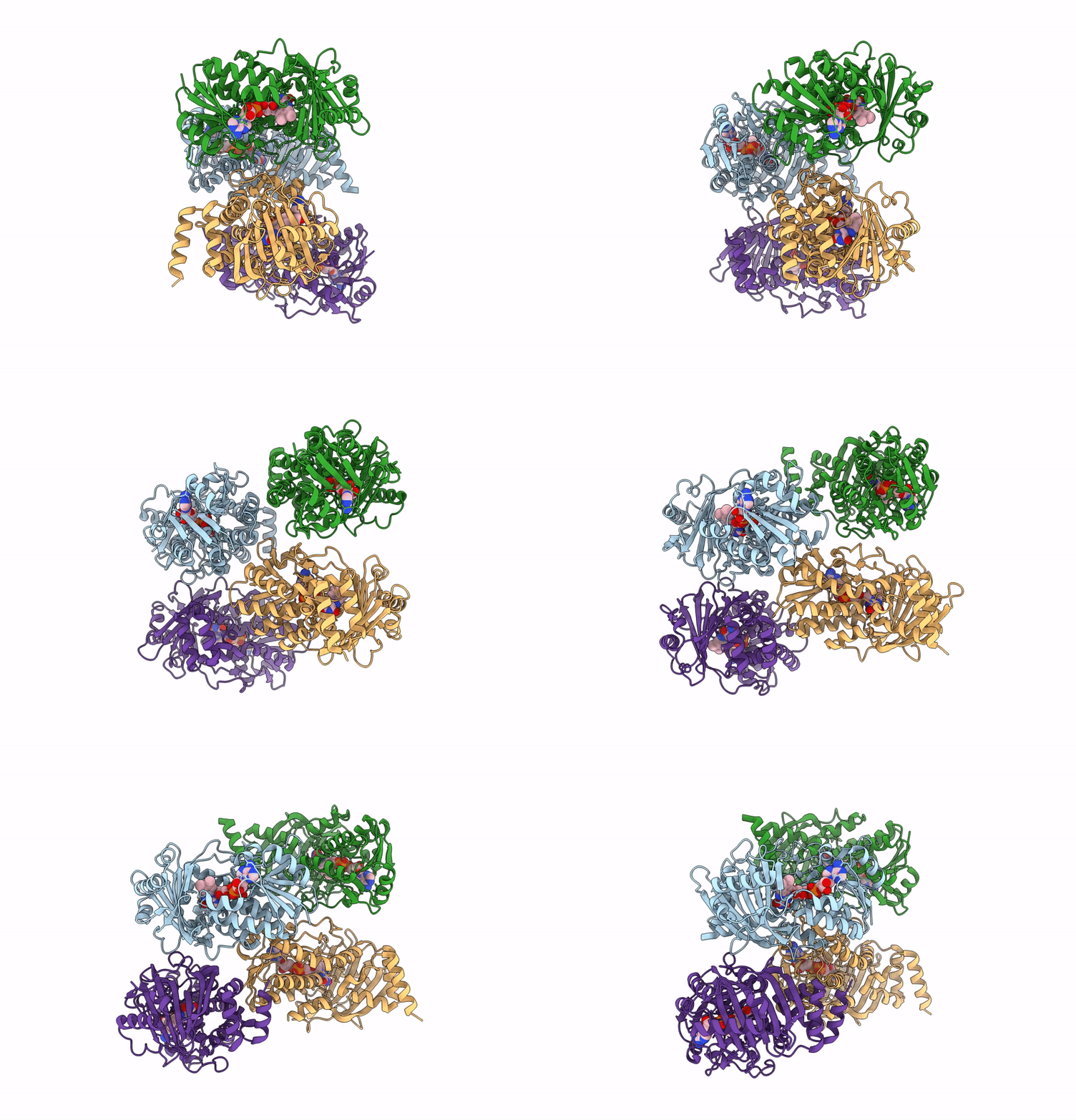
9LRQ image
Deposition Date 2025-02-01
Release Date 2025-12-10
Last Version Date 2025-12-17
Entry Detail
PDB ID:
9LRQ
Keywords:
Title:
Indole monooxygenase from Acinetobacter baumannii
Biological Source:
Source Organism(s):
Expression System(s):
Method Details:
Experimental Method:
Resolution:
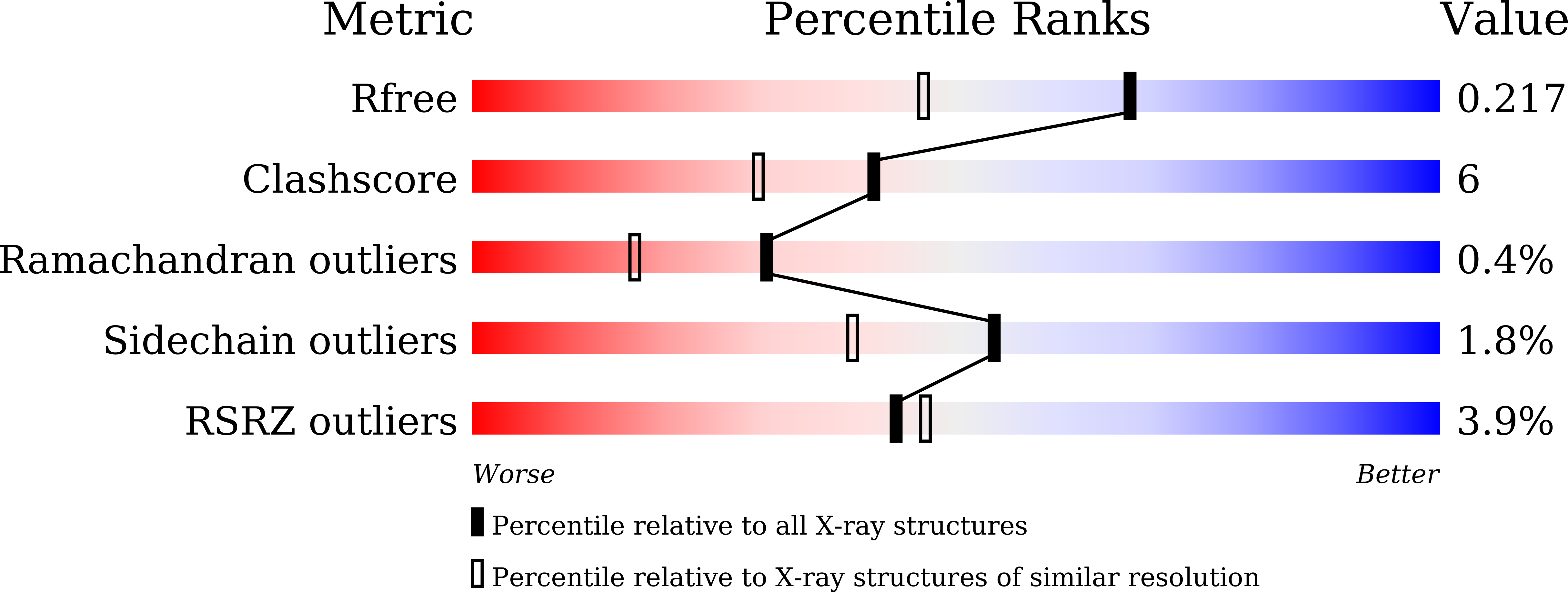
1.70 Å
R-Value Free:
0.21
R-Value Work:
0.17
R-Value Observed:
0.17
Space Group:
P 1
Macromolecular Entities
Structures with similar UniProt ID
Protein Blast
Polymer Type:polypeptide(L)
Molecule:Alanine-phosphoribitol ligase
Chain IDs:A, B, C, D
Chain Length:420
Number of Molecules:4
Biological Source:Acinetobacter baumannii
Ligand Molecules
Primary Citation
Structure and reaction mechanisms of a two-component indole monooxygenase from Acinetobacter baumannii.
Arch.Biochem.Biophys. 776 110681 110681 (2025)
PMID: 41325957 DOI: 10.1016/j.abb.2025.110681

Abstact

The indole monooxygenase system from Acinetobacter baumannii is a two-component flavoprotein that catalyzes the monooxygenation of indole. The system consists of the flavoprotein reductase (IndR) and the oxygenase (IndOx). IndR generates reduced FAD (FADH-) to IndOx using NADH. The pre-equilibration of IndOx with FADH- inhibits the formation of C4a-hydroperoxyflavin. In contrast, the presence of indole facilitates the formation of C4a-hydroperoxyflavin. The structural study reveals a dynamic loop at the active site, which has never been demonstrated in this class of enzyme, resulting in two conformations of IndOx. The closed conformation prevents the formation of the C4a-hydroperoxyflavin, whereas the binding of indole directs the open conformation, allowing for the formation of C4a-hydroperoxyflavin. The kinetic mechanism of both components was elucidated using rapid kinetics. The binding of indole to form a ternary complex is a preferential random-order mechanism in which indole preferentially binds to IndOx:C4a-hydroperoxyflavin, compared with IndOx:FADH- complex. The turnover number in the presence of both components to produce 3-hydroxyindole demonstrated that either the release of oxidized FAD or the release of monooxygenated product from the IndOx active site, or partially both, entirely limits the catalytic reaction. The solvent isotope effect on the step of the structural rearrangement of the monooxygenated product to form 3-hydroxyindole in this study supports the previously proposed epoxide-dihydrodiol model. This step is significantly slower than the turnover number, indicating that the monooxygenated indole is released and then undergoes a non-enzymatic structural rearrangement outside the active site, leading to the formation of 3-hydroxyindole.

Legend

Protein

Chemical

Disease

Primary Citation of related structures
Feedback Form
Name
Email
Institute
Feedback