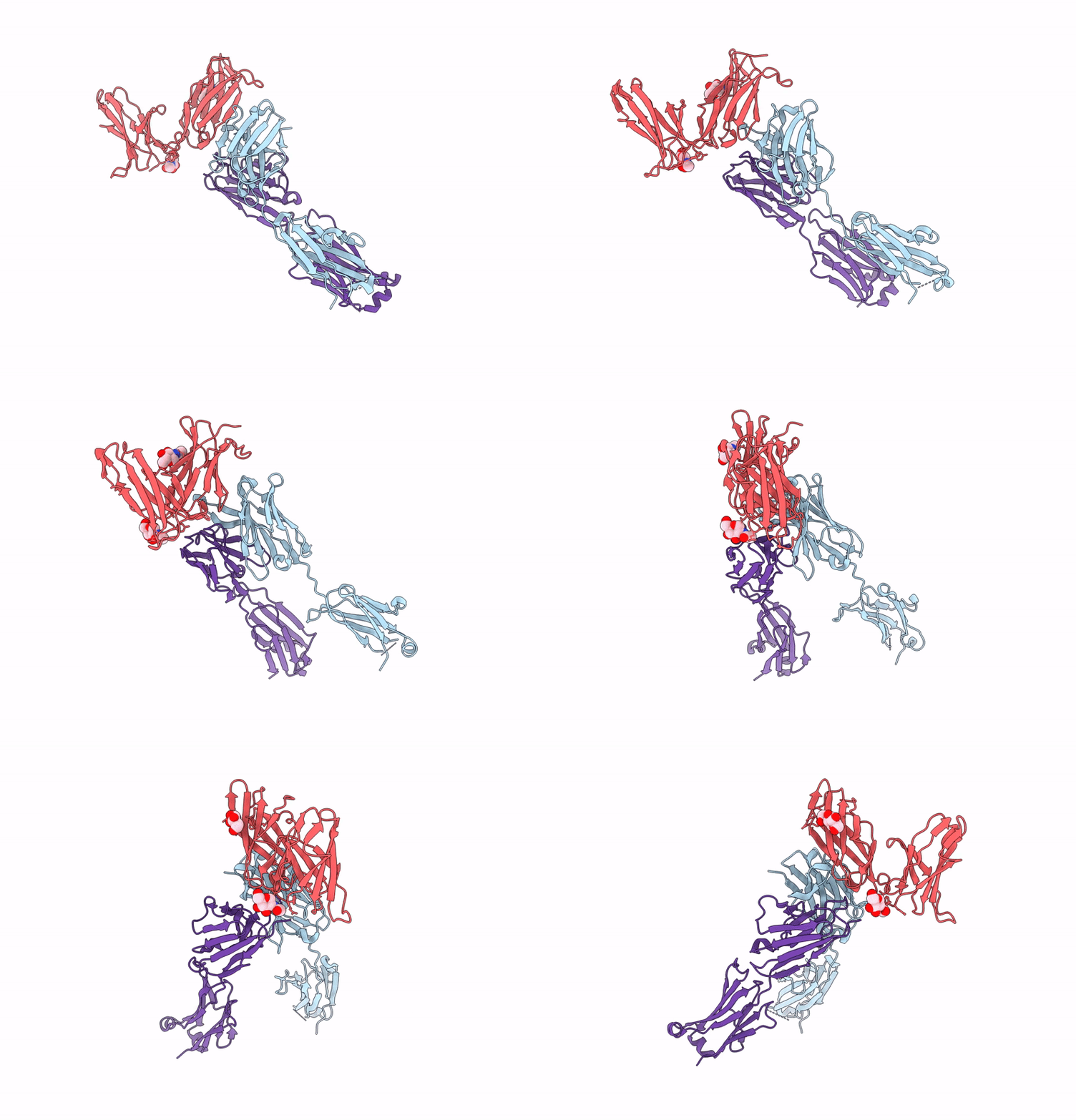
9LRF image
Deposition Date 2025-01-31
Release Date 2025-10-15
Last Version Date 2025-10-15
Entry Detail
PDB ID:
9LRF
Keywords:
Title:
Killer immunoglobulin receptor KIR2DL2 in complex with KIR2DL2_KIR2DL2/3 agonist 61-Fab
Biological Source:
Source Organism:
Homo sapiens (Taxon ID: 9606)
Method Details:
Experimental Method:
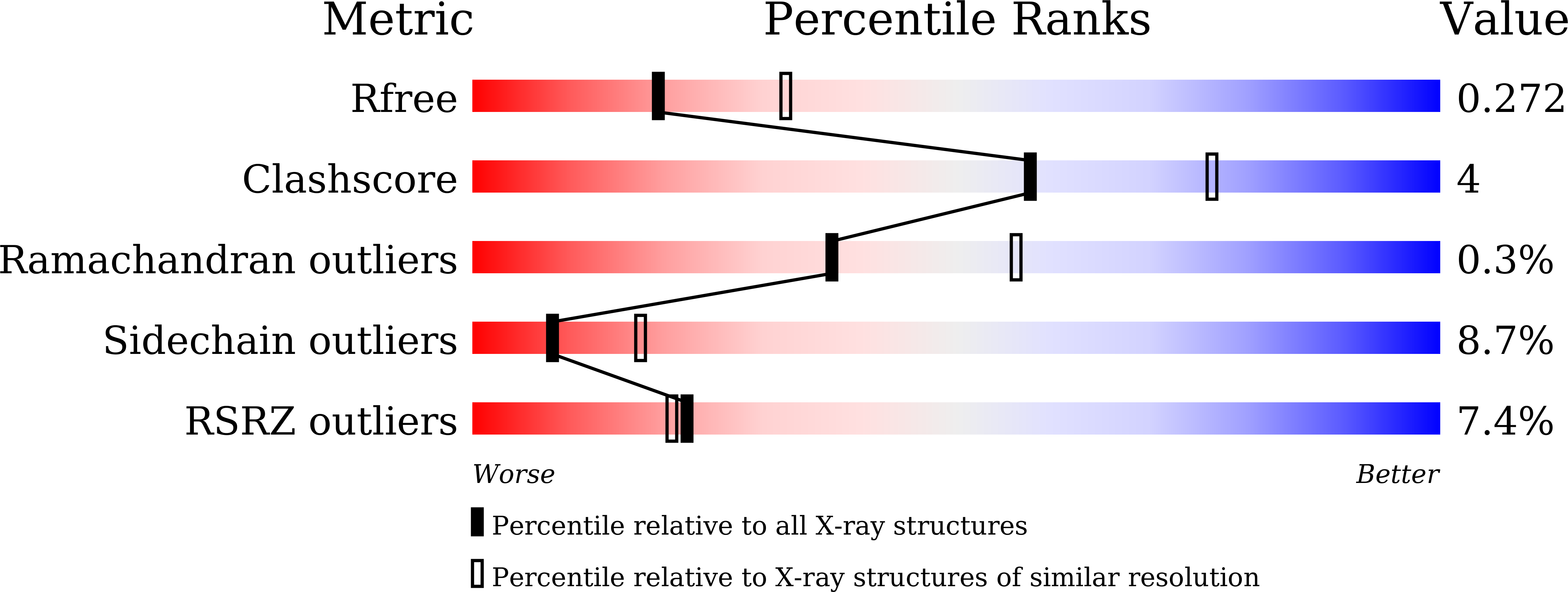
Resolution:
2.50 Å
R-Value Free:
0.27
R-Value Work:
0.23
R-Value Observed:
0.23
Space Group:
C 1 2 1
Macromolecular Entities
Polymer Type:polypeptide(L)
Molecule:KIR2DL2_KIR2DL2/3 agonist 61 FAB FRAGMENT HEAVY CHAIN
Chain IDs:B (auth: H)
Chain Length:230
Number of Molecules:1
Biological Source:Homo sapiens
Structures with similar UniProt ID
Protein Blast
Polymer Type:polypeptide(L)
Molecule:Killer cell immunoglobulin-like receptor 2DL2
Gene (Uniprot):KIR2DL2
Chain IDs:A (auth: K)
Chain Length:210
Number of Molecules:1
Biological Source:Homo sapiens
Polymer Type:polypeptide(L)
Molecule:KIR2DL2_KIR2DL2/3 agonist 61 FAB FRAGMENT LIGHT CHAIN
Chain IDs:C (auth: L)
Chain Length:212
Number of Molecules:1
Biological Source:Homo sapiens
Ligand Molecules
Primary Citation
Selective agonists of KIR and NKG2A to evade missing self response of natural killer cells.
Sci Rep 15 33550 33550 (2025)
PMID: 41023081 DOI: 10.1038/s41598-025-18394-z

Abstact

Immune rejection is one of the most serious challenges in allogeneic transplantation, including allogeneic induced pluripotent stem cell (allo-iPSC)-derived cell therapy. Beta-2-Microglobulin gene-knockout, human leukocyte antigen (HLA) class I-deficient iPSCs can evade immune rejection by host T cells, which occurs due to HLA mismatches. However, natural killer (NK) cells recognize HLA class Ⅰ-deficient cells and reject them, which is known as the missing-self response. Introducing chimeric HLA-E protein to HLA class Ⅰ-deficient iPSCs suppresses the missing-self response of NK cells expressing the inhibitory receptor NKG2A; however, technology to suppress NKG2A-negative NK cells is still required. Here, we developed novel agonists for the other inhibitory receptor, killer immunoglobulin receptor (KIR), on NK cells. We found that antibodies that bind to activating KIR enhance NK cell activation and developed selective agonists for inhibitory KIRs (KIR2DL1, KIR2DL2/3, and KIR3DL1). Introducing these selective inhibitory KIR agonists on T cells and HLA class Ⅰ-deficient iPSCs allowed them to evade immune rejection by NK cells. Additionally, we identified an NKG2A-selective agonist as an alternative to chimeric HLA-E, which stimulates the activating receptor NKG2C. This technology enhances immune tolerance in allo-iPSCs and facilitates the development of various iPSC-derived regenerative medicines.

Legend

Protein

Chemical

Disease

Primary Citation of related structures
Feedback Form
Name
Email
Institute
Feedback