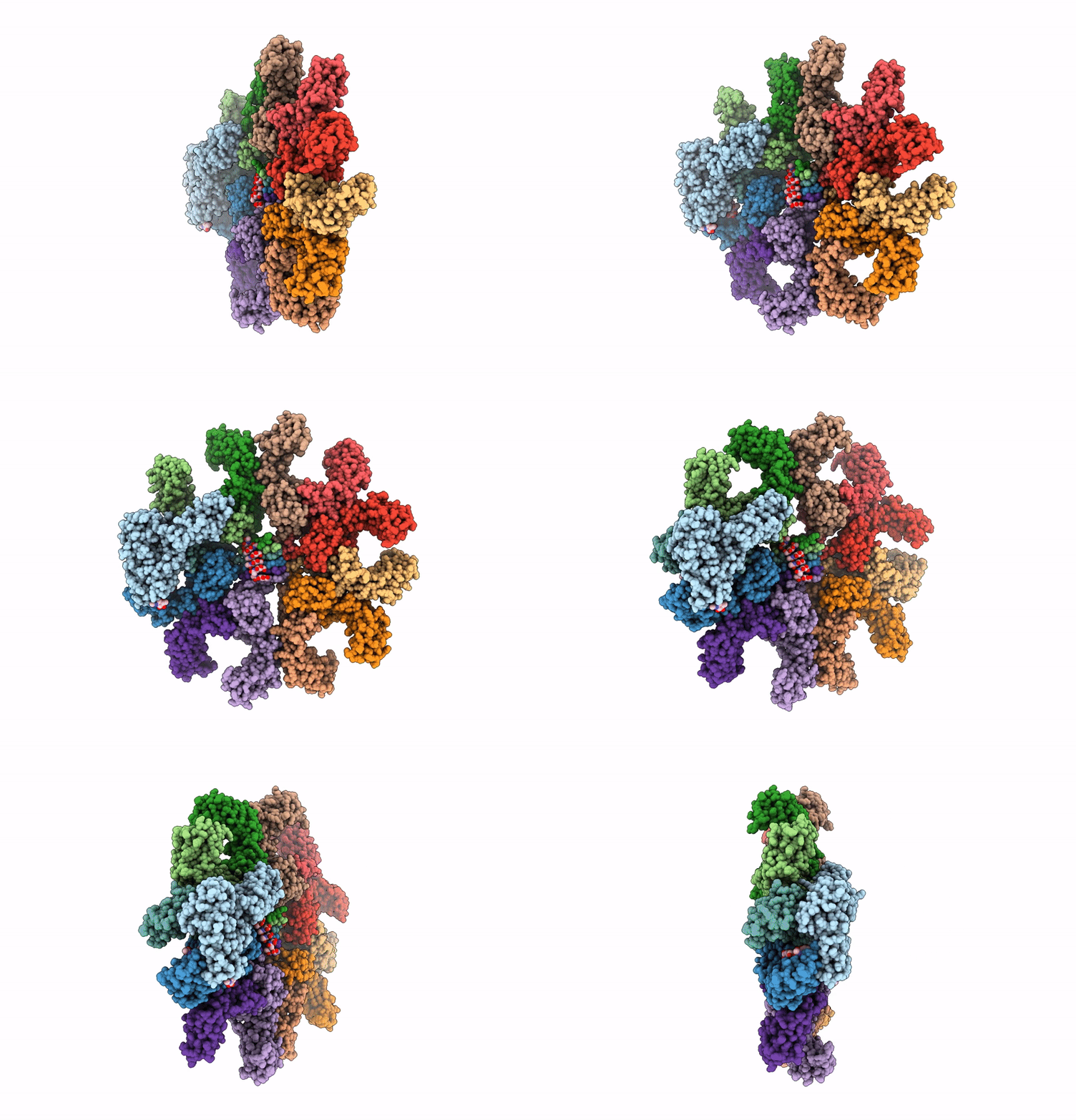
9LOC image
Deposition Date 2025-01-23
Release Date 2025-11-26
Last Version Date 2026-01-21
Entry Detail
PDB ID:
9LOC
Keywords:
Title:
Cryo-EM structure of human FcRL5 bound to IgG-Fc
Biological Source:
Source Organism(s):
Homo sapiens (Taxon ID: 9606)
Expression System(s):
Method Details:
Experimental Method:
Resolution:
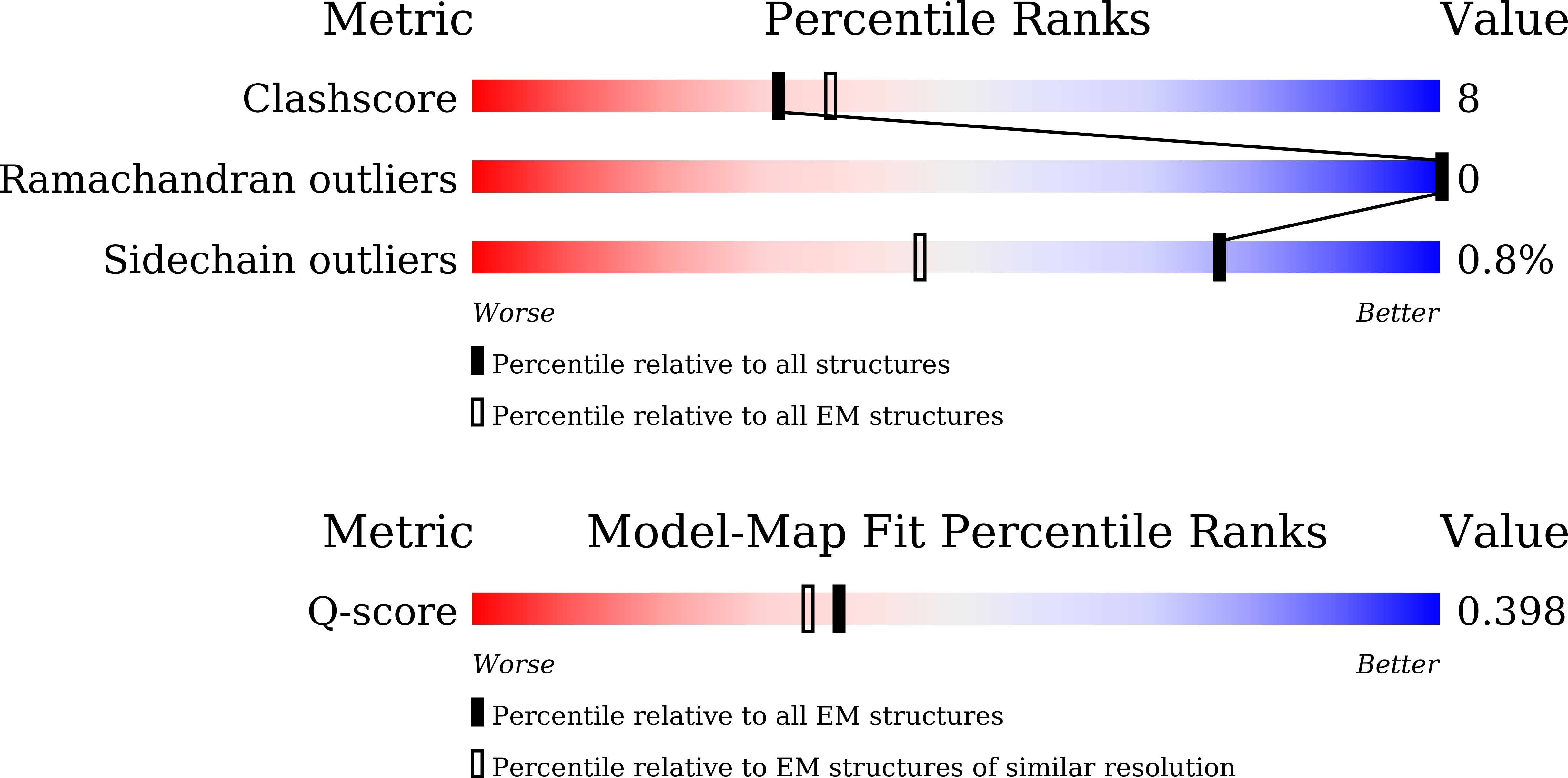
3.56 Å
Aggregation State:
PARTICLE
Reconstruction Method:
SINGLE PARTICLE
Macromolecular Entities
Structures with similar UniProt ID
Protein Blast
Polymer Type:polypeptide(L)
Molecule:Fc receptor-like protein 5
Gene (Uniprot):FCRL5
Chain IDs:A
Chain Length:860
Number of Molecules:1
Biological Source:Homo sapiens
Structures with similar UniProt ID
Protein Blast
Polymer Type:polypeptide(L)
Molecule:Immunoglobulin gamma-1 heavy chain
Chain IDs:B, C, D, E, F, G, H, I, J, K, L, M
Chain Length:250
Number of Molecules:12
Biological Source:Homo sapiens
Ligand Molecules
Primary Citation
Human FcRL5 is an Fc receptor that simultaneously engages two IgGs.
Sci Adv 12 eaeb8865 eaeb8865 (2026)
PMID: 41477863 DOI: 10.1126/sciadv.aeb8865

Abstact

The Fc receptors play crucial roles in initiating the effector functions of immunoglobulins. FcRL5 is a prominent target in B cell malignancies and has been implicated as a receptor for immunoglobulin G (IgG). However, the molecular mechanism remained unclear. Here, we demonstrate that human FcRL5, but not its mouse counterpart, is a bona fide IgG-Fc (Fcγ) receptor that uniquely requires the presence of two Fcγ molecules in close proximity to form a robust interaction. Cryo-electron microscopy reveals that FcRL5 optimally engages two Fcγ molecules positioned at a 60° angle, with its D1-D2 domains binding to the first Fcγ molecule, while its D3 domain arches over the second Fcγ. This distinctive binding capability enables FcRL5 to specifically recognize IgG immune complexes (ICs), with the binding strength correlating with IgG concentration in the ICs. In addition, we demonstrate that FcRL5 can internalize the IgG polymer and IC. These results shed light on FcRL5 function and reveal a unique Fcγ-FcγR binding mode governed by avidity.

Legend

Protein

Chemical

Disease

Primary Citation of related structures
Feedback Form
Name
Email
Institute
Feedback