9LMM image
Deposition Date 2025-01-19
Release Date 2025-11-26
Last Version Date 2025-11-26
Entry Detail
PDB ID:
9LMM
Keywords:
Title:
An antibiotic biosynthesis monooxygenase family protein from Streptomyces sp. MA37
Biological Source:
Source Organism:
Method Details:
Experimental Method:
Resolution:
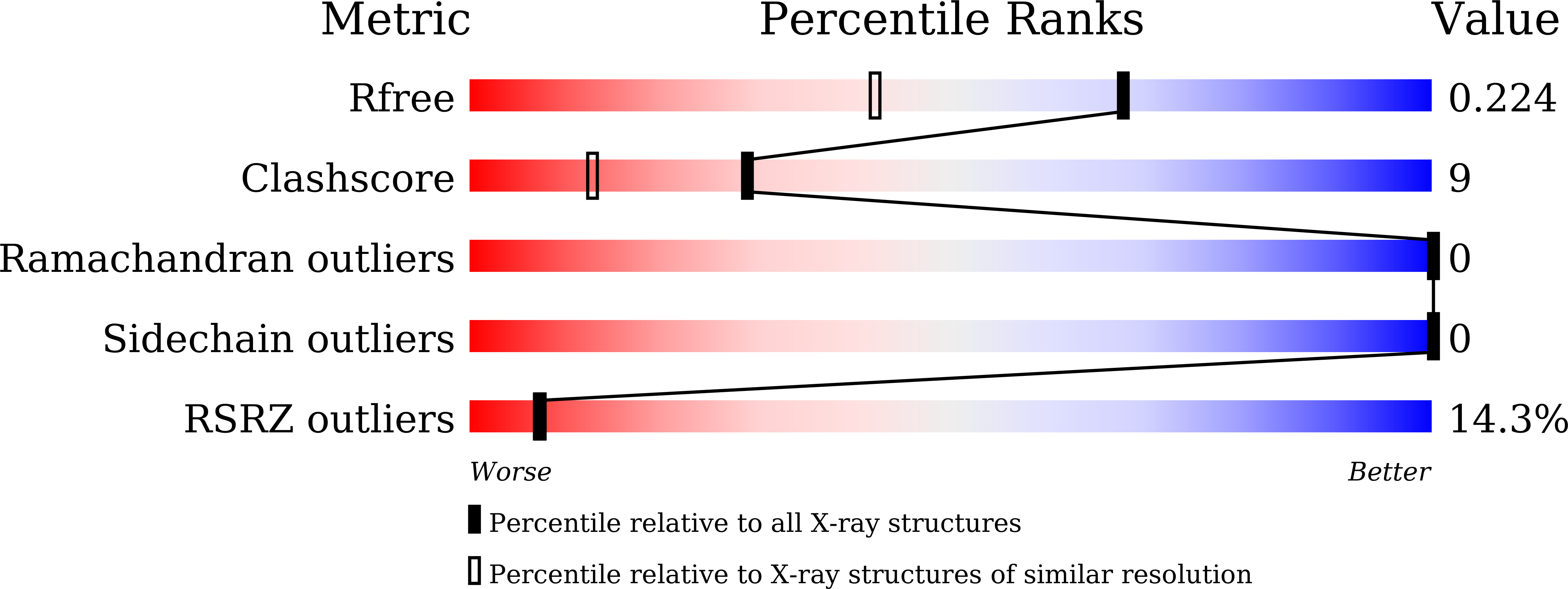
1.65 Å
R-Value Free:
0.22
R-Value Work:
0.20
R-Value Observed:
0.21
Space Group:
P 21 21 21
Macromolecular Entities
Polymer Type:polypeptide(L)
Molecule:Antibiotic biosynthesis monooxygenase
Chain IDs:A, B
Chain Length:113
Number of Molecules:2
Biological Source:Streptomyces sp. MA37
Primary Citation
Terminal Carboxyl Editing Drives Divergence in Fasamycin and Anthrabenzoxocinone Biosynthesis.
J.Am.Chem.Soc. 147 26468 26476 (2025)
PMID: 40690660 DOI: 10.1021/jacs.5c06089

Abstact

Aromatic polyketides are a vast category of natural products known for their wide-ranging biological activities, with their structural variety stemming from modifications to their core frameworks. This study reveals two distinct processes that shape the frameworks of (+)/(-)-anthrabenzoxocinone (ABX) and fasamycin (FAS) from a common biosynthetic precursor, compound 1. FasS protects the carboxyl group of this molecule without altering it, preparing it for FasU, which then crafts FAS's unique, nonplanar axial chiral aromatic framework. In contrast, Abx(+)O and Abx(-)O remove the carboxyl group from compound 1, producing phenyldimethylanthrone (PDA), a key intermediate for (+)/(-)-ABX formation. Structural analysis of AccS (1.65 Å, FasS homologue) and Abx(+)O (1.99 Å), combined with mutagenesis studies, identifies key residues of AccS and Abx(+)O, providing insights into the carboxyl-protecting mechanism and decarboxylation mechanism. Evolutionary and functional studies further connect AccS and AbxO to the N- and C-termini of the long-studied, functionally enigmatic protein family, WhiE-ORFI (resolved in 2.3 Å). This study unveils hidden strategies for terminal carboxyl group editing, providing new insights into the origins of aromatic polyketide diversity.

Legend

Protein

Chemical

Disease

Primary Citation of related structures
Feedback Form
Name
Email
Institute
Feedback