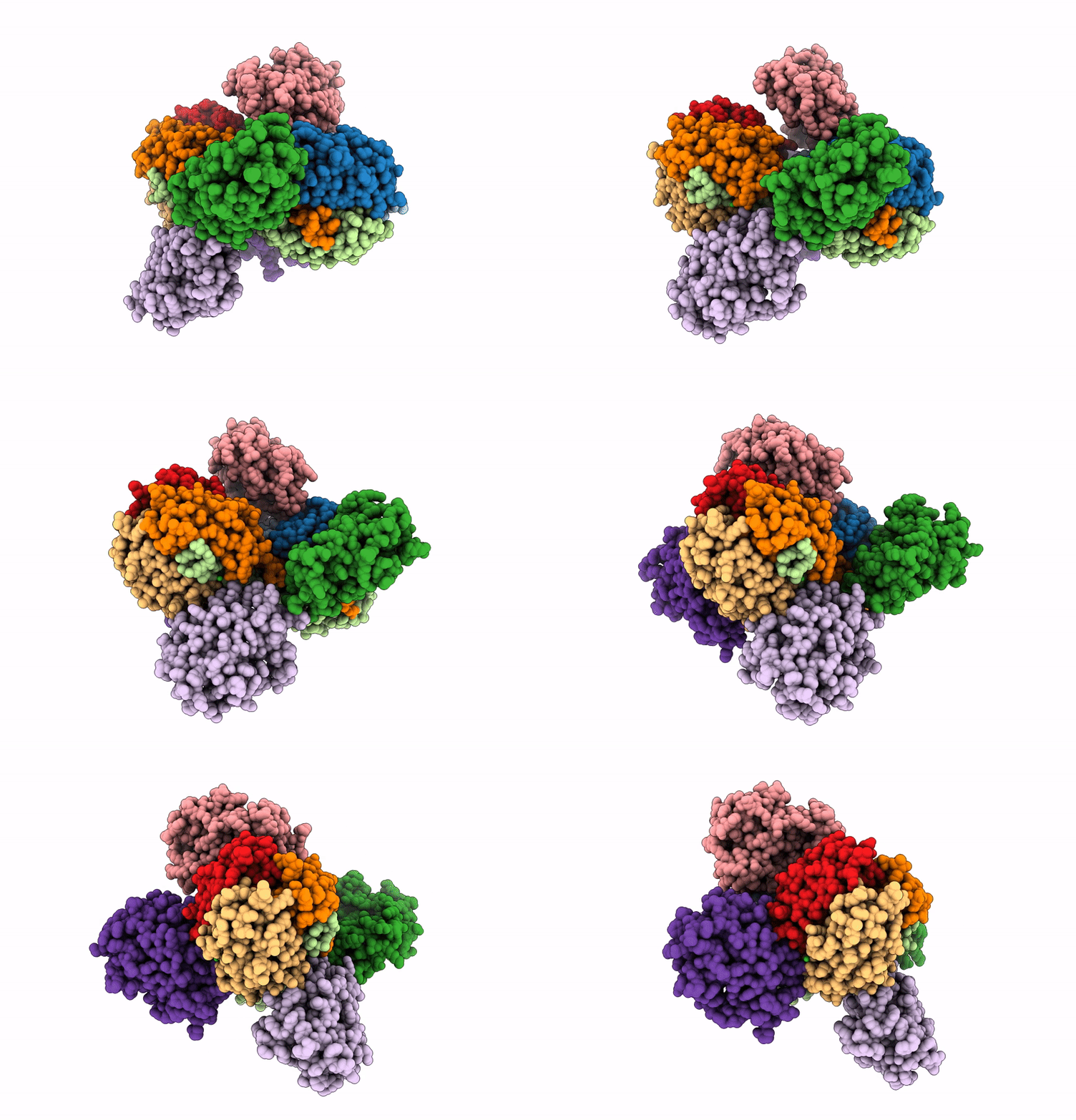
9LKL image
Deposition Date 2025-01-16
Release Date 2025-12-17
Last Version Date 2026-01-14
Entry Detail
PDB ID:
9LKL
Title:
Cryo-EM map of C1ql1-gC1q hexamer and BAI3-eCUB complex
Biological Source:
Source Organism(s):
Mus musculus (Taxon ID: 10090)
Homo sapiens (Taxon ID: 9606)
Method Details:
Experimental Method:
Resolution:
3.48 Å
Aggregation State:
PARTICLE
Reconstruction Method:
SINGLE PARTICLE
Macromolecular Entities
Structures with similar UniProt ID
Protein Blast
Polymer Type:polypeptide(L)
Molecule:C1q-related factor
Gene (Uniprot):C1ql1
Chain IDs:A, B, C, F, G, H
Chain Length:140
Number of Molecules:6
Biological Source:Mus musculus
Structures with similar UniProt ID
Protein Blast
Polymer Type:polypeptide(L)
Molecule:Adhesion G protein-coupled receptor B3
Gene (Uniprot):ADGRB3
Chain IDs:D, E, I, J
Chain Length:238
Number of Molecules:4
Biological Source:Homo sapiens
Ligand Molecules
Primary Citation
Structural basis of calcium-dependent C1ql1/BAI3 assemblies in synaptic connectivity.
Nat Commun 16 11444 11444 (2025)
PMID: 41372137 DOI: 10.1038/s41467-025-66254-1

Abstact

Cell adhesion molecules (CAMs) are pivotal in establishing and maintaining synaptic connectivity. Emerging evidence indicates that some secreted factors within the synaptic cleft, including C1q-like proteins (C1qls), play a crucial role in bridging pre- and post-synapses by connecting the bilateral CAMs. However, the mechanisms of those secreted factors in synapse assembly remain incomplete. Here, we explore C1ql-mediated synaptic connectivity, focusing on the assembly of C1ql1 and its postsynaptic receptor brain-specific angiogenesis inhibitor 3 (BAI3, also called ADGRB3). Our biochemical, structural, and computational analyses reveal that the trimeric globular C1q (gC1q) domain of C1ql1 undergoes a calcium-modulated domain-swapping event to form a hexamer. Cryo-EM study manifests the stabilizing role of calcium ions on the C1ql1_gC1q hexamer in complex with the extended CUB domain of BAI3. Using the gC1q hexamer, full-length C1ql1 further assembles into linear clusters, possibly providing a scaffold to accumulate BAI3 receptors on the plasma membrane. Our cellular and in vivo studies support a role for the gC1q-mediated dynamic assembly of C1ql1 in receptor accumulation and synapse maintenance. Collectively, our findings provide a plausible mechanism of secreted factor-mediated synaptic connectivity, driven by the calcium-modulated assembly of C1qls and their interactions with CAMs.

Legend

Protein

Chemical

Disease

Primary Citation of related structures
Feedback Form
Name
Email
Institute
Feedback