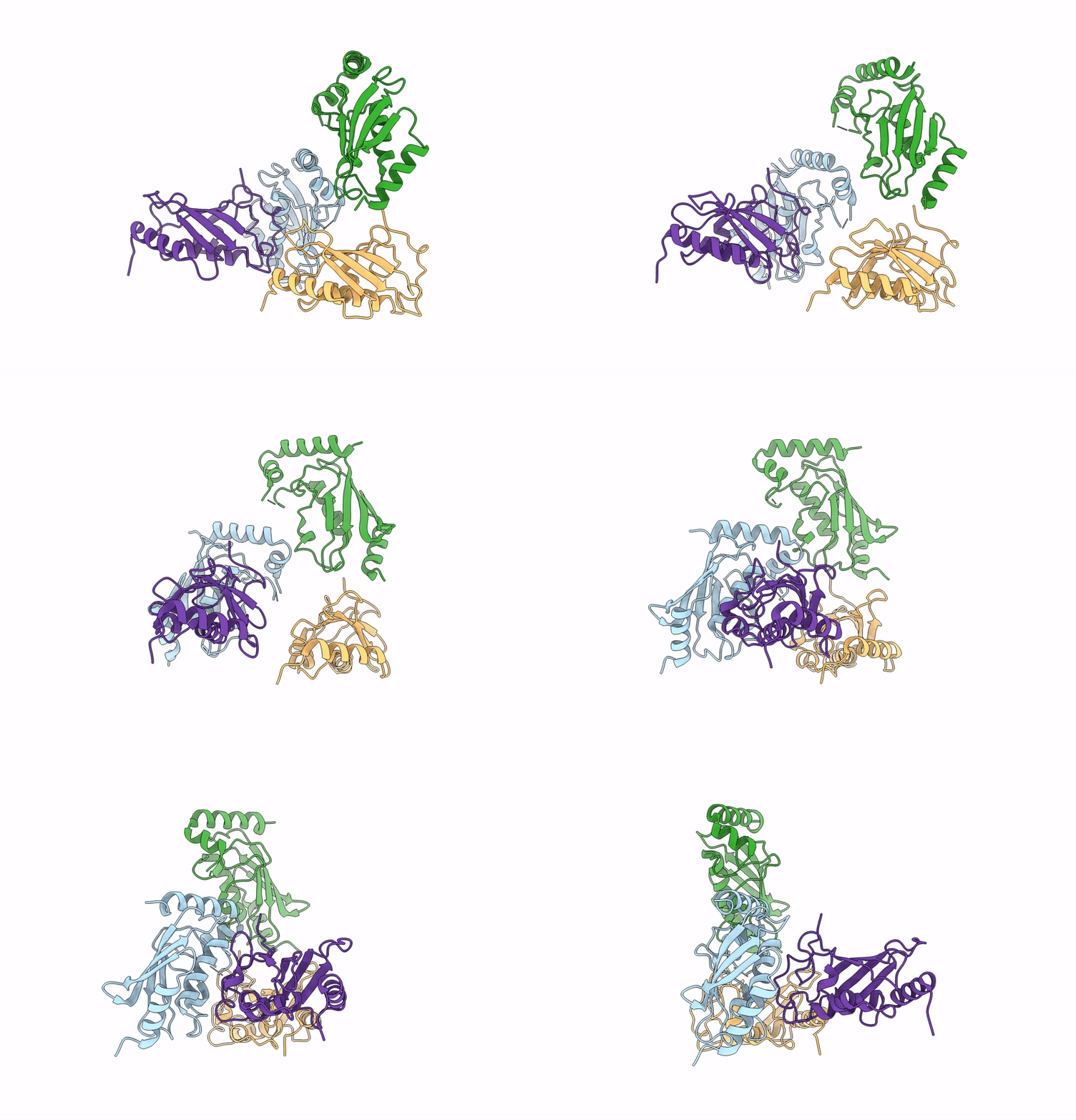
9LHJ image
Deposition Date 2025-01-12
Release Date 2025-05-14
Last Version Date 2025-06-25
Entry Detail
PDB ID:
9LHJ
Keywords:
Title:
UBE2N/UBE2V2 complexed with a covalent inhibitor
Biological Source:
Source Organism:
Homo sapiens (Taxon ID: 9606)
Host Organism:
Method Details:
Experimental Method:
Resolution:
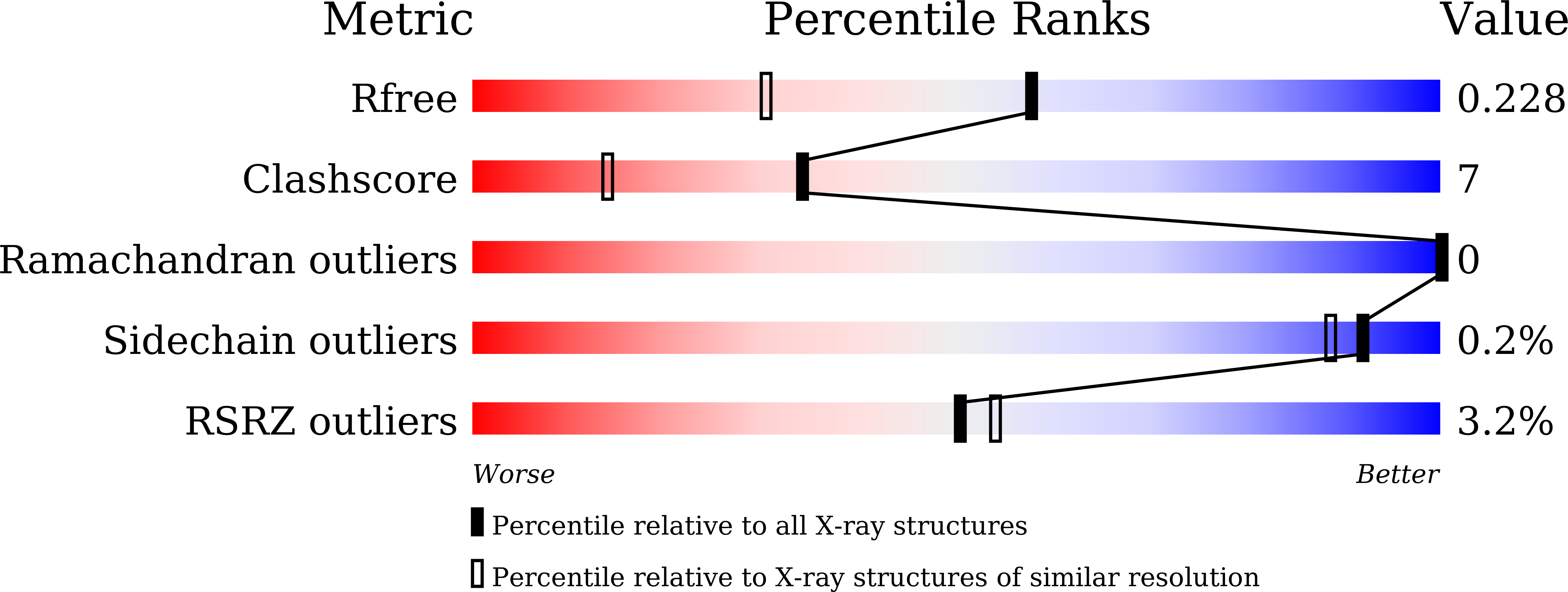
1.68 Å
R-Value Free:
0.22
R-Value Work:
0.18
R-Value Observed:
0.18
Space Group:
P 1 21 1
Macromolecular Entities
Structures with similar UniProt ID
Protein Blast
Polymer Type:polypeptide(L)
Molecule:Ubiquitin-conjugating enzyme E2 N
Gene (Uniprot):UBE2N
Chain IDs:A, B
Chain Length:152
Number of Molecules:2
Biological Source:Homo sapiens
Structures with similar UniProt ID
Protein Blast
Polymer Type:polypeptide(L)
Molecule:Ubiquitin-conjugating enzyme E2 variant 2
Gene (Uniprot):UBE2V2
Chain IDs:C, D
Chain Length:145
Number of Molecules:2
Biological Source:Homo sapiens
Modified Residue
Compound ID Chain ID Parent Comp ID Details 2D Image
A1EJS A LYS modified residue
Primary Citation
Proteome-Wide Data Guides the Discovery of Lysine-Targeting Covalent Inhibitors Using DNA-Encoded Chemical Libraries.
Angew.Chem.Int.Ed.Engl. 64 e202505581 e202505581 (2025)
PMID: 40223230 DOI: 10.1002/anie.202505581

Abstact

Broadening the application of covalent inhibitors requires the exploration of nucleophilic residues beyond cysteine. The covalent DNA-encoded chemical library (CoDEL) represents an advanced technology for covalent drug discovery. However, its application in lysine-targeting inhibitors remains uncharted territory. Here, we report the utilization of CoDEL selection guided by proteome-wide data to identify lysine-targeting covalent inhibitors. A comprehensive assessment of activity-based protein profiling (ABPP) data on lysine distribution and ligandability reveals potential targets for selective covalent inhibition, including phosphoglycerate mutase 1 (PGAM1), bromodomain (BRD) family proteins, and ubiquitin-conjugating enzyme E2 N (UBE2N). The 10.7-million-member CoDELs, featuring diverse lysine-reactive warheads, enable the discovery of a series of covalent inhibitors, covering photo-covalent, reversible covalent, and irreversible covalent reaction mechanisms. In-depth characterization of binding sites and modes of action provides structural and functional insights. Notably, irreversible covalent inhibitors unveil a novel mechanism for regulating UBE2N-mediated ubiquitination by modulating the conformation of the protein complex. Our work adopts the ABPP-CoDEL strategy, offering an efficient and versatile selection method for the development of covalent inhibitors targeting functional lysines.

Legend

Protein

Chemical

Disease

Primary Citation of related structures
Feedback Form
Name
Email
Institute
Feedback